
Omron Photoelectric Sensors

The Omron product portfolio includes diffuse reflective, retro-reflective, and through-beam sensor types designed for stable detection in demanding industrial environments. On IndMALL, buyers can view Omron photoelectric sensor series, compare available models, and connect with verified suppliers and dealers offering genuine products across multiple industrial locations in India.
Omron Photoelectric Sensor Series
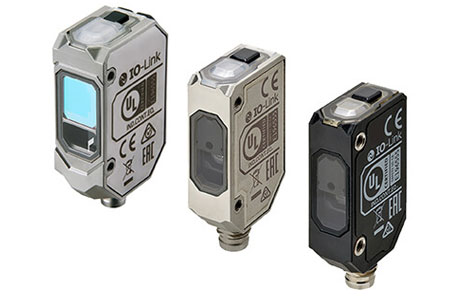
Omron E3AS Series — Distance-settable Photoelectric Sensors
- Sensing Distance: Up to 1,500 mm.
- Response Time: As low as 1.5 ms.
- Output Types: NPN, PNP, IO-Link.
Distance-settable sensors designed for long-range detection in demanding industrial environments.
🔘 View E3AS Series Models →
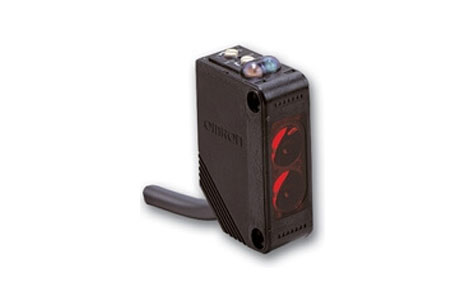
Omron E3Z Series — Compact Photoelectric Sensors
- Sensing Distance: Up to 1,000 mm
- Response Time: 1 ms
- Output: NPN, PNP, some models with IO-Link
Compact sensors widely used in packaging machines and logistics automation systems.
🔘 View E3Z Series Models →
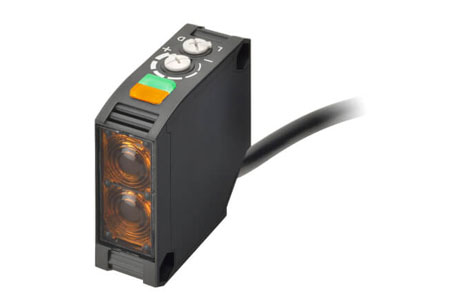
Omron E3JK Series — Multi-voltage Photoelectric Sensors
- Voltage Range: 24 to 240 VAC/DC.
- Output Types: Models with PNP/NPN transistor output and relay output.
- Sensing Distance: Up to 2,500 mm for diffuse reflective models; up to 11,000 mm for retro-reflective models; up to 40,000 mm for through-beam models.
Universal sensors suitable for machine builders requiring flexible voltage compatibility.
🔘 View E3JK Series Models →
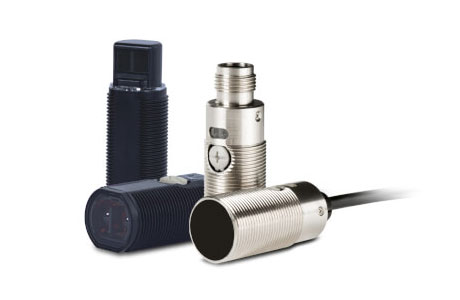
Omron E3FA / E3FB / E3RA / E3RB — Cylindrical Photoelectric Sensors
- Sensing Methods: Diffuse reflective, retro-reflective, and background suppression.
- Sensing Distance: Up to 1,000 mm for diffuse reflective, 4,000 mm for retro-reflective, and up to 500 mm for coaxial retro-reflective.
- Response Time: 0.5 ms
Cylindrical sensors designed for packaging, assembly lines, and industrial automation applications.
🔘 View E3FA / E3FB / E3RA / E3RB Series Models →
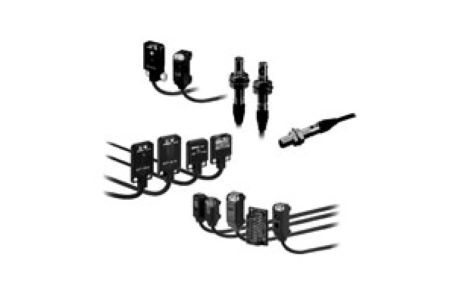
Omron E3T Series — Ultracompact Photoelectric Sensors
- Sensing Methods: Diffuse reflective, background suppression, through-beam, limited reflective, retro-reflective.
- Sensing Distance: Varies by model, up to 1,000 mm for through-beam models.
- Voltage: 12–24 VDC
- Output: NPN / PNP
Miniature sensors designed for automation systems where installation space is limited.
🔘 View E3T Series Models →
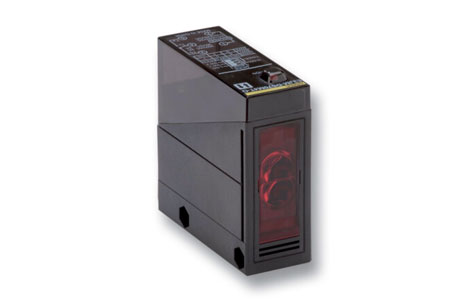
Omron E3JM Series — Multi-voltage and Relay Output Sensors
- Voltage: 12–240 VDC / 24–240 VAC.
- Output: Relay / Solid-state Relay.
- Sensing Distance: Up to 10,000 mm (through-beam), 700 mm (diffuse reflective), 4 m (retro-reflective).
Industrial-grade, high-voltage sensor ideal for mixed AC/DC automation panels.
🔘 View E3JM Series Models →
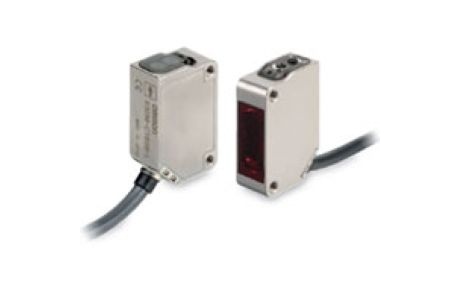
Omron E3ZM Series — Stainless Steel Photoelectric Sensors
- Sensing Distance: Up to 500 mm (E3ZM-B) and 20 m (E3ZM-C Through-beam)
- Output: PNP / NPN
- Protection: IP67 / IP69K
Stainless steel sensors designed for hygienic environments such as food and pharmaceutical industries.
🔘 View E3ZM Series Models →
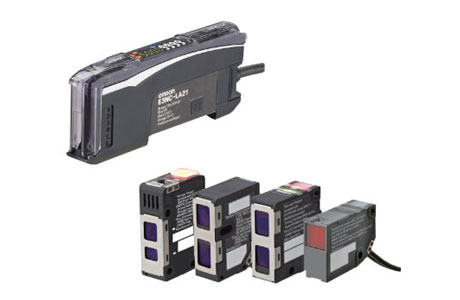
Omron E3NC Series — Smart Laser Sensors
- Sensing Distance: Up to 1.2 m for diffuse-reflective, 70±15 mm for limited reflective, and 8 m for coaxial retro-reflective.
- Voltage: 10–30 VDC.
- Output: NPN / PNP.
- Protection: IP65 / IP67.
High-precision laser sensors designed for fine object detection and positioning tasks.
🔘 View E3NC Series Models →
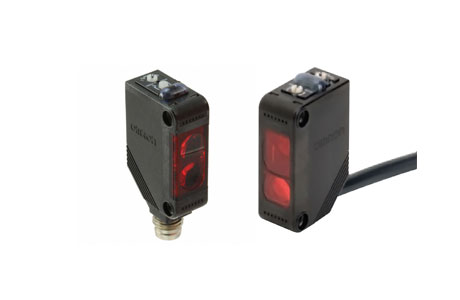
Omron E3Z-LS Series — Compact Photoelectric Sensor
- Sensing Method: Distance-settable.
- Output Types: NPN and PNP; Sensing Distance: Up to 200 mm.
- Response Time: 1 ms max.
- Connection: Pre-wired or M8 connector. rating
🔘 View E3Z-LS Series Models →
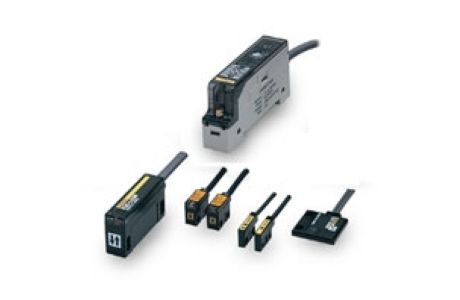
Omron E3C Series — High-Accuracy Diffuse and Convergent Sensors
- Sensing Range: Up to 2 m (through-beam), 100 mm (diffuse), 30 ± 3 mm (convergent)
- Light Source: Infrared LED (940–950 nm), Red LED (680 nm for convergent)
- Protection: IP50 to IP66 (model-dependent, indoor use only)
High-accuracy reflective sensors for optical inspection and small object detection. rating
🔘 View E3C Series Models →
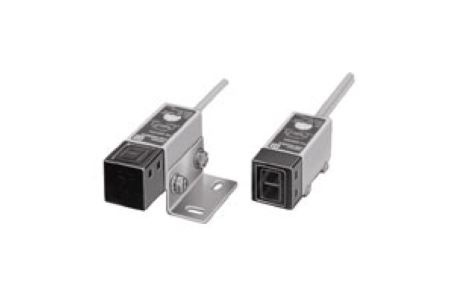
Omron E3S Series — Industrial Photoelectric Sensors
- Sensing Distance: Up to 5 m (through-beam), 0.1–2 m (retro), 100–300 mm (diffuse), 30–250 mm (convergent)
- Light Source: Infrared LED (950/945 nm), Red LED (660 nm)
- Response Time: Fast 1–3 ms
- Output: NPN/PNP
Durable sensors designed for conveyors and heavy industrial machinery. rating
🔘 View E3S Series Models →
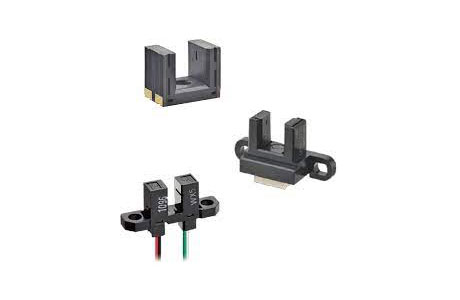
Omron EE Series — Photomicro Sensors
- Sensing Distance: 5 mm (slot width typical)
- Output: NPN, PNP.
- Response Time: 0.17 ms.
- Light Type: Infrared; Dimensions: Varies by shape (Straight, T-shaped).
Miniature photomicrosensors for compact, high-speed position detection in assembly automation. rating
🔘 View EE Series Models →
Omron Photoelectric Sensor Suppliers
🛠️ Get Quotes Instantly from Omron Vendors

✔ Verified🌟 Trusted Vendor
Deals in PAN India
Dealing Photoelectric Sensor Brands: Omron, Autonics, Leuze

✔ Verified🌟 Trusted Vendor
Deals in PAN India
Dealing Photoelectric Sensor Brands: Omron, Autonics, Pepperl Fuchs, Leuze, Sick, Banner

✔ Verified🌟 Trusted Vendor
Deals in PAN India
Dealing Photoelectric Sensor Brands: Autonics, Omron

✔ Verified🌟 Trusted Vendor
Deals in South India
Dealing Photoelectric Sensor Brands: Omron, Autonics, Sick, Telemecanique

✔ Verified🌟 Trusted Vendor
Deals in South India
Dealing Photoelectric Sensor Brands: Omron
Top Omron Photoelectric Sensor Models

E3Z-R61 2M
- Sensing Method: Retro Reflective
- Sensing Distance: 4 m
- Output: Relay
- Connection: 2M Cable

EE-SX674
- Sensing Method: Slot Sensor
- Sensing Distance: 5 mm
- Output: NPN
- Connection: PCB Mount

E3JK-R4M1
- Sensing Method: Retro Reflective
- Sensing Distance: 4 m
- Output: Relay
- Connection: Terminal
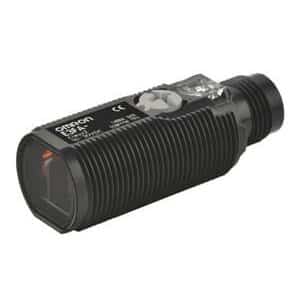
E3FA-RP21
- Sensing Method: Retro Reflective
- Sensing Distance: 4 m
- Output: PNP
- Connection: M12 Connector

E3T-ST12 2M
- Sensing Method: Diffuse Reflective
- Sensing Distance: 300 mm
- Output: NPN
- Connection: 2M Cable

E3JK-RR12 2M
- Sensing Method: Retro Reflective
- Sensing Distance: 12 m
- Output: Relay
- Connection: 2M Cable
Types of Proximity Sensors
Photoelectric sensors are available in different sensing configurations based on how the light beam is transmitted and received. Each type is designed for specific industrial detection applications.
Diffuse Reflective Photoelectric Sensors
Diffuse reflective sensors detect objects when the emitted light beam reflects directly from the target surface back to the receiver. These sensors are commonly used for short-distance detection in packaging machines, conveyors, and assembly lines.
Retro-Reflective Photoelectric Sensors
Retro-reflective sensors operate using a reflector placed opposite the sensor. The emitted light travels to the reflector and returns to the receiver. When an object interrupts this light path, the sensor detects the presence of the object.
Through-Beam Photoelectric Sensors
Through-beam sensors use separate emitter and receiver units placed opposite each other. When an object blocks the light beam between them, detection occurs. This type offers the longest sensing distance and high detection reliability.
Applications of Photoelectric Sensors
Photoelectric sensors are widely used in industrial automation systems where reliable non-contact object detection is required.
Common applications include:
-
Conveyor belt object detection
-
Packaging and labeling machines
-
Robotics and pick-and-place systems
-
Assembly line automation
-
Material handling systems
-
Bottle detection in filling machines
-
Part counting in production lines
Omron Photoelectric Sensor FAQs
Below are some frequently asked questions about Omron photoelectric sensors used for reliable non-contact object detection in industrial automation systems.
What is a photoelectric sensor?
A photoelectric sensor is an optical detection device that uses a light beam to detect the presence, position, or movement of objects without physical contact.
What are the main types of photoelectric sensors?
The three main types are diffuse reflective sensors, retro-reflective sensors, and through-beam sensors. Each type uses a different optical detection principle.
Where are photoelectric sensors used?
Photoelectric sensors are commonly used in industrial automation applications such as conveyors, packaging machines, robotics, assembly lines, and material handling systems.
What is the sensing distance of photoelectric sensors?
The sensing distance varies depending on the sensor type and model. Through-beam sensors generally offer the longest detection range, while diffuse sensors are used for shorter distances.
Why are Omron photoelectric sensors widely used?
Omron photoelectric sensors are widely used because they provide stable detection performance, durable industrial design, and multiple sensing configurations suitable for various automation applications.