
Pepperl Fuchs Photoelectric Sensors – Diffuse & Background Suppression
Pepperl Fuchs photoelectric sensors use controlled optical transmission and reception principles to detect objects across defined industrial automation applications. These sensors operate through through-beam, retro-reflective, or diffuse principles using emitters, receivers, optical filters, defined housings, and connector or cable interfaces suitable for machine integration across varied detection distances and target conditions. The Pepperl Fuchs Photoelectric Sensor, manufactured by Pepperl Fuchs, incorporates optical transmission paths, aligned emitter–receiver elements, standardized mounting formats, and discrete switching outputs referenced through the Pepperl Fuchs lineup in India.

Technical classifications include the p&f photoelectric sensor used for short to long sensing ranges, with structural definitions covering cylindrical or rectangular housings, adjustable optical axes, and wiring interfaces configured for PNP or NPN control integration within automation systems. A P&F photoelectric sensor functions as optical sensing technology structured around emitter–receiver components classified under photoelectric detectors interfaced through standardized discrete outputs for industrial automation.
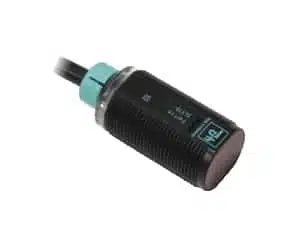
Pepperl Fuchs GLV18-55/115/120
- Type: Retro-reflective Photoelectric Sensor
- Sensing Distance: 4 meters
- Output: PNP
- Operating voltage: 10 to 30 VDC
- Light type: Visible Red Light
- Switching Frequency: 500Hz
- Electrical connection: 2-meter cable type

Pepperl Fuchs GLV18-8-450/115/120
- Type: Diffuse mode sensor
- Detection range: 50 … 450 mm
- Output: 2 PNP
- Operating voltage: 10 to 30 VDC
- Light type: Visible Red Light
- Switching Frequency: 500Hz
- Connection: 2 m fixed cable
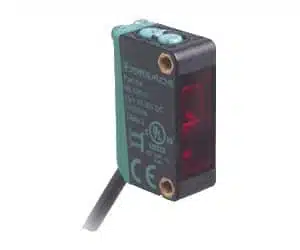
Pepperl + Fuchs ML100-55/102/115
- Type: Retroreflective sensor
- Detection range: 0 … 5 m
- Output: PNP
- Operating voltage: 10 to 30 VDC
- Light type: LED
- Switching Frequency: 1000 Hz
- Connection: 2 m fixed cable
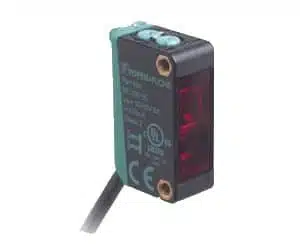
Pepperl + Fuchs ML100-55-103-115a
- Type: Retroreflective sensor
- Detection range: 0 … 5 m
- Output: PNP
- Operating voltage: 10 to 30 VDC
- Light type: LED
- Switching Frequency: 1000 Hz
- Connection: M8 connector, 4-pin
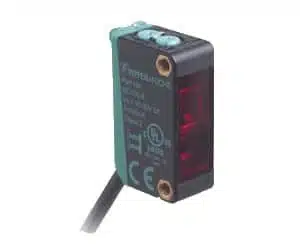
Pepperl Fuchs ML100-8-1000-RT/103/115
- Type: Diffuse photoelectric sensor
- Operating Voltage: 10-30VDC
- Sensing Distance: 1000mm (1 meter)
- Output: PNP
- Light: Visible Red Light
- Switching Frequency: 1000Hz
- Electrical Connection: 2-meter cable type
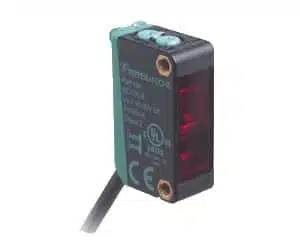
P&F ML100-8-H-350-RT/103/115
- Type: Background Suppression
- Operating Voltage: 10-30VDC
- Output: PNP
- Light: Visible Red Light
- Switching Frequency: 500 Hz
- Response time: 1 ms
- Electrical Connection: 2 m fixed cable
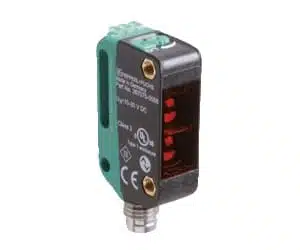
P&F OBT300-R100-2EP-IO-V31-L
- Type: Triangulation Sensor (BGS)
- Sensing Distance: 300mm
- Output: PNP
- Operating Voltage: 10 to 30VDC
- Light Type: Visible Red Light
- Switching Frequency: 1650Hz
- Electrical Connection: Connector Type
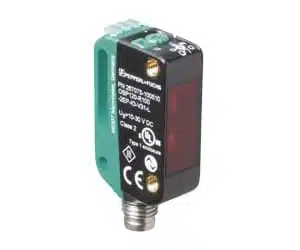
P&F OBP120-R100-2EP-IO-V31-L
- Detection range : 25 … 120 mm
- Light source: laser diode
- Light type: modulated visible red light
- Interface type: IO-Link
- Switching frequency: 3300 Hz
- Response time: 125 µs
- Switching voltage: max. 30 V DC
- Connection: M8 x 1 connector, 4-pin
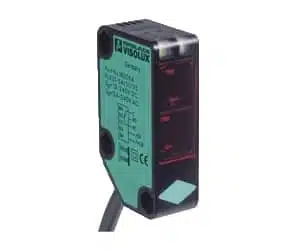
P&F RLK31-54/25/31/115
- Detection range : 0 … 9000 mm
- Light source: LEDLight type: red light
- Operating voltage: 12 … 240 V AC/DC
- Signal output: Relay
- Switching type: light-on
- Switching frequency: 20 Hz
- Connection: 2 m fixed cable
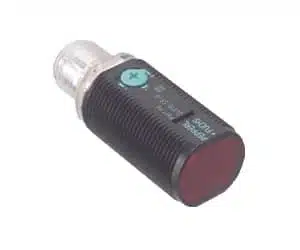
P&F GLV18-55-G/73/120
- Detection Range : 0 … 5 m
- Light type: red light
- Operating voltage: 12 … 240 V AC/DC
- Signal output: PNP
- Switching type: light/dark on
- Switching frequency: 1 kHz
- Connection: 4-pin, M12 x 1 connector
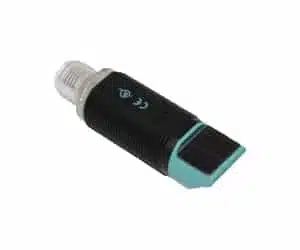
P&F GLV18-55-S/73/120
- Detection Range : 0 … 3.5 m
- Light type: red light
- Operating voltage: 10 … 30 V DC
- Signal output: PNP
- Switching type: light/dark on
- Switching frequency: 500 Hz
- Connection: 4-pin, M12 x 1 connector
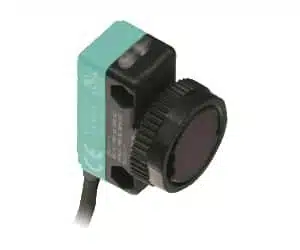
Pepperl + Fuchs ML17-54/115/136
- Detection Range : 0 … 3.5 m
- Light type: red light
- Operating voltage: 10 … 30 V DC
- Signal output: push-pull
- Switching type: light/dark on
- Switching frequency: 500 Hz
- Connection: 2 m fixed cable
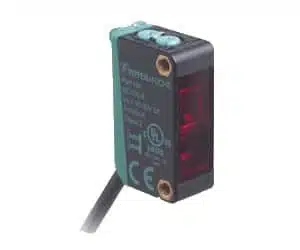
Pepperl + Fuchs ML100-55/103/115
- Sensor Type: Reflective Photo Sensor
- Sensing distance: 5 meters
- Output: 1 PNP
- Operating voltage: 10-30VDC
- Light color: Red
- Switching frequency: 1000Hz
- Connection: Pre-wired with a 2-meter PVC cable
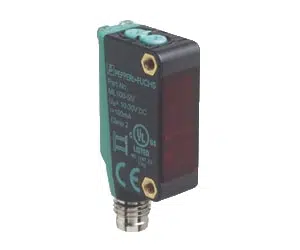
Pepperl + Fuchs ML100-55/95/103
- Sensor Type: Retroreflective sensor
- Detection Range: 0 … 5 m
- Output: 1 PNP
- Operating voltage: 10-30VDC
- Light color: Red
- Switching frequency: 1000Hz
- Connection: Connector M8 x 1 , 4-pin
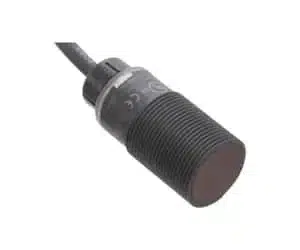
Pepperl + Fuchs OBG3500-18GK40-E0
- Detection Range: 0 … 3.5 m
- Output: NPN
- Operating voltage: 10 … 30 V DC
- Switching frequency: 500 Hz
- Connection: 2 m fixed cable, PVC
- Response time: ≤ 1 ms
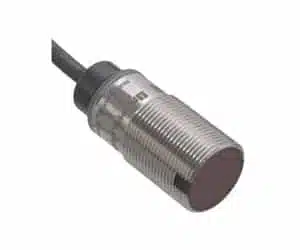
Pepperl + Fuchs OBG3500-18GM40-E0
- Detection Range: 0 … 3.5 m
- Output: NPN
- Operating voltage: 10 … 30 V DC
- Switching frequency: 500 Hz
- Connection: 2 m fixed cable
- Response time: ≤ 1 ms
Our Photoelectric Sensor Related Brands




Frequently Asked Questions
How do you test a photoelectric sensor?
To test a photoelectric sensor, first connect a multimeter in resistance mode. Attach the meter to the sensor’s two leads. Observe resistance changes by covering the sensor. Try it in different light conditions, like turning lights off. An auto-ranging meter is ideal for this, due to varied resistance levels.
Why is the photoelectric effect?
The photoelectric effect happens when light hits a metal surface, causing electrons to be ejected. It’s observed that only specific light frequencies can eject these electrons. This phenomenon reveals how light and matter interact at a fundamental level.
Is photoelectric effect DC or AC?
The photoelectric effect generates a flow of electrons, creating an electrical current. This electron movement results in direct current (DC), not alternating current (AC). It’s a process where light induces a direct flow of electrons in one direction.
For more information or questions about our P&F Photoelectric Sensors please feel free to contact us at IndMALL.