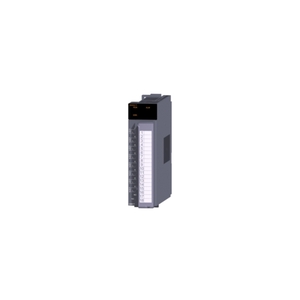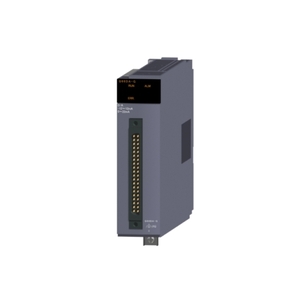
Mitsubishi Q68TD-G-H01 - PLC Analog Output Module
The Mitsubishi Q68TD-G-H01 Programmable Logic Controller features 8 thermocouple input channels supporting E, B, J, K, N, R, S, and T types for accurate temperature measurement. Developed by Mitsubishi, it belongs to the Mitsubishi Programmable Logic Controller product line within the MELSEC-Q Series. The module consumes 0.49 A current, weighs 0.18 kg, and is designed with compact 27.4 mm width and 90 mm depth for industrial integration.

| Brand | Mitsubishi |
| Product Type | PLC Analog Output Module |
| Product | Q68TD-G-H01 |
Mitsubishi PLC Analog Output Module Q68TD-G-H01 Technical Specifications
| Specification | Value |
|---|---|
| Series | MELSEC-Q SERIES |
| Type | TEMPERATURE INPUT |
| Occupied I/O Points on PLC | 16 |
| Integrated Analogue Inputs | 8 |
| Int. Current Consumption (A) | 0,49 |
| Depth (mm) | 90 |
| Weight (kg) | 0,18 |
| Width (mm) | 27,4 |
| Height (mm) | 98 |
| Input Type | THERMOCOUPLE |
| Applicable Thermocouple Type | E, B, J, K, N, R, S, T |
The Mitsubishi Q68TD-G-H01 Programmable Logic Controller is a dedicated temperature input module designed for precise industrial control. It includes 8 analog inputs for thermocouple types such as K, J, E, B, N, R, S, and T. Operating at 24V DC with 0.49A current consumption, this Mitsubishi PLC provides stable temperature readings and reliable process control within the MELSEC-Q Series.
The Mitsubishi Q68TD-G-H01 PLC is widely used in process industries, heating systems, packaging, and assembly automation. Its thermocouple compatibility allows accurate monitoring across multiple temperature points, ensuring consistent performance in applications requiring real-time thermal regulation. The compact structure and screw-type wiring simplify installation while maintaining dependable connectivity in demanding industrial environments.
The Mitsubishi Q68TD-G-H01 Programmable Logic Controller represents Mitsubishi’s quality in industrial temperature management and automation. As part of the MELSEC-Q Series, it delivers accuracy, durability, and consistent signal conversion for efficient operations. Engineers prefer this model for dependable temperature input performance, seamless system integration, and long-term operational stability in industrial automation setups.