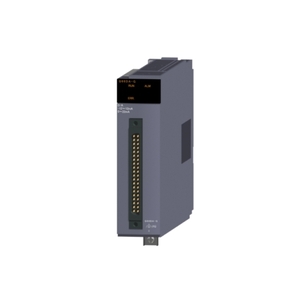
Mitsubishi Q68CT - PLC Analog Output Module
The Mitsubishi Q68CT Programmable Logic Controller features 8 current transformer input channels with a 0–600000 mA input range for precise AC current monitoring and control. Built by Mitsubishi, it is part of the Mitsubishi Programmable Logic Controller family within the MELSEC-Q Series. The module operates on AC current type, consumes 0.35 A current, and includes screw-type wiring for dependable installation in industrial automation systems.
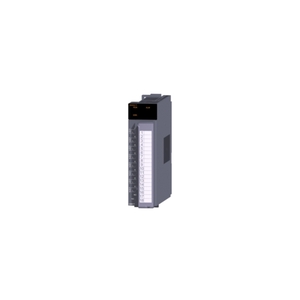
| Brand | Mitsubishi |
| Product Type | PLC Analog Output Module |
| Product | Q68CT |
Mitsubishi PLC Analog Output Module Q68CT Technical Specifications
| Specification | Value |
|---|---|
| Series | MELSEC-Q SERIES |
| Type | CURRENT TRANSFORMER INPUT |
| Occupied I/O Points on PLC | 16 |
| Integrated Analogue Inputs | 8 |
| Input Current Range (mA) | 0-600000 |
| Wiring | SCREW |
| Int. Current Consumption (A) | 0,35 |
| Depth (mm) | 112 |
| Weight (kg) | 0,19 |
| Width (mm) | 27,4 |
| Height (mm) | 98 |
| Current Type | AC |
The Mitsubishi Q68CT Programmable Logic Controller is a precision current transformer input module designed for measuring and monitoring electrical currents in industrial environments. It supports 8 input channels with a 0–600000 mA range and operates under AC current type configurations. As part of the MELSEC-Q Series, this Mitsubishi PLC delivers reliable and consistent performance across automation control systems.
The Mitsubishi Q68CT PLC is used in automation processes such as motor control, energy monitoring, and current feedback applications. Its compact design, 27.4 mm width, and 112 mm depth enable easy integration within control cabinets. The screw-type wiring ensures stable electrical connections and accurate current detection across demanding industrial installations.
The Mitsubishi Q68CT Programmable Logic Controller demonstrates Mitsubishi’s reliability and engineering precision in industrial automation. Belonging to the MELSEC-Q Series, it ensures long-term durability, precise current input conversion, and compatibility with advanced automation systems. Engineers trust this model for its stable performance and seamless integration in electrical measurement and monitoring systems.