
Balluff Photoelectric Sensors – Background Suppression Sensor
The Balluff Photoelectric Sensor, manufactured by Balluff, applies operating principles such as through-beam transmission, retro-reflective return paths, and diffuse reflection to identify object presence, measure positioning, or verify material characteristics across machine environments. These sensors integrate optical emitters, photodiodes, processing electronics, and standardized mechanical housings in cylindrical or rectangular mounting formats, with electrical interfaces that include PNP, NPN, or relay-based switching outputs for PLC or controller integration.
One reference to Balluff anchors the entity semantically within the larger sensor and automation portfolio. Classification variants span background suppression types, reflective sensing modes, mark detection functions, and emitter–receiver paired architectures, depending on application requirements. A Balluff Photoelectric Sensors are defined by optical detection technology, an emitter-receiver structural configuration, classified sensing modes, and standardized industrial interface types.
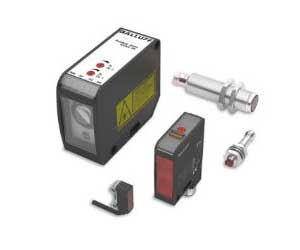
Balluff Photoelectric Sensors: Diffuse
- Dimensions: Ranging from Ø 8 x 40 mm to Ø 35 x 93 mm.
- Range: Varies from 0 to 2000 mm.
- Light Type: Includes LED (red/infrared) and Laser red light.
- Interface: PNP/NPN, normally open or closed.
- Connection: Cable or Connector types (M8x1-Male, M12x1-Male, 3-pin, 4-pin).
Balluff Diffuse Sensor with Background Suppression
- Range: 25 to 2000 mm.
- Light Type: LED (red), Laser red light, Infrared.
- Dimensions: From 17 x 50 x 50 mm to 28.5 x 80.5 x 62 mm.
- Interface: PNP/NPN, normally open or closed.
- Connection: Connector, M12x1-Male, 4-pin.
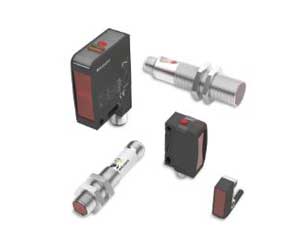
Balluff Retroreflective Sensors
- Range: 0 to 25 meters.
- Light Type: LED (red), Laser red light, LED infrared.
- Dimensions: From Ø 18 x 71.5 mm to 17 x 50 x 50 mm.
- Interface: PNP/NPN, normally open or closed.
- Connection: Cable (2.00 m, PVC) or Connector (M12x1-Male, 4-pin).
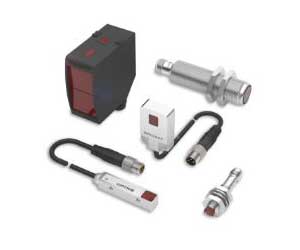
Balluff Through-beam Sensors
- Range: 0 to 50 meters.
- Light Type: LED (red), Laser red light, Infrared.
- Dimensions: From Ø 18 x 75 mm to 20 x 85 x 33.7 mm.
- Interface: PNP/NPN, normally open or closed.
- Connection: Cable (2.00 m, PVC) or Connector (M12x1-Male, 4-pin).
Product List:
Model No |
Image |
Series |
Dimension |
Principle of optical operation |
Range |
Connection |
|---|---|---|---|---|---|---|
| BOS00K0 | 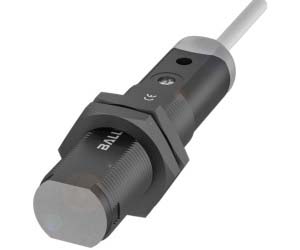
|
18KF | Ø 18 x 77 mm | Diffuse sensor, energetic | 0…700 mm | Cable, 2.00 m, PVC |
| BOS01ZJ | 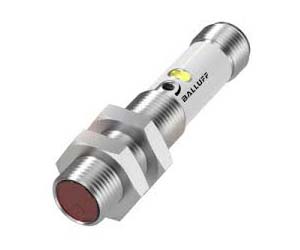
|
12M | Ø 12 x 60 mm | Diffuse sensor, energetic | 1…400 mm | Connector, M12x1-Male, 4-pin |
| BOS002H | 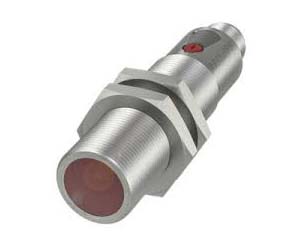
|
18M | Ø 18 x 75 mm | Diffuse sensor, triangulation | 30…150 mm | Connector, M12x1-Male, 4-pin |
| BOS00K3 | 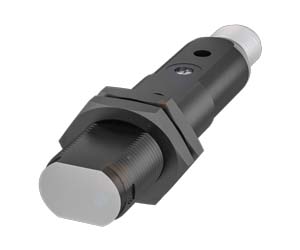
|
18KF | Ø 18 x 81.5 mm | Retroreflective sensor | 0…4.5 m | Connector |
| BOS01KM | 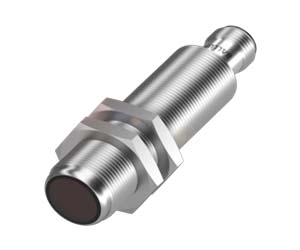
|
18E | Ø 18 x 75 mm | Through-beam sensor (receiver) | 0…20 m | Connector, M12x1-Male, 4-pin |




Frequently Asked Questions
What is retroreflective sensor?
A retroreflective sensor is a device that detects objects by reflecting light back from a reflector. It sends out a light beam, which bounces off a reflector and returns. When an object interrupts this beam, the sensor activates. This technology is ideal for precise object detection in various applications.
What is the difference between optical sensor and photoelectric sensor?
Optical sensors use light to detect changes in or the presence of objects, often employing fiber optics. Photoelectric sensors, on the other hand, use light beams and photodiodes for direct object detection. While optical sensors focus on light transmission through fibers, photoelectric sensors rely on light interruption or reflection for sensing.
How do I choose a photoelectric sensor?
To choose a photoelectric sensor, consider the application’s specific needs. Assess the type of object to detect, its size, and distance. Select between diffuse, retroreflective, or through-beam sensors based on range and environment. Also, consider the sensor’s response time and environmental factors like dust, moisture, and ambient light.
For more information on our Balluff Photoelectric Sensors please get in touch with us.