Autonics Proximity Sensors
Autonics proximity sensors are widely used in industrial automation for reliable non-contact detection of metal and non-metal objects in manufacturing systems. These Proximity Sensors detect the presence or absence of objects without physical contact, making them suitable for conveyor systems, packaging machines, material handling systems, and automated production lines.
The Autonics proximity sensor portfolio includes inductive, capacitive, and magnetic sensing technologies designed for stable and consistent detection in demanding industrial environments. These sensors are available in various sensing distances, mounting sizes, and output configurations to meet different industrial automation requirements.

Autonics Proximity Sensor Series
Autonics Proximity Sensors: PR Series
- Sensing Performance: Sensing distances (1.5 mm to 15 mm).
- Installation: Flush and non-flush installation options.
- Size Range: Diameters from Ø 8 mm to Ø 30 mm.
- Response Speed: Frequencies up to 1.5 kHz.
- Connection: M12 Connector
- Indication: Integrated operation indicator. (red).
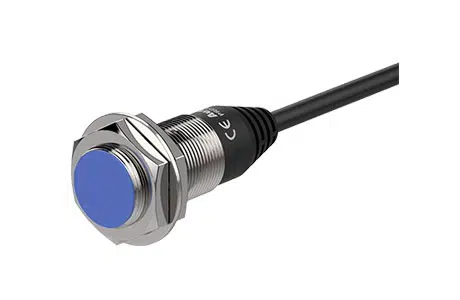
Autonics Inductive Proximity Sensor: PRD Series
- Sensing Performance: Sensing distances range from 2 mm to 25 mm.
- Installation Options: Available in both flush and non-flush types.
- Size Variability: Sensing side diameters from Ø 8 mm to Ø 30 mm.
- Response Frequency: Ranges from 100 Hz to 1 kHz.
- Connection: Equipped with M12 Plug connectors.
- Power Supply: 12 – 24 VDC operating voltage
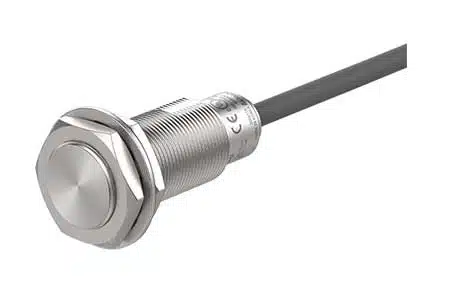
Autonics Proximity: PRFD Series
- Sensing Performance: Sensing distances from 2 mm to 12 mm.
- Size Options: Diameters ranging from Ø 8 mm to Ø 30 mm.
- Response Speed: Frequency response from 50 Hz to 150 Hz.
- Connection Type: M12 connectors.
- Indicators: Stability (green) and operation (red) indicators.
- Power Supply: 12 – 24 VDC, ripple P-P ≤ 10%.
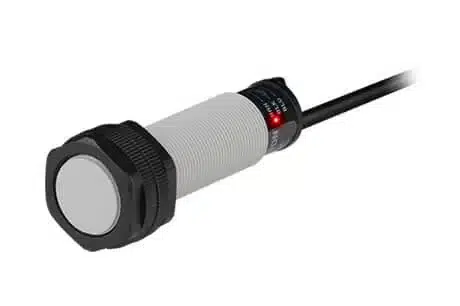
Autonics Capacitive Proximity Sensor: CR Series
- Sensing Range: 8 mm to 15 mm sensing distances.
- Design: Sensing side diameters of Ø 18 mm and Ø 30 mm.
- Response Frequency: 50 Hz for DC 3-Wire, 20 Hz for AC 2-Wire
- Protection: Surge protection, with IP66/IP65 protection structure.
- Power Supply: 12 – 24 VDC for DC, 100 – 240 VAC for AC models.
- Connection: Cable types with Ø 4 mm and Ø 5 mm options, 2 m length.
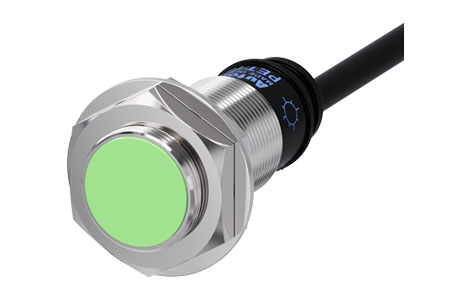
Proximity Switch Autonics– PET18-5 Series
- Performance: 5 mm transmitting distance, ≤ 1 ms response time.
- Setting Range: 1 to 4.5 mm.
- Indicator: Operation indicator (red).
- Durability: Operates in -25 to 70 ℃, IP67 rated.
- Connection: Ø 5 mm, 2-wire, 2 m cable.
- Material: Nickel-plated brass, PBT, PVC cable.
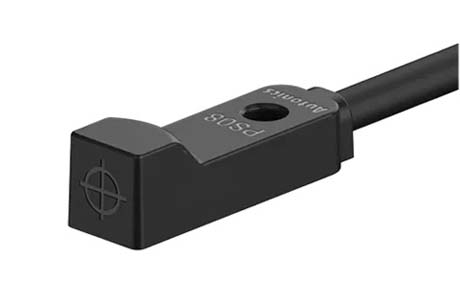
Autonics Proximity Switch – PS Series
- Sensing Range: Sensing distances from 2.5 mm to 30 mm.
- Design: Sensing side lengths from 8 mm to 50 mm.
- Response Speed: Response frequencies from 50 Hz to 1 kHz.
- Output: Control output up to 200 mA, residual voltage ≤ 1.5 V.
- Power Supply: 12 – 24 VDC, operating voltage range 10 – 30 VDC.
- Connection: Cable types ranging from Ø 2.5 mm to Ø 5 mm, up to 2 m length.
Autonics Proximity Sensor Suppliers

✔ Verified🌟 Trusted Vendor
Deals in PAN India
Dealing Proximity Sensor Brands: Autonics, Omron

✔ Verified🌟 Trusted Vendor
Deals in PAN India
Dealing Proximity Sensor Brands: Omron, Autonics, Pepperl Fuchs, Leuze, Sick, Wenglor

✔ Verified🌟 Trusted Vendor
Deals in PAN India
Dealing Proximity Sensor Brands: Omron, Autonics, Leuze

✔ Verified🌟 Trusted Vendor
Deals in South India
Dealing Proximity Sensor Brands: Omron, Autonics, Sick, Telemecanique

✔ Verified
Deals in PAN India
Dealing Proximity Sensor Brands: Leuze, Autonics
Top Autonics Proximity Sensor Models
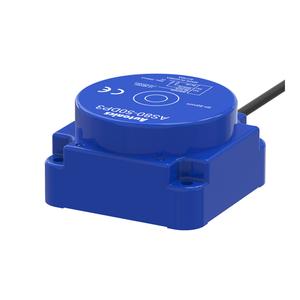
AS80-50DN3
- Type: Rectangular Inductive
- Sensing Distance: 50 mm
- Output: NPN
- Power: 12–24V DC
- Protection: IP67

AS80-50DP3
- Type: Rectangular Inductive
- Sensing Distance: 50 mm
- Output: PNP
- Power: 12–24V DC
- Protection: IP67

CR18-8AC
- Type: Capacitive
- Sensing Distance: 8 mm
- Output: AC Type
- Size: M18
- Protection: IP67

CR18-8AO
- Type: Capacitive
- Sensing Distance: 8 mm
- Output: AC NO
- Size: M18
- Protection: IP67

CR18-8DN
- Type: Capacitive
- Sensing Distance: 8 mm
- Output: NPN
- Size: M18
- Protection: IP67

CR18-8DP
- Type: Capacitive
- Sensing Distance: 8 mm
- Output: PNP
- Size: M18
- Protection: IP67
Types of Autonics Proximity Sensors
Autonics proximity sensors are available in different sensing technologies used in industrial automation systems. The most common types are inductive and capacitive proximity sensors, designed to detect different materials in machines and production lines.
Autonics Inductive Proximity Sensors
Autonics inductive proximity sensors are designed to detect metal objects without physical contact. These sensors are widely used in machine automation, conveyor systems, and packaging equipment for reliable metal detection.
Autonics Capacitive Proximity Sensors
Autonics capacitive proximity sensors can detect both metal and non-metal materials such as plastic, glass, liquid, and powder. They are commonly used in level detection, material sensing, and packaging applications.
Applications of Autonics Proximity Sensors
Autonics proximity sensors are commonly used in:
-
Packaging machines
-
Conveyor systems
-
Industrial automation
Autonics Proximity Sensor FAQs
What is the distance range of Autonics proximity sensor?
The distance range of Autonics proximity sensors varies with the model and detection method. For example, the inductive proximity sensors can detect objects at distances ranging from a few millimeters up to approximately 40 mm. On the other hand, capacitive proximity sensors have a range from a few millimeters to several centimeters.
How to test if PR30-15AO(AC 2-wire, proximity sensor) is working properly or not?
To test if a PR30-15AO AC 2-wire proximity sensor is working properly, you can follow these steps:
- Power on the sensor and ensure that the LED indicator is illuminated, indicating that the sensor is receiving power.
- Bring a metallic object (such as a screwdriver or a metal plate) near the sensor’s active surface.
- The LED indicator should change state or turn off, indicating that the sensor has detected the metallic object.
- Move the metallic object away from the sensor, and the LED indicator should return to its original state.
- Repeat this test multiple times to ensure consistent results.
If the sensor is not functioning properly, it could be due to a faulty sensor, improper installation, or external interference. In such cases, it’s recommended to consult the manufacturer’s user manual or contact their technical support for further assistance.
Can the proximity sensor PR series detect aluminum, steel and acrylic resins?
Yes, Aluminium, steel, and acrylic resins are conductive materials that the PR series of proximity sensors can identify. But it’s crucial to take into account some factors, such as the target object’s size, shape, and composition.
Why PNP type is more widely used than NPN type in the proximity sensor?
What is the diameter of the inductive proximity sensor?
Small sensors with a diameter of 3 mm and larger ones with a diameter of 80 mm or more are both available in a variety of sizes.
For inquiries or more information about our range of Autonics Proximity Sensors, please call us at +91 79955 44066.