
Panasonic Fiber Optic Sensor: Digital Fiber Sensors
IndMALL Automation offers the Panasonic Fiber Optic Sensor series, including the FX 100, FX 300, FX-410, FX-500 Ver.2, and FX-550L Series. The FX 100 Series features efficient power consumption and a quick response time, suitable for precise sensing. The FX 300 Series is known for its long-range sensing and easy operation, while the FX-410 Series offers selectable response times and clear LED indicators.
The FX-500 Ver.2 Series provides adjustable response times and a high-contrast display, and the FX-550L Series includes a variable timer function and an incident light intensity display. These series are designed for reliability and versatility in industrial sensing applications. Choose IndMALL Automation for top-quality Panasonic Digital Fiber Optic Sensors, ensuring efficient and accurate sensing solutions.

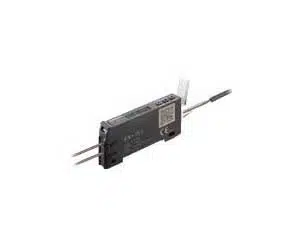
Panasonic Fiber Optic Sensor: FX 100 Series
- Supply Voltage: 12 to 24 V DC ±10%, Ripple P-P 10% or less.
- Power Consumption: Normal operation: 720 mW or less; ECO mode: 600 mW or less.
- Output: PNP/NPN open-collector transistor, max current 100 mA.
- Response Time: Emission frequency 0: 250 µs or less; other frequencies available.
- Operation Indicator: Orange LED (lights up when output is ON).
- Digital Display: 4 digits (green) + 4 digits (red) LCD display.
- Cable Length: Up to 100 meters with 0.3 mm² or more cable.
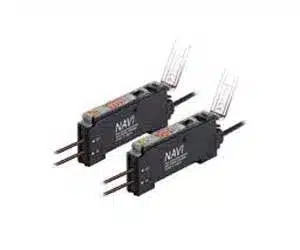
Panasonic Digital Fiber Sensor: FX 300 Series
- Long-Range Sensing: Enabled by a built-in optical lens.
- Optical Communication Function: Allows data copying and saving for up to 16 amplifiers.
- Response Time: 35µs (FX-301HS model).
- Display: 4-digit, 7-segment red LED display and LED indicators.
- Ease of Use: Operated with just two switches – a large jog switch and a mode key.
- Supply Voltage: Single cable supply for up to 16 amplifiers.
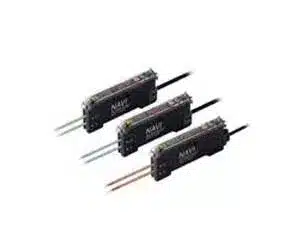
Panasonic Fiber Sensor: FX-410 Series
- Supply Voltage: 12 to 24 V DC ±10%, Ripple P-P 10% or less.
- Power Consumption: Normal operation: 960 mW or less; ECO mode: 840 mW or less.
- Output: NPN open-collector transistor, max sink current 100 mA.
- Response Time: Selectable between 150 µs, 500 µs, and 4.5 ms.
- Operation Indicator: Orange LED; Stability Indicator: Green LED.
- Timer Function: ON-delay / OFF-delay / ONE SHOT timer, variable.
- Cable Length: Up to 100 meters with 0.3 mm² or more cable.
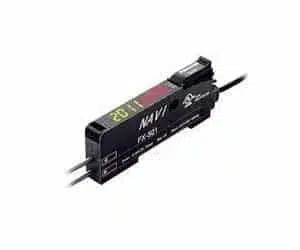
Panasonic Fiber Amplifiers: FX-500 Ver.2 Series
- Response Time: Options from 25 µs to 24 ms, selectable based on application needs.
- Output: NPN/PNP open-collector transistor, max sink/source current 50 mA.
- Supply Voltage: 12 to 24 V DC ±10%, Ripple P-P 10% or less.
- Power Consumption: Normal operation: 960 mW or less; ECO mode: 680 mW or less.
- Display: High-contrast 7-segment LED display for clear visibility.
- Cable Extension: Up to 100 meters with 0.3 mm² or more cable.
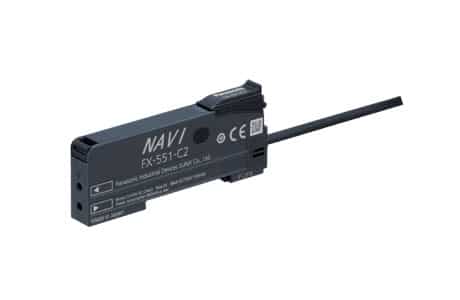
Panasonic Fiber Optic Amplifier: FX-550L Series
- Supply Voltage: 12 to 24 V DC ±10%, Ripple P-P 10% or less.
- Power Consumption: Normal operation: 960 mW or less; ECO mode: 720 mW or less.
- Output: PNP open-collector transistor, max source current 50 mA.
- Response Time: STD: 250 µs or less; selectable up to HYPR: 24 ms or less.
- Incident Light Intensity Display Range: STD: 0 to 4,000; HYPR: 0 to 9,999.
- Timer Function: OFF-delay / ON-delay / One-shot, variable up to 999.9 ms.
- Cable Extension: Up to 20 meters with 0.3 mm² or more cable.
IndMALL Automation offers an extensive range of Panasonic Fiber Optic Sensors, renowned for their precision and reliability. Our Panasonic sensor lineup includes the advanced Panasonic FX100S, a standout in fiber optic technology. These Panasonic Digital Fiber Sensors are designed for high accuracy and durability in various industrial settings.
The optic sensor range we provide is ideal for applications requiring sensitive and precise detection. Our optical fiber and fibre optic sensors are known for their versatility and adaptability. The Panasonic fiber optic series excels in environments where traditional sensors may not perform optimally.
Our fiberoptic sensor models, along with fiber optics sensors and fiber optics sensor products, are tailored to meet diverse sensing needs. At IndMALL Automation, we ensure that our Panasonic fiber sensors offer the highest standards of quality and performance. Choose our Panasonic sensors for reliable and efficient sensing solutions in your industrial processes.
Product List:
| Model No | Image | Output Operation | Power Consumption | Supply Voltage | Output | Operation Indicator |
|---|---|---|---|---|---|---|
| FX-102 | 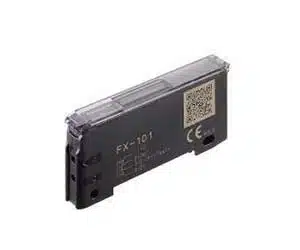 |
Light-ON or Dark-ON | 720 mW or less | 12 to 24 V DC | NPN | Orange LED |
| FX-551 | 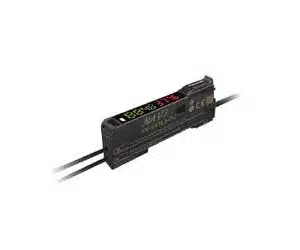 |
Switchable either Light-ON or Dark-ON by L/D mode | 960 mW or less | 12 to 24 V DC +10-15 % Ripple P-P 10 % or less | NPN | Red LED |
| FX-412 | 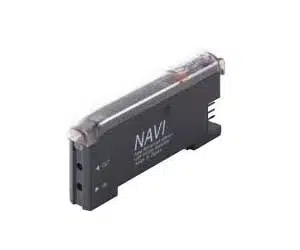 |
Switchable either Light-ON or Dark-ON by L/D mode | 960 mW or less | 12 to 24 V DC ±10 % Ripple P-P 10 % or less | NPN | Orange LED |
| FX-502 | 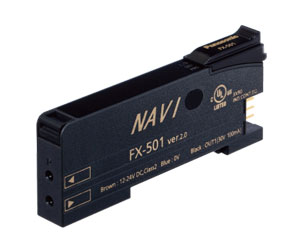
|
Switchable either Detection-ON or Detection-OFF | 0.1 to 2 m 0.328 to 6.562 ft | 10 to 30 V DC | NPN | RED LED |
Frequently Asked Questions
What are the Two Types of Optical Fiber Sensors?
The first type is called “intrinsic.” In these sensors, the fiber itself detects changes. Examples are temperature or strain changes.
The second type is “extrinsic.” Here, the fiber carries light to a sensing element. This element detects changes and sends light back through the fiber.
In short, intrinsic sensors use the fiber to sense directly. Extrinsic sensors use it to transport light to another sensor. Both types are useful in different situations.
How do Optical Fiber Sensors Work?
Fibers are thin strands, much like hair. They carry light from one end to another. When light travels inside, some properties might change if there’s any external effect like temperature or pressure.
In intrinsic sensors, the light changes directly inside the fiber. This change gives us information.
In extrinsic sensors, light goes to a separate sensing part. This part feels the changes and affects the light. The changed light then goes back into the fiber.
To sum up, these sensors watch how light changes and use that to gather information.
What Materials are used in Fiber Optic Sensors?
Fiber optic sensors are made of special materials. Let’s see what they are.
The main part is the fiber itself. It’s made of glass or plastic. Glass fibers are more common and give clearer signals.
The core is the center part of the fiber. It’s where light travels. Around it is the cladding. To protect the fiber, there’s a coating. This is usually made of plastic. It shields the fiber from damage.
In short, glass or plastic, along with coatings, make up a fiber optic sensor. These materials ensure the sensor works well.
What is a Digital Fiber Optic Sensor?
A digital fiber optic sensor is a device that uses fiber optic cables to transmit light for sensing purposes. It converts light changes into digital signals, offering high precision and sensitivity.
These sensors are ideal for challenging environments, as they are immune to electromagnetic interference and can detect minute changes. They are widely used in industrial and medical applications.
Get the best prices for the Panasonic Fiber Optic Sensor or Digital Fiber Sensors.