
Panasonic Color Sensor – Color Mark Sensors
Panasonic color sensors are industrial photoelectric devices designed to detect color differences through reflected light analysis in automation systems.
The Panasonic Color Sensor, manufactured by Panasonic, operates using optical emitters and receivers to measure color intensity, contrast, and chromatic variation, supporting RGB or grayscale evaluation, adjustable sensitivity, fast response time, stable detection under ambient light changes, and electrical outputs compatible with programmable controllers and industrial control circuits, as used across Indian manufacturing environments for sorting, inspection, and process control tasks.
This entity represents a color detection technology built on photoelectric sensing structure, classified as discrete industrial sensors, defined by optical color measurement principles, standardized mounting formats, solid state construction, and signal interfaces such as NPN, PNP, or analog outputs for integration with automation networks and connected control systems within factory automation architectures in India, supporting reliable color based decision logic for machines and inspection equipment across production lines nationwide.
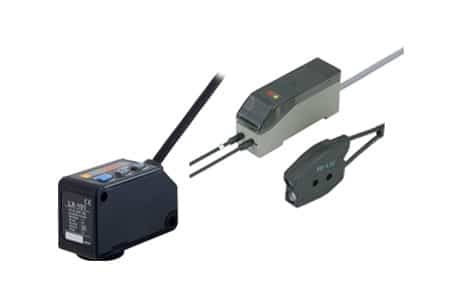
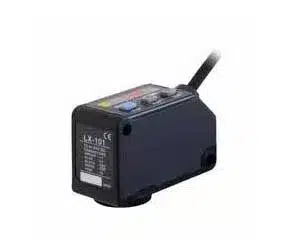
Panasonic Color Sensor: LX-100 Series
- LEDs: Red, Green, Blue.
- Optical System: Coaxial Reflective.
- A/D Converter: 12-Bit; Display: 4-Digit LED.
- Teach-In: Simple with external option.
- Timer: ON/OFF-Delay; Outputs: Two inverse (cable type).
- Size: Compact, M12 or cable type.
- Sensing Range: 10 ± 3 mm; Voltage: 12 to 24 V DC.
- Response Time: 45 µs (mark mode), 150 µs (color mode).
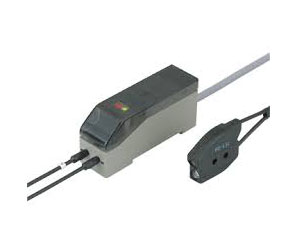
Panasonic Color Mark Sensors FZ-10
- LEDs: Red, Green, Blue.
- Response Time: 1ms; Teach-In Button: For easy sensor adjustment.
- Tolerance Adjuster: 16-step.
- Construction: Miniature; Ambient Light Immunity: High.
- Sensor Life: Long; Timer Function: Included.
- Sensing Range: Various, with fibers from 1 to 8mm spot diameters.
Product List:
| Model No | Image | Spot Size | Sensing Range | Supply Voltage | Output | Digital Display |
|---|---|---|---|---|---|---|
| LX-101 | 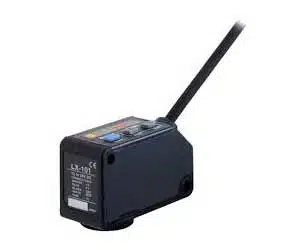 |
1 x 5 mm 0.039 x 0.197 | 10 ± 3 mm 0.394 ± 0.118 in | 12 to 24 V DC ± 10 % Ripple P-P 10 % or less | NPN | 4-digit red LED display |
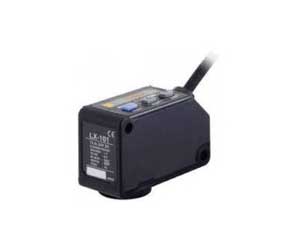
| LX-101-P | 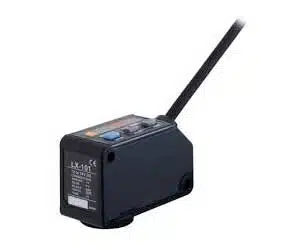 |
1 x 5 mm 0.039 x 0.197 | 10 ± 3 mm 0.394 ± 0.118 in | 12 to 24 V DC ± 10 % Ripple P-P 10 % or less | PNP | 4-digit red LED display |
| LX-101-P-Z | 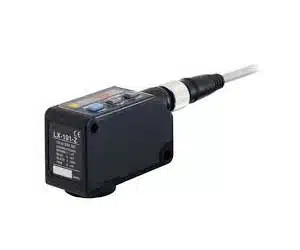 |
1 x 5 mm 0.039 x 0.197 | 10 ± 3 mm 0.394 ± 0.118 in | 12 to 24 V DC ± 10 % Ripple P-P 10 % or less | PNP | 4-digit red LED display |
| LX-101-Z | 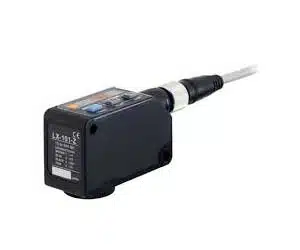 |
1 x 5 mm 0.039 x 0.197 | 10 ± 3 mm 0.394 ± 0.118 in | 12 to 24 V DC ± 10 % Ripple P-P 10 % or less | NPN | 4-digit red LED display |
Frequently Asked Questions
What is Colour Mark Sensor?
They help in precise and quick operations. In short, a color mark sensor “sees” colors and helps machines work accurately.
How Does a Color Sensor Work?
A color sensor is like a tiny camera. It detects colors in objects. How? By using light. The sensor shines light on an object. Then, it measures the reflected light. Different colors reflect light differently. The sensor reads these differences. After reading, it identifies the color.
Here we can take example a red apple reflects more red light. So, the sensor knows it’s red. In a nutshell, color sensors use light to spot and name colors. They help machines “see” and respond to colors.
What is the Range of Color Sensors?
Color sensors can detect many colors. Their range varies by model and type. Some sense basic colors like red, blue, and green. Others can spot a wide range of shades. The range depends on the sensor’s design. Better sensors can identify more colors accurately.
So, before buying, always check the sensor’s range. It tells you how many colors it can detect. In short, color sensors can “see” from a few to many colors. The exact number depends on the sensor.
What are the Main Parts of a Color Sensor?
A color sensor has key parts. First, there’s a light source, often an LED. It shines light on objects. Next, there’s a detector. It senses reflected light from the object. The detector has tiny parts called photodiodes. They capture red, green, and blue light.
Lastly, there’s a circuit. It processes the captured light information. In short, a color sensor has a light, detector, and circuit. Together, they identify colors.
Get the best price for Panasonic Color Sensors.