
Autonics Encoders
Autonics encoders are known for stable performance and consistent output in demanding industrial environments. They are widely used across automation systems where precise motion control and reliable feedback are required for smooth machine operation.
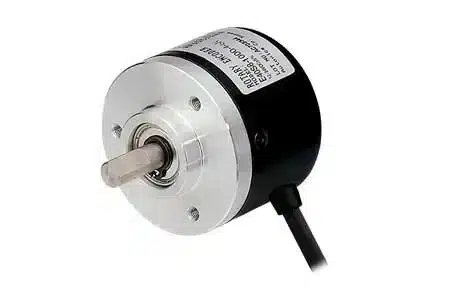
Autonics Encoders Series
Autonics Encoders – E40S Series
- Resolution: 1 to 5,000 PPR.
- Control Output: Totem pole, NPN open collector, Voltage, Line driver.
- Output Phase: A, B, Z (varies by model).
- Response Speed: ≤ 1 ㎲.
- Max. Response Frequency: 300 kHz.
- Max. Allowable Revolution: 5,000 rpm.
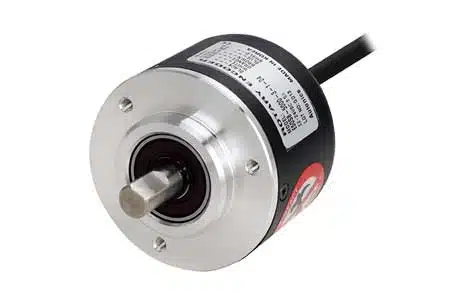
Autonics Rotary Encoder – E50S Series
- Resolution: 1 to 8,000 PPR.
- Control Output: Totem pole, NPN open collector, Voltage, Line driver.
- Output Phase: A, B, Z; A, A, B, B, Z, Z (varies by model).
- Response Speed: ≤ 1 ㎲.
- Max. Response Frequency: 300 kHz.
- Max. Allowable Revolution: 5,000 rpm.
- Cable Specifications: Ø 5 mm, 5-wire (8-wire for Line driver), 2 m length.
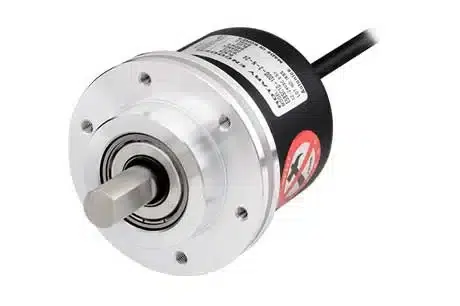
Rotary Encoder Autonics – E58SC Series
- Control Output: A totem pole, NPN open collector, Voltage.
- Output Phase: A, B, Z; A, A, B, B, Z, Z (varies by model).
- Response Speed: ≤ 1 ㎲.
- Max. Response Frequency: 300 kHz.
- Max. Allowable Revolution: 5,000 rpm.
- Protection Rating: IP50.
- Cable Specifications: Ø 5 mm, 5-wire (8-wire for Line driver), 2 m length.
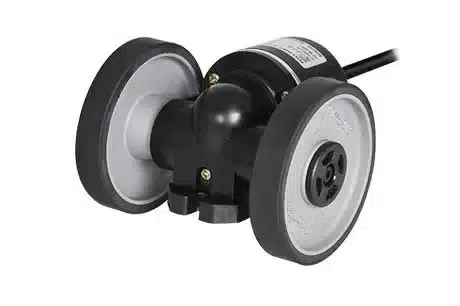
Encoder Autonics – ENC Series
- Control Output: A totem pole, NPN open collector, Voltage.
- Output Phase: A, B.
- Response Speed: ≤ 1 ㎲.
- Max. Response Frequency: 180 kHz.
- Max. Allowable Revolution: 5,000 rpm.
- Protection Rating: IP50.
- Cable Specifications: Ø 5 mm, 4-wire, 2 m length.
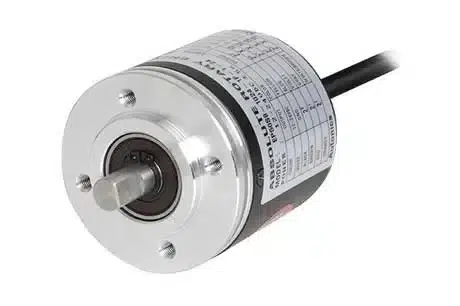
Autonics Absolute Encoder – EP50S Series
- Resolution: ≤ 1024 divisions.
- Control Output: NPN open collector, PNP open collector.
- Max. Response Frequency: 35 kHz.
- Max. Allowable Revolution: 3,000 rpm.
- Protection Rating: IP64.
- Connection: Axial cable type (cable gland).
- Cable Specifications: Ø 7 mm, 15-wire, 2m length.
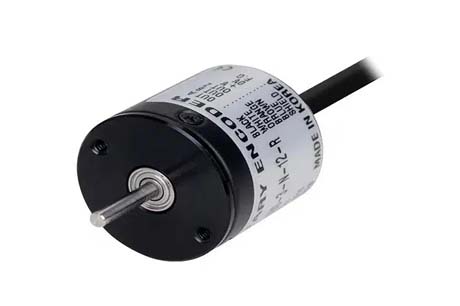
Autonics Rotary Encoders – E20HB Series
- Control Output: NPN open collector, Voltage, Line driver.
- Output Phase: A, B, Z; A, A, B, B, Z, Z (varies by model).
- Response Speed: ≤ 1 ㎲.
- Max. Response Frequency: 100 kHz.
- Max. Allowable Revolution: 6,000 rpm.
- Connection: Axial/Radial cable type.
- Cable Specifications: Ø 3 mm, 5-wire (8-wire for Line driver), 1 m length.
Autonics Encoders Suppliers

✔ Verified🌟 Trusted Vendor
Deals in PAN India
Dealing Rotary Encoder Brands: Autonics, Omron

✔ Verified🌟 Trusted Vendor
Deals in PAN India
Dealing Rotary Encoder Brands: Omron, Autonics, Leuze, Sick

✔ Verified🌟 Trusted Vendor
Deals in PAN India
Dealing Rotary Encoder Brands: Omron, Autonics, Leuze

✔ Verified🌟 Trusted Vendor
Deals in South India
Dealing Rotary Encoder Brands: Omron, Autonics, Sick

✔ Verified
Deals in PAN India
Dealing Rotary Encoder Brands: Leuze, Autonics
Top Autonics Encoders Models
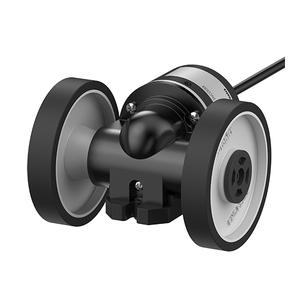
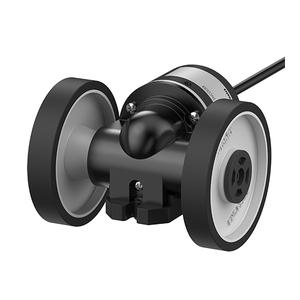
ENC-1-1-T-24
- Type: Incremental Encoder
- Resolution: 1 PPR
- Output: Totem Pole
- Power: 12–24V DC
- Connection: Cable Type
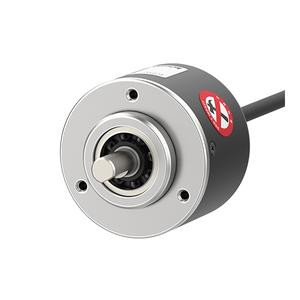
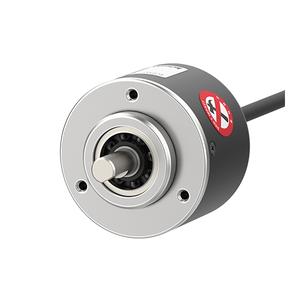
E50S8-1000-3-T-24
- Type: Incremental Encoder
- Resolution: 1000 PPR
- Shaft: 8 mm
- Output: Totem Pole
- Power: 12–24V DC
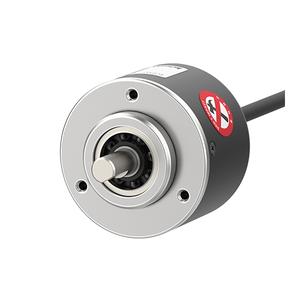
ENC-1-2-T-24
- Type: Incremental Encoder
- Resolution: 2 PPR
- Output: Totem Pole
- Power: 12–24V DC
- Connection: Cable Type
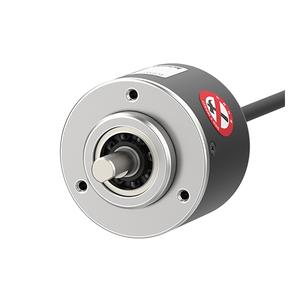
E50S8-1000-3-T-1
- Type: Incremental Encoder
- Resolution: 1000 PPR
- Shaft: 8 mm
- Output: Totem Pole
- Power: 5V DC
E50S8-360-3-T-24
- Type: Incremental Encoder
- Resolution: 360 PPR
- Shaft: 8 mm
- Output: Totem Pole
- Power: 12–24V DC
E50S8-1024-3-T-1
- Type: Incremental Encoder
- Resolution: 1024 PPR
- Shaft: 8 mm
- Output: Totem Pole
- Power: 5V DC
Types of Autonics Encoders
Autonics encoders are available in different types based on output signal, mounting style, and application requirements. These encoders are widely used in industrial automation systems for position, speed, and motion control.
Autonics Incremental Encoders
Autonics incremental encoders generate pulse signals based on shaft rotation. These encoders are commonly used for speed measurement, position tracking, and motion control in machines.
Autonics Absolute Encoders
Autonics absolute encoders provide exact position data even after power loss. These encoders are used in applications where accurate positioning and system restart reliability are important.
Autonics Hollow Shaft Encoders
Autonics hollow shaft encoders are designed to mount directly on rotating shafts without coupling. These encoders are widely used in motors and conveyor systems for easy installation.
Autonics Shaft Type Encoders
Autonics shaft type encoders have a solid shaft that connects using couplings. These are standard encoders used in general automation applications for precise motion feedback.
Autonics Wire Type Encoders
Autonics wire type encoders are used for measuring linear movement and distance. These encoders are commonly used in lifting systems, material handling, and positioning applications.
Applications of Autonics Encoders
Autonics Encoders are commonly used in:
-
Packaging machines
-
CNC machines
-
Conveyor systems
-
Robotics
-
Elevator systems
Autonics Encoders FAQs
What are Autonics Encoders?
Autonics encoders are industrial motion sensors used to measure shaft rotation, speed, and position in automated machines. These devices convert mechanical movement into electrical signals that can be interpreted by control systems such as PLCs or servo drives.
Most Autonics encoders operate as rotary encoders, generating digital pulse signals through quadrature A/B phase output channels. These signals provide real-time position feedback and speed feedback for industrial machines.
Autonics manufactures various encoder types including incremental encoders, absolute encoders, solid shaft encoders, and hollow shaft encoders, allowing engineers to select suitable motion feedback devices for different industrial automation applications.
How do Autonics rotary encoders work?
Autonics rotary encoders detect rotational movement and convert it into digital output signals used by machine control systems. Inside the encoder, a rotating disk passes through an optical sensor assembly.
As the shaft rotates, the sensor produces pulse signals corresponding to angular movement. These signals are typically delivered as quadrature A/B phase signals, allowing control systems to determine both rotation direction and speed.
Many encoders also provide a Z phase index pulse, which indicates a reference position once per revolution. Motion controllers count these pulses to calculate rotational speed, shaft position, and direction of movement.
What is the difference between incremental and absolute encoders?
An incremental encoder generates a series of pulses as the shaft rotates. The control system counts these pulses to determine position relative to a reference point.
An absolute encoder, however, outputs a unique digital code representing the shaft’s exact position at all times. This allows the system to determine position immediately after power-up without requiring a homing process.
Incremental encoders are commonly used in speed monitoring and motion control applications, while absolute encoders are used where continuous position tracking is required.
What is PPR in rotary encoders?
PPR (pulses per revolution) refers to the number of output pulses generated by an encoder during one complete shaft rotation.
A higher PPR value allows more precise position detection and motion tracking, because the control system receives more detailed feedback about shaft movement.
Industrial machines requiring high precision—such as CNC machines and robotic systems—often use high-resolution encoders to maintain accurate positioning.
If you need more info about our Autonics Encoders, just call us at +91 79955 44066.