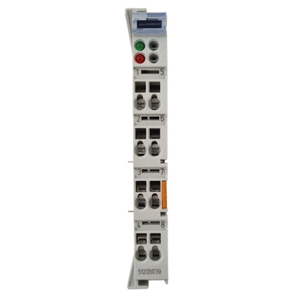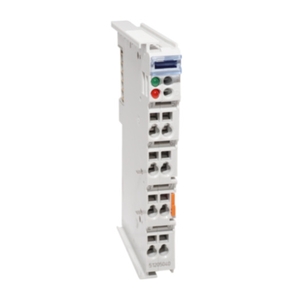
Mitsubishi STL-W750-458 - PLC Analog Output Module
Technical Specifications of Mitsubishi PLC Analog Output Module STL-W750-458:
| Brand | Mitsubishi |
| Product Type | PLC |
| Product | STL-W750-458 |
Mitsubishi PLC Analog Output Module STL-W750-458 Technical Specifications
| Specification | Value |
|---|---|
| Series | STLITE SERIES |
| Type | TEMPERATURE INPUT |
| Integrated Analogue Inputs | 8 |
| Int. Current Consumption (A) | 0,1 |
| Depth (mm) | 100 |
| Weight (kg) | 49 |
| Width (mm) | 12 |
| Height (mm) | 96 |
| Power Supply (V) | 24 |
| Current Type | DC |
| Input Type | THERMOCOUPLE |
| Applicable Thermocouple Type | U, T, S, R, N, J, E, C, B |
The Mitsubishi STL-W750-458 Programmable Logic Controller is an analog input module designed to handle 8 thermocouple channels for accurate temperature input. Belonging to the STLITE Series, it operates on a 24V DC power supply and supports multiple thermocouple types such as U, T, S, R, N, J, E, C, and B. This model integrates seamlessly within Mitsubishi control systems, providing dependable performance in industrial automation processes.
The Mitsubishi STL-W750-458 PLC module is widely used in industrial environments such as manufacturing, packaging, and process control systems. It offers stable temperature readings that enhance automation efficiency and accuracy. The 8-input thermocouple configuration enables multi-point temperature monitoring, making it ideal for furnaces, ovens, and precision-controlled production lines where temperature feedback is essential.
The Mitsubishi STL-W750-458 Programmable Logic Controller demonstrates Mitsubishi’s commitment to reliable automation technology. As part of the STLITE Series, it delivers accurate analog temperature measurement, efficient power usage, and dependable system integration. Engineers trust this model for its robust build, consistent input performance, and compatibility with industrial process control systems requiring stable thermocouple-based temperature management.
Related Products