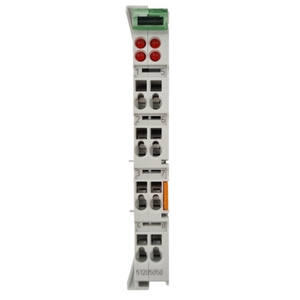
Mitsubishi STL-DA4-I - PLC Analog Output Module
The Mitsubishi STL-DA4-I Programmable Logic Controller provides 4 analog outputs with a 4–20mA current range for precise process control in automation systems. Manufactured by Mitsubishi, it is part of the Mitsubishi Programmable Logic Controller family within the STLITE Series. The module consumes 125mA current, operates with cage clamp wiring, and has compact dimensions of 65 mm height, 12 mm width, and 100 mm depth, with a total weight of 535 g.
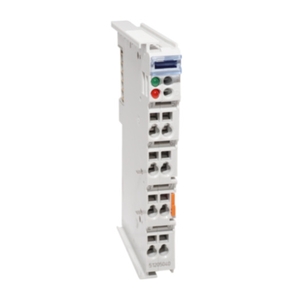
| Brand | Mitsubishi |
| Product Type | PLC Analog Output Module |
| Product | STL-DA4-I |
Mitsubishi PLC Analog Output Module STL-DA4-I Technical Specifications
| Specification | Value |
|---|---|
| Series | STLITE SERIES |
| Type | ANALOG OUTPUT |
| Wiring | CAGE CLAMP |
| Int. Current Consumption (A) | 125 |
| Depth (mm) | 100 |
| Weight (kg) | 535 |
| Width (mm) | 12 |
| Height (mm) | 65 |
| Integrated Analogue Outputs | 4 |
| Output Current Range (mA) | 4-20 |
The Mitsubishi STL-DA4-I Programmable Logic Controller is a dedicated analog output module designed for stable and accurate current output in automation control systems. Featuring 4 analog output channels supporting a 4–20mA range, it ensures consistent signal transmission for industrial devices. As part of the STLITE Series, this model operates efficiently within Mitsubishi PLC architectures, offering reliable performance for industrial automation needs.
The Mitsubishi STL-DA4-I PLC module is widely applied in industrial processes such as conveyors, packaging machinery, and factory automation systems. It enables smooth analog signal output to actuators and controllers, maintaining stable process control. The cage clamp wiring design ensures secure connections, while low power consumption and compact size make it ideal for space-constrained control panels.
The Mitsubishi STL-DA4-I Programmable Logic Controller exemplifies Mitsubishi’s engineering precision and dependability in automation technology. Belonging to the STLITE Series, it delivers reliable analog output performance, long operational life, and ease of integration with industrial systems. This model is trusted by automation engineers for its robust current output stability and compatibility across diverse industrial applications.