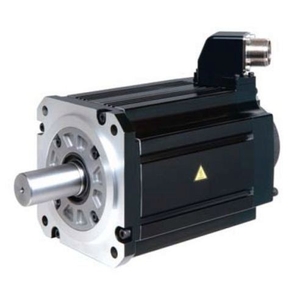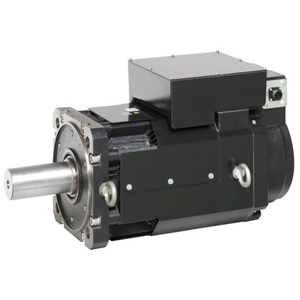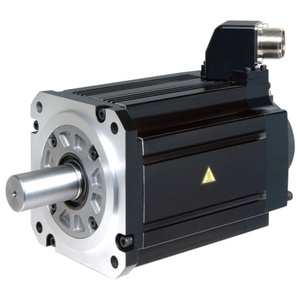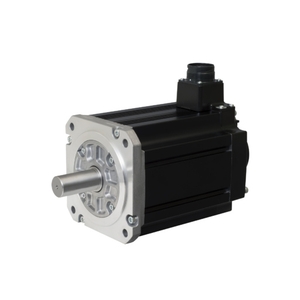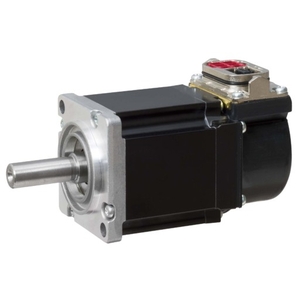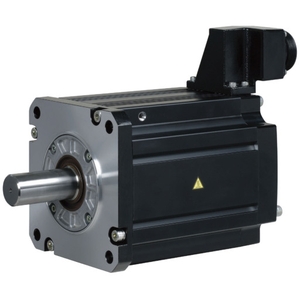
Mitsubishi HG-JR11K1M4B - Servo Motors
Technical Specifications of Mitsubishi Servo Motors HG-JR11K1M4B:

| Brand | Mitsubishi |
| Product Type | Servo Motors |
| Product | HG-JR11K1M4B |
Mitsubishi Servo Motors HG-JR11K1M4B Technical Specifications:
| Specification | Value |
|---|---|
| Series | MELSERVO-J4 |
| Type | HG-JR |
| Power Supply (V) | 400 |
| Rated Capacity (kW) | 11 |
| Inertia | LOW INERTIA |
| Rated Torque (Nm) | 70 |
| Maximum Torque (Nm) | 210 |
| Rated Speed (rpm) | 1500 |
| Inertia (kg*cm2) | 240 |
| Brake | YES |
| Shaft Type | STRAIGHT SHAFT |
| Current Type | AC |
| Encoder Resolution (p/rev) | 4194304 |
| Maximum Speed (rpm) | 3000 |
| Protection Class | IP67 |
| Encoder Type | 22-BIT |
| Depth (mm) | 528 |
| Weight (kg) | 74 |
| Width (mm) | 220 |
| Height (mm) | 281,1 |
The Mitsubishi HG-JR11K1M4B Servo Motor is an 11 kW low inertia model designed for demanding industrial automation. It offers 70 Nm rated torque, runs at 1500 rpm, and uses a 22-bit encoder with 4194304 pulses per revolution. As part of the MELSERVO-J4 series, it supports stable control, consistent motion, and precise feedback performance in continuous operation.
This motor is suited for conveyors, heavy packaging machinery, automated handling units, and long-cycle assembly systems requiring controlled movement. Its low inertia structure enables quick acceleration and response, improving system efficiency. The IP67 protection rating, AC operation, integrated brake, and mechanical strength make it reliable for environments demanding durability and steady torque output.
The Mitsubishi HG-JR11K1M4B Servo Motor offers dependable torque delivery, precise positioning, and long service reliability. Its combination of encoder precision, protective construction, and MELSERVO-J4 compatibility ensures consistent performance in industrial applications. Engineers choose this model for operational stability, predictable load handling, and trusted integration in medium-to-heavy automation systems.
Related Products