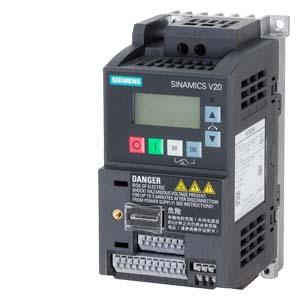
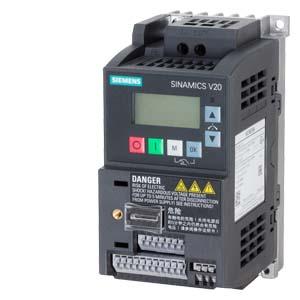
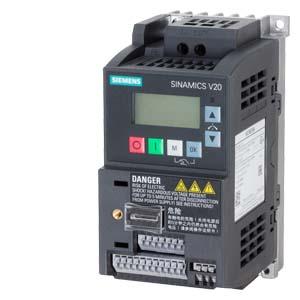
Siemens 6SL3210-5BB15-5BV1 Variable Frequency Drive
The Siemens 6SL3210-5BB15-5BV1 Variable Frequency Drive provides 0.55 kW single-phase control with 200–240 V input for industrial automation applications. It delivers 3.2 A rated current, supports 0–550 Hz output frequency, and includes IP20 enclosure protection with USS and Modbus RTU communication. Explore Siemens, the Siemens Variable Frequency Drive range, and the SINAMICS V20 series.
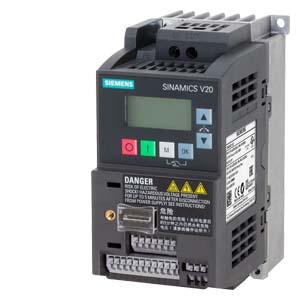
| Brand | Siemens |
| Product Type | Variable Frequency Drive (VFD) |
| Model Number | 6SL3210-5BB15-5BV1 |
Siemens Variable Frequency Drive 6SL3210-5BB15-5BV1 - Technical Specifications
| Specification | Value |
|---|---|
| Product Description | SINAMICS V20 200-240V 1AC -10/+10% 47-63Hz rated power 0.55 kW with 150% overload for 60 sec. integrated filter C1 I/O: 4 DI, 2 DO,2 AI, 1 AQ fieldbus: USS/MODBUS RTU with built-in BOP protection: IP20/ UL open size: QB 68x142x128 (WxHxD) |
| Product family | SINAMICS V20 basic converters |
| Product Lifecycle (PLM) | PM300:Active Product |
| Metal Factor | None |
| Net Weight (kg) | 0.900 Kg |
| Packaging Dimension | 180.00 x 205.00 x 140.00 |
| Country of origin | China |
The Siemens 6SL3210-5BB15-5BV1 Variable Frequency Drive is part of the SINAMICS V20 series designed for basic industrial automation. It offers 0.55 kW rated power, operates on 200–240 V single-phase input, and provides a 3.2 A rated output current. This Siemens Variable Frequency Drive supports standardized digital and analog I/O for controlled motor speed regulation.
The Siemens 6SL3210-5BB15-5BV1 Variable Frequency Drive is used in conveyors, packaging machines, small assembly systems, and auxiliary automation equipment. Its wide output frequency range enables smooth motor start and stop behavior, while the compact enclosure allows easy integration into control cabinets with limited installation space.
The Siemens 6SL3210-5BB15-5BV1 Variable Frequency Drive reflects Siemens design standards for reliable and consistent electrical performance. As a SINAMICS V20 drive, it ensures predictable operation, standardized communication interfaces, and suitability for continuous-duty industrial applications requiring dependable low-power motor control.
Related Products