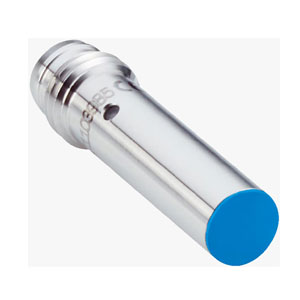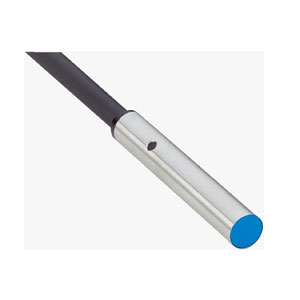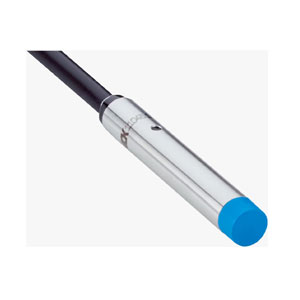
Sick IHM03-0B6POVU2S Proximity Sensor
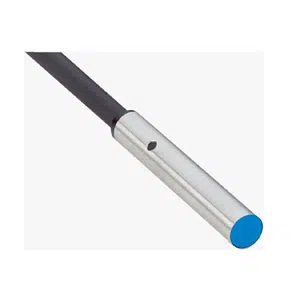
The Sick IHM03-0B6POVU2S Proximity Sensor provides a 0.6 mm sensing range and PNP NC output for precise miniature detection applications. It supports flush installation, offers a 5,000 Hz switching frequency, and operates on DC 3-wire wiring with an IP67 enclosure rating. This Ø 3 mm model is supplied with a 2 m cable and includes a cable flag for secure mounting. Learn more about Sick, explore Sick Proximity Sensors, or review the Sick IME Series.
| Brand | Sick |
| Product Type | Proximity Sensor |
| Model Number | IHM03-0B6POVU2S |
Sick IHM03-0B6POVU2S Proximity Sensor – Technical Specifications
| Specification | Value |
|---|---|
| Housing | Cylindrical thread design, Standard design |
| Thread size | - |
| Diameter | Ø 3 mm |
| Sensing range Sn | 0.6 mm |
| Safe sensing range Sa | 0.486 mm |
| Installation type | Flush |
| Switching frequency | 5,000 Hz |
| Connection type | 2 m Cable |
| Switching output | PNP |
| Output function | NC |
| Electrical wiring | DC 3-wire |
| Enclosure rating | IP67 1) |
| Items supplied | Cable flag, Polymatic 50 (1 x) |
The Sick IHM03-0B6POVU2S Proximity Sensor is a compact inductive device designed for accurate detection in confined automation spaces. The IHM03-0B6POVU2S model offers a 0.6 mm sensing range, a PNP NC output, a 5,000 Hz switching frequency, and an IP67 enclosure. As part of the Sick IME Series, it supports reliable performance in industrial systems requiring miniature sensors.
This sensor is used in packaging lines, conveyors, small robotic mechanisms, and fine assembly equipment. Its flush installation design ensures stable measurement in metallic surroundings, while the fast switching frequency supports high-speed detection tasks. The 2 m cable enhances flexibility during integration into compact machinery layouts.
The Sick IHM03-0B6POVU2S Proximity Sensor combines a 0.6 mm detection range, PNP NC configuration, and IP67 sealing to deliver dependable sensing performance in demanding industrial setups. Engineers value its reliability, consistent switching behavior, and suitability for miniature automation applications. Its performance characteristics and trusted Sick engineering reinforce it as a dependable choice for precision detection tasks.
Related Products