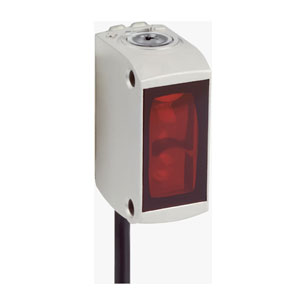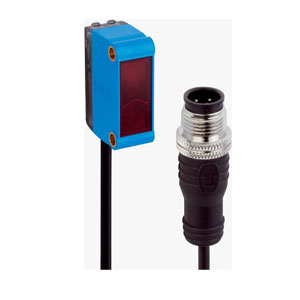
Sick GL6-P0111S61 Photoelectric Sensor
The Sick GL6-P0111S61 photoelectric sensor provides dual lens retro-reflective detection with 7.2 m maximum sensing range capability for automation. This Sick 7.2m Dual Lens Photo Sensor operates using visible red PinPoint LED at 650 nm wavelength, supports PNP output, and delivers 1,000 Hz switching frequency on 10–30 V DC supply. It is manufactured by Sick, listed under Sick Photoelectric Sensors, and belongs to the G6 Series used in industrial automation.

| Brand | Sick |
| Product Type | Photoelectric Sensors |
| Model Number | GL6-P0111S61 |
Sick GL6-P0111S61 Photoelectric Sensor – Technical Specifications
| Specification | Value |
|---|---|
| Functional principle | Photoelectric retro-reflective sensor |
| Functional principle detail | Dual lens |
| Sensing range max. | ≤ 7.2 m |
| Sensing range | ≤ 6 m |
| Light source | PinPoint LED |
| Type of light | Visible red light |
| Light spot size (distance) | Ø 8 mm (350 mm) |
| Wave length | 650 nm |
| Adjustment | None |
| Supply voltage UB | 10 V DC ... 30 V DC |
| Ripple | ± 10 % |
| Current consumption | 30 mA 3) |
| Protection class | III |
| Digital Output type | PNP |
| Switching mode | Light/dark switching |
| Switching mode selector | Selectable via light/dark selector |
| Signal voltage PNP HIGH/LOW | VS - (≤ 3 V) / approx. 0 V |
| Output current Imax. | ≤ 100 mA 4) |
| Response time | < 625 µs 5) |
| Switching frequency | 1,000 Hz 6) |
| Housing | Rectangular |
| Dimensions (W x H x D) | 12 mm x 31.5 mm x 21 mm |
| Connection | Cable with connector M8, 4-pin, with knurled nuts, 3 m |
| Housing material | Plastic, ABS/PC |
| Front screen material | Plastic, PMMA |
| Enclosure rating | IP67 |
| Ambient operating temperature | –25 °C ... +55 °C |
| Ambient temperature, storage | –40 °C ... +70 °C |
| Weight | 120 g |
The GL6-P0111S61 Sick 7.2m Dual Lens Photo Sensor is a retro-reflective photoelectric sensor designed for stable long-range detection. The GL6-P0111S61 combines dual lens sensing, 7.2 m maximum range, PNP digital output, and a 1,000 Hz switching frequency. This model is part of the Sick G6 series and is used in industrial automation systems requiring consistent reflective detection.
The GL6-P0111S61 Sick 7.2m Dual Lens Photo Sensor is applied in conveyor systems, packaging lines, automated material handling, and assembly stations. Dual lens retro-reflective operation enables reliable object recognition across extended distances. The rectangular housing and fixed optical setup support stable alignment in continuous-duty industrial environments.
The Sick GL6-P0111S61 Photoelectric Sensor offers dependable electrical performance and mechanical protection for industrial use. With an IP67 enclosure and controlled optical characteristics, it supports operation in dusty or moisture-prone areas. As part of the G6 series, the GL6-P0111S61 aligns with Sick photoelectric sensor standards for long-term reliability and system compatibility.
Related Products