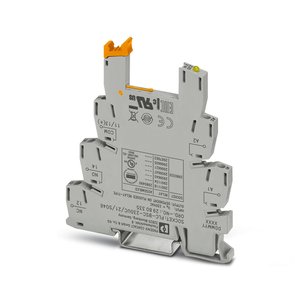
Phoenix PLC-BSC-120UC/21 Relay Socket
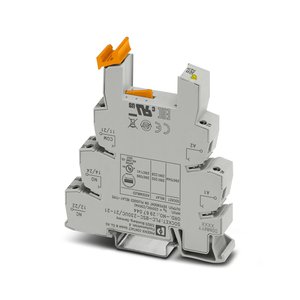
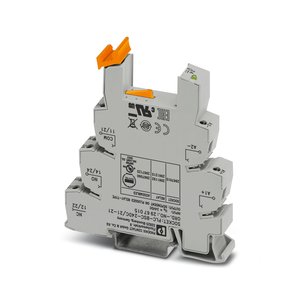
The Phoenix PLC-BSC-120UC/21 Relay Socket (Part No: 2966032 ) offers a Screw connection method, 0.14 mm² ... 2.5 mm² conductor cross section rigid, 0.14 mm² ... 2.5 mm² conductor cross section flexible, DIN rail mounting mounting type. Manufactured by Phoenix under the Phoenix Relay Socket category, this model belongs to the Phoenix PLC Series.
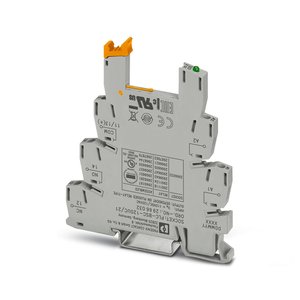
| Brand | Phoenix Contact |
| Product Type | Relay Socket |
| Model Number | PLC-BSC-120UC/21 |
Phoenix PLC-BSC-120UC/21 Relay Socket – Technical Specifications
| Specification | Value |
|---|---|
| Product type | Relay socket |
| Product family | PLC-INTERFACE |
| Connection method | Screw connection |
| Stripping length | 8 mm |
| Screw thread | M3 |
| Conductor cross section rigid | 0.14 mm² ... 2.5 mm² |
| Conductor cross section flexible | 0.14 mm² ... 2.5 mm² |
| Width | 6.2 mm |
| Height | 80 mm |
| Color | gray (RAL 7042) |
| Ambient temperature (operation) | -40 °C ... 55 °C |
| Ambient temperature (storage/transport) | -40 °C ... 85 °C |
| Mounting type | DIN rail mounting |
| Mounting position | any |
| Application | Universal |
| Protective circuit | Bridge rectifier |
| Nominal input voltage UN | 120 V AC/DC |
| Conductor cross section AWG | 26 ... 14 |
| Tightening torque | 0.6 Nm ... 0.8 Nm |
| Status display | LED |
| Depth | 94 mm |
| Flammability rating according to UL 94 | V0 (Housing) |
| Enclosure Low | Required protection according to the Rules shall be provided upon installation on board |
| Low Voltage Directive | Conformance with Low Voltage Directive |
| Electromagnetic compatibility | Conformance with EMC directive |
| Maximum switching voltage | - |
| Overvoltage category | II |
| Standards/regulations | IEC 60255/DIN VDE 0435 (in relevant parts) |
| Rated control circuit supply voltage US | - |
| Voltage range with reference to US | - |
The Phoenix Contact PLC-BSC-120UC/21 (Part No: 2966032) is a precision-built Relay Socket crafted for dependable performance in automation and PLC interface applications. Designed for 120 V AC/DC operation, it features a screw connection system with M3 terminals that accommodate conductor cross sections from 0.14 mm² to 2.5 mm², supporting both rigid and flexible wiring. The compact 6.2 mm width and 80 mm height make it ideal for dense DIN rail assemblies, ensuring quick installation without compromising accessibility or safety. Its integrated bridge rectifier protective circuit allows safe AC/DC operation while protecting connected components from polarity or surge issues.
Built for long-term operation, the PLC-BSC-120UC/21 functions reliably within an ambient temperature range of –40 °C to +55 °C. The gray (RAL 7042) housing offers high mechanical strength and complies with the UL 94 V0 flammability rating, ensuring safe use in enclosed control systems. An LED status display provides clear visual confirmation of relay activity, reducing downtime during testing and troubleshooting. The model meets IEC 60255 and DIN VDE 0435 standards and conforms to both Low Voltage and EMC Directives, guaranteeing compliance in global industrial installations. Its precise engineering and compact form factor make it one of the most durable and maintenance-friendly relay sockets in the Phoenix Contact range.
Industrial engineers and automation technicians use the Phoenix Contact Relay Socket in PLC-based systems, control panels, and electrical cabinets that require secure relay mounting and clean signal interfacing. Its screw terminal design ensures stable connections under vibration and thermal stress, while the LED display helps maintenance teams quickly identify operational states during commissioning. The PLC-BSC-120UC/21 2966032 is also favored for retrofits and system upgrades where compact dimensions and 120 V AC/DC compatibility are essential. In educational institutions and technical workshops, this model is widely used to demonstrate interface safety, voltage handling, and wiring discipline—helping new engineers understand real-world automation reliability.