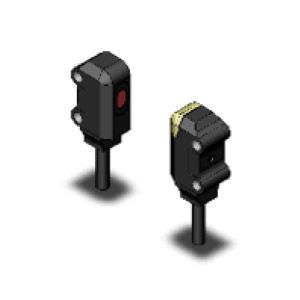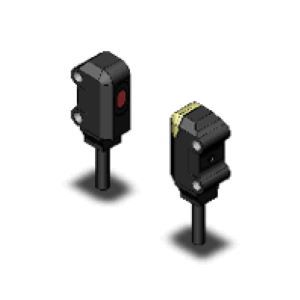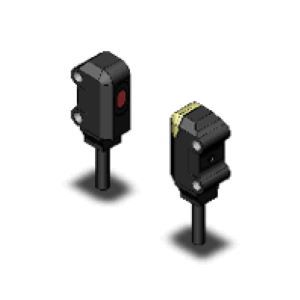
Omron E3T-ST11F 2M Through-beam Photoelectric Sensor
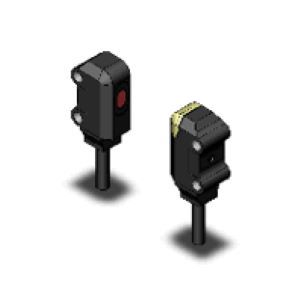
The Omron E3T-ST11F 2M Photoelectric Sensor is an ultracompact, ultrathin through-beam sensor with a built-in amplifier designed for precise object detection. This model features square type housing, 1 m sensing distance, NPN output, and a pre-wired 2 m cable, using an infrared LED (860 nm) light source with 12 to 24 VDC operation in Light-ON mode. Manufactured by Omron, it is part of the Omron Photoelectric Sensors range under the Omron E3T Series.
| Brand | Omron |
| Product | Photoelectric Sensors |
| Model Number | E3T-ST11F 2M |
Omron E3T-ST11F 2M Photoelectric Sensor - Technical Specifications
| Specification | Value |
|---|---|
| Sensing Method | Through-beam |
| Shape | Square type |
| Sensing Distance | 1 m |
| Power Supply Voltage | 12 to 24 VDC |
| Output Configuration | NPN |
| Connection Method | Pre-wired cable length 2m |
| Current Consumption | 30 mA max. (Emitter 10 mA max., Receiver 20 mA max.) |
| Light Source (Wavelength) | Infrared LED (860 nm) |
| Operation Mode | Light-ON |
| Response Time | 1 ms max. |
| Degree Of Protection | IP67 |
| Material | Polybutylene terephthalate |
| Material Lens | Denatured Polyarylate |
| Weight | 40g |
The Omron E3T-ST11F 2M is a through-beam photoelectric sensor developed for applications requiring reliable detection in compact installation spaces. As an ultracompact, ultrathin photoelectric sensor with built-in amplifier, it provides stable sensing using an infrared LED (860 nm), NPN output, and 12–24 VDC power supply, supporting consistent operation in automated systems.
In industrial environments, this through-beam sensor is commonly used in assembly lines, conveyors, packaging machines, and electronic component handling systems. The slim square-type body allows easy mounting in confined areas, while the through-beam sensing principle ensures accurate object detection regardless of surface color or reflectivity.
The E3T-ST11F 2M belongs to the Omron E3T Series, known for compact design, electrical stability, and long-term reliability. Engineers selecting this photoelectric sensor value its predictable switching behavior, noise resistance, and suitability for modern automation equipment where space-saving design and dependable sensing performance are required.
Related Products