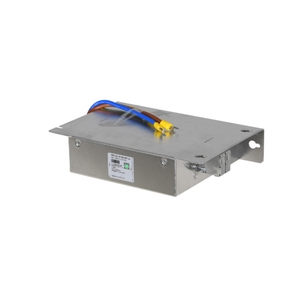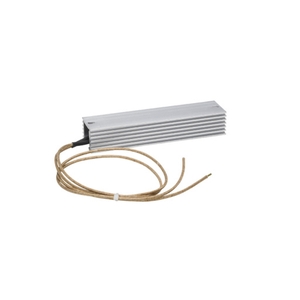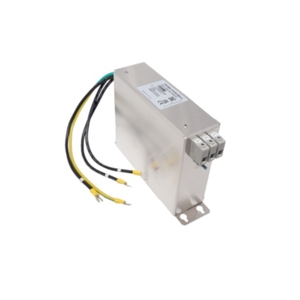
Mitsubishi RFC60/300W (000086) - VFD Inverter
The Mitsubishi RFC60/300W (000086) Variable Frequency Drive resistor provides IP00 protection and a compact 36 mm depth for braking support. It belongs to the Mitsubishi family and supports the Mitsubishi Variable Frequency Drive braking range across industrial panels. As part of the RFC SERIES, the RFC60/300W (000086) features a 200 mm width, 27 mm height, and 333 kg weight, suitable for controlled braking applications.

| Brand | Mitsubishi |
| Product Type | VFD Inverter |
| Model Number | RFC60/300W (000086) |
Mitsubishi RFC60/300W (000086) VFD Inverter - Technical Specifications:
| Specification | Value |
|---|---|
| Type | BRAKING RESISTOR |
| Protection Class | IP00 |
| Depth (mm) | 36 |
| Weight (kg) | 333 |
| Width (mm) | 200 |
| Height (mm) | 27 |
The Mitsubishi RFC60/300W (000086) Variable Frequency Drive braking resistor is designed for stable energy dissipation in RFC SERIES systems. The RFC60/300W (000086) includes a 36 mm depth, 200 mm width, 27 mm height, and an IP00 protection class, supporting controlled braking where excess regenerative energy must be safely released in industrial automation environments.
In conveyors, packaging machinery, assembly systems, and material handling equipment, the RFC60/300W (000086) helps maintain predictable braking response. Its defined dimensions support convenient panel mounting while ensuring stable thermal behavior during repetitive braking cycles. This enhances overall drive performance by preventing overload and maintaining controlled deceleration.
The Mitsubishi RFC60/300W (000086) Variable Frequency Drive resistor provides dependable braking support with its IP00-protected design and compact construction. As part of the Mitsubishi RFC SERIES, the RFC60/300W (000086) helps industrial users achieve reliable braking performance across demanding applications. Its specifications make it a trusted choice for engineers seeking stable and consistent energy dissipation in VFD-based systems.
Related Products