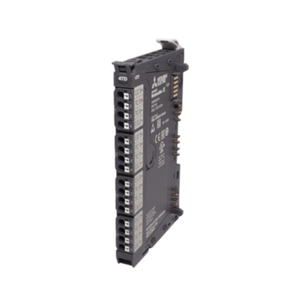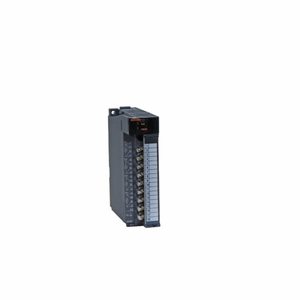
Mitsubishi Q61LD - PLC Analog Output Module
The Mitsubishi Q61LD Programmable Logic Controller features 1 load cell input channel with a 0–0.003V input voltage range for precise signal measurement. Manufactured by Mitsubishi, it is part of the Mitsubishi Programmable Logic Controller family under the MELSEC-Q Series. The module operates on 5V DC power, consumes 0.48A current, and has compact dimensions of 98 mm height, 27.4 mm width, and 90 mm depth with a 231 g weight.
| Brand | Mitsubishi |
| Product Type | PLC Analog Output Module |
| Product | Q61LD |
Mitsubishi PLC Analog Output Module Q61LD Technical Specifications
| Specification | Value |
|---|---|
| Series | MELSEC-Q SERIES |
| Type | LOAD CELL INPUT |
| Occupied I/O Points on PLC | 16 |
| Integrated Analogue Inputs | 1 |
| Wiring | SCREW |
| Int. Current Consumption (A) | 0,48 |
| Depth (mm) | 90 |
| Weight (kg) | 231 |
| Width (mm) | 27,4 |
| Height (mm) | 98 |
| Power Supply (V) | 5 |
| Current Type | DC |
| Input Voltage Range (V) | 0-0,001; 0-0,002; 0-0,003; |
The Mitsubishi Q61LD Programmable Logic Controller is a load cell input module from the MELSEC-Q Series, designed for accurate analog signal conversion. It includes 1 input channel with a 0–0.003V voltage range and operates on a 5V DC power supply with 0.48A current consumption. Its screw terminal wiring ensures stable connectivity, making it suitable for precise measurement applications in automation systems.
The Mitsubishi Q61LD PLC module is widely used in industrial automation environments for weight, pressure, and force measurement. It supports integration with conveyor systems, assembly machines, and packaging lines where high-accuracy load detection is essential. Its stable performance and compact structure provide reliable data acquisition under continuous operation.
The Mitsubishi Q61LD Programmable Logic Controller reflects Mitsubishi’s commitment to precision and reliability. With 1 load cell input channel and MELSEC-Q Series architecture, it ensures consistent signal measurement for industrial automation needs. Built for durability and stable output, it remains a dependable solution for engineers managing load-based control systems.