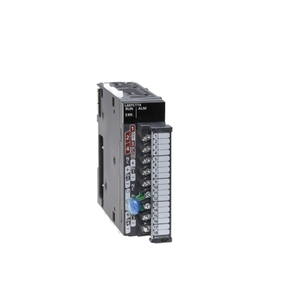
Mitsubishi L60TCTT4 - PLC Analog Output Module
Technical Specifications of Mitsubishi PLC Analog Output Module L60TCTT4:
| Brand | Mitsubishi |
| Product Type | PLC |
| Product | L60TCTT4 |
Mitsubishi PLC Analog Output Module L60TCTT4 Technical Specifications
| Specification | Value |
|---|---|
| Series | MELSEC-L SERIES |
| Type | TEMPERATURE CONTROL |
| Occupied I/O Points on PLC | 16 |
| Integrated Analogue Inputs | 4 |
| Int. Current Consumption (A) | 0,3 |
| Depth (mm) | 117 |
| Weight (kg) | 0,18 |
| Width (mm) | 28,5 |
| Height (mm) | 90 |
| Input Type | THERMOCOUPLE |
| Applicable Thermocouple Type | L, K, J, E, B, N, U, T, S, R, PLII |
The Mitsubishi L60TCTT4 Programmable Logic Controller is part of the MELSEC-L Series, designed for precise temperature measurement and control in industrial automation systems. It features 4 analog thermocouple inputs and supports multiple thermocouple types including K, J, R, and S. Operating at 24V DC with 0.3A internal current consumption, it ensures stable and accurate temperature signal acquisition for process control environments.
The Mitsubishi L60TCTT4 PLC module is widely used in automated heating, cooling, and process monitoring applications across manufacturing and assembly plants. It helps maintain consistent thermal control in systems such as ovens, packaging equipment, and chemical processes. Its compact design, screw-type wiring, and compatibility with Mitsubishi controllers make it easy to integrate and maintain in existing industrial setups.
The Mitsubishi L60TCTT4 Programmable Logic Controller offers dependable temperature control performance for critical automation applications. With 4 thermocouple input channels and compatibility with the MELSEC-L Series, it delivers reliable temperature regulation and signal precision. Supported by Mitsubishi’s proven engineering quality, this module ensures accurate readings, durability, and long-term operational consistency in industrial environments.
Related Products