
Many engineers reviewing Mitsubishi MITSUBISHIELECTRIC-FR-ABR-H2-2K also explore Schneider VFD, Mitsubishi HMI and Mitsubishi Mitsubishielectric Fr E720 3 7K, ensuring they don’t miss strong alternatives before finalizing procurement decisions.
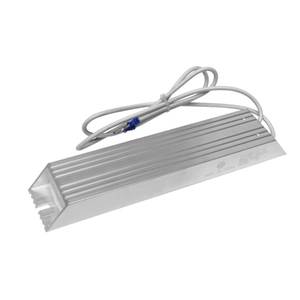
Mitsubishi FR-ABR-H2.2K - VFD Inverter
The Mitsubishi FR-ABR-H2.2K Variable Frequency Drive brake resistor offers IP00 protection with a compact 50 mm depth for industrial braking. It integrates within Mitsubishi automation systems and aligns with the Mitsubishi Variable Frequency Drive category used across the FR-E800 SERIES. The unit features a 0.5 kg weight, 240 mm width, and 26 mm height, making it suitable for controlled braking and heat dissipation in drive applications.
| Brand | Mitsubishi |
| Product Type | VFD Inverter |
| Model Number | FR-ABR-H2.2K |
Mitsubishi FR-ABR-H2.2K VFD Inverter - Technical Specifications:
| Specification | Value |
|---|---|
| Type | EXT. HIGH-DUTY BRAKE RESISTOR |
| Protection Class | IP00 |
| Depth (mm) | 50 |
| Weight (kg) | 0,5 |
| Width (mm) | 240 |
| Height (mm) | 26 |
The Mitsubishi FR-ABR-H2.2K Variable Frequency Drive brake resistor is built for stable braking performance with IP00 protection, a 50 mm depth, and a 0.5 kg construction. The Mitsubishi FR-ABR-H2.2K is aligned with the FR-E800 SERIES structure and supports smooth stopping, energy dissipation, and operational stability across industrial automation environments.
This brake resistor is commonly used in conveyors, packaging systems, assembly machines, and motion-control setups requiring effective braking control. Its compact dimensions support easy panel placement while ensuring consistent heat dissipation under repeated braking cycles, helping maintain drive reliability and process continuity in varied automation tasks.
The Mitsubishi FR-ABR-H2.2K provides dependable braking support with its IP00 rating, compact 50 mm profile, and efficient thermal handling for VFD-driven systems. Its integration into Mitsubishi automation solutions ensures stable performance, enhanced drive protection, and suitability for continuous industrial operation where controlled deceleration is essential.
Related Products