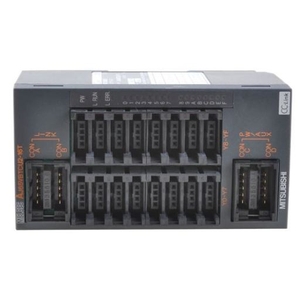
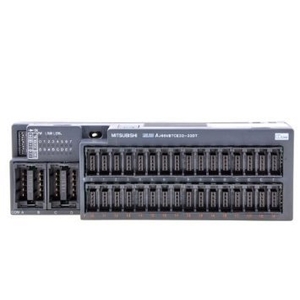
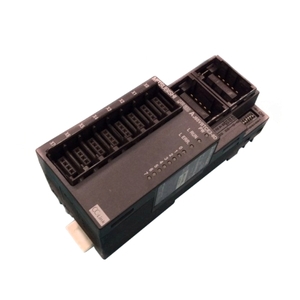
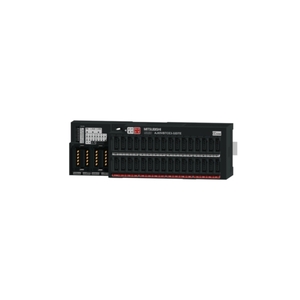
Mitsubishi AJ65VBTS2-16T - Programmable Logic Controller
The Mitsubishi AJ65VBTS2-16T Programmable Logic Controller (PLC) is engineered to deliver efficient and decentralized digital output control for CC-Link networks. This Mitsubishi module enhances industrial automation performance in space-constrained or distributed applications.
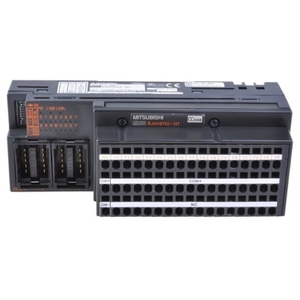
| Brand | Mitsubishi |
| Product Type | PLC(Programmable Logic Controller) |
| Product | AJ65VBTS2-16T |
Technical Specifications of Mitsubishi Programmable Logic Controller AJ65VBTS2-16T
| Specification | Value |
|---|---|
| Series | CC-LINK |
| Type | REMOTE TRANSISTOR OUTPUT |
| Depth (mm) | 51,5 |
| Weight (kg) | 0,24 |
| Width (mm) | 137 |
| Height (mm) | 50 |
| Power Supply (V) | 24 |
| Current Type | DC |
| Integrated Digital Outputs | 16 |
| Output Type | TRANSISTOR |
| Output Logic | SINK |
| Rated Load Voltage (VDC) | 12/24 |
| Wiring | SPRING CLAMP |
| Int. Current Consumption (A) | 0,45 |
| Occupied Stations | 1 |
Built for performance-driven environments, the Mitsubishi AJ65VBTS2-16T PLC is engineered to handle 16 digital transistor outputs with sink logic, supporting rated load voltages of 12/24 VDC. Its compact structure—just 137 mm wide, 51.5 mm deep, and 50 mm high—makes it ideal for installation in confined panel spaces. Operating on a 24V DC power supply with an internal current consumption of 0.45 A, this controller ensures energy-efficient output for continuous operations. With a maximum switching frequency range of 2 to 16 kHz, it provides flexible response for different load conditions.
Engineered to withstand industrial stress, the AJ65VBTS2-16T operates reliably in temperatures ranging from -10°C to 60°C (with derating). It conforms to IEC 60068-2-6 vibration standards, supports cabinet-mounting, and is protected by an IP20-rated enclosure. The use of spring clamp wiring ensures quick, secure connections during installation and maintenance, improving uptime and field serviceability. In addition, the module’s RS-485 communication interface supports high-speed and noise-resistant data exchange in distributed systems.
At just 0.24 kg, this PLC supports vertical mounting and performs well at high altitudes (above 1000 m) with current derating. With natural air cooling and 27 W of heat dissipation, it operates efficiently without the need for fans. Engineers trust the Mitsubishi AJ65VBTS2-16T for its consistent performance in remote I/O applications across automotive, packaging, and food processing industries. For full technical documentation and compatibility resources, visit the official Mitsubishi product page: AJ65VBTS2-16T Mitsubishi PLC Documentation.
The Mitsubishi AJ65VBTS2-16T PLC is highly suitable for decentralized automation systems where speed, flexibility, and reliable output control are critical. It is frequently deployed in conveyor lines, automated material handling systems, and robotic packaging stations, where real-time output precision is essential.
Indian plant engineers benefit from the spring clamp wiring for faster terminal connections, especially in dusty or vibration-prone environments. Because of its compact form factor and wide temperature tolerance, this model is well-suited for installation in small cabinets and high-heat factory zones without requiring special cooling systems. The CC-Link compatibility allows seamless connection to Mitsubishi PLCs, HMIs, and servo drives, making integration with existing automation systems easier for both junior technicians and experienced engineers.
Whether you are modernizing legacy systems or expanding new smart factory lines, the Mitsubishi AJ65VBTS2-16T PLC offers the efficiency, durability, and communication capability required for today’s industrial automation demands. With long-term dependability and excellent build quality, it helps engineers reduce downtime and ensure consistent output across complex control systems.