
GIC Insulation Monitoring Devices
IndMALL Automation offers a reliable range of GIC Insulation Monitoring devices designed to enhance electrical safety by continuously monitoring insulation resistance in unearthed IT power systems. Built in compliance with international standards like IEC 61557-8, EN 50155, IEC 61373, and EN 45545 1-IL-2/3, these devices are essential for preventing insulation faults, equipment failure, and safety hazards.
GIC Insulation Monitoring solutions support 1-Phase, 3-Phase 3-Wire, and 3-Phase 4-Wire systems, measuring insulation between Line (L) and PE at voltages up to 520V AC. With features such as an adjustable trip resistance (1 kΩ to 100 kΩ), wide auxiliary supply range (24V–240V AC/DC), and dual relay outputs for fail-safe and non-fail-safe operation, these devices are ideal for critical infrastructure, transportation, and industrial environments.
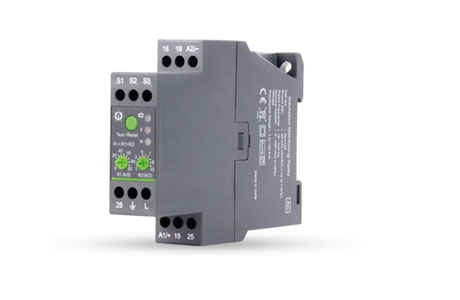
GIC Insulation Monitoring
Monitors insulation resistance of unearthed IT systems in compliance with IEC 61557-8, EN 50155, IEC 61373, and EN 45545 1-IL-2/3
Suitable for 1-Phase, 3-Phase 3-Wire, and 3-Phase 4-Wire unearthed systems
Measures insulation between Line (L) and PE with line voltages up to 520V AC
Operates on a wide auxiliary supply range: 24V to 240V AC/DC
Adjustable trip resistance from 1 kΩ to 100 kΩ for flexible fault sensitivity
Includes 2 relay outputs (1 C/O + 1 NO) for fail-safe and non-fail-safe operations
Test/Reset functionality with both manual and remote control options
Frequently Asked Questions
What is insulation monitoring?
Insulation monitoring is the process of checking the insulation resistance between live conductors and earth in unearthed power systems (also known as IT systems). It helps detect early signs of insulation failure before it becomes dangerous. These systems can be AC, DC, or AC/DC combinations. A device called an Insulation Monitoring Device (IMD) continuously measures this resistance and alerts you if it drops below a safe level.
The main goal of insulation monitoring is to prevent electric shock, equipment damage, or fire caused by insulation breakdown. It’s commonly used in hospitals, railways, and industrial setups where uninterrupted power and safety are critical. Modern devices like the GIC Insulation Monitoring unit also support 1-Phase, 3-Phase 3-Wire, and 3-Phase 4-Wire systems, making them versatile for various applications.
What is the current monitoring system?
A current monitoring system is used to check how much electric current is flowing through a machine or circuit. If the current goes above or below a safe limit, it sends an alert or turns off the device to prevent damage. This is also called over-current protection or underload protection.
Devices like the GIC Current Monitoring Relay help protect motors and equipment from problems like overload, phase loss, or unbalanced current. It continuously watches the current and reacts instantly when something goes wrong. These systems are used in both single-phase and three-phase setups to keep machines running safely and efficiently.
How does an insulation monitoring device work?
An insulation monitoring device works by continuously checking the insulation resistance between live conductors and earth in unearthed systems, also called IT systems. It connects between the power lines and the protective earth (PE). If the insulation resistance drops below a set value, the device triggers an alarm.
This helps you know when there’s a fault before it becomes dangerous. The insulation monitoring device doesn’t wait for a short circuit or shock to happen—it warns early. It’s commonly used in hospitals, trains, and critical industries where safety and uptime are important. It keeps your system safe without shutting down the power.