
Many engineers reviewing Festo DSNU-32-F1A also explore Festo Festo, Festo Dsnu 25 50 P A 19221 and Festo Valves, ensuring they don’t miss strong alternatives before finalizing procurement decisions.
Festo DSNU-32- -F1A- Round Cylinder
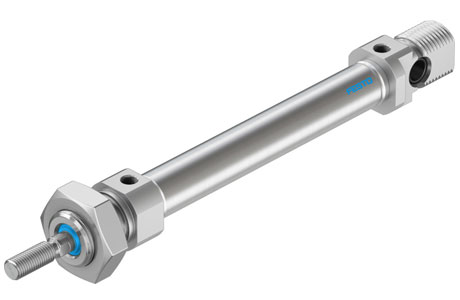
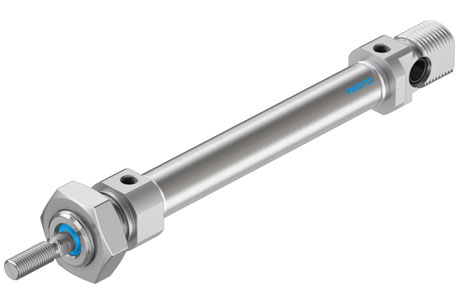
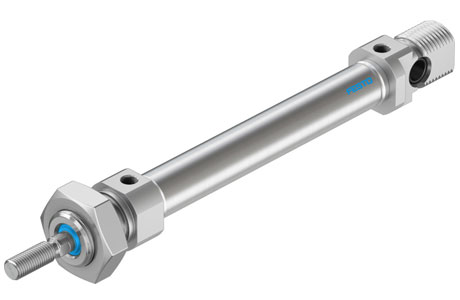
The Festo DSNU-32- -F1A- Round Cylinder offers M10x1.25 rod thread, piston rod end, 32 mm diameter, andPiston; Piston rod; Cylinder barrel. Manufactured by Festo under the Festo Round Cylinder category, this model belongs to the DSNU Series.
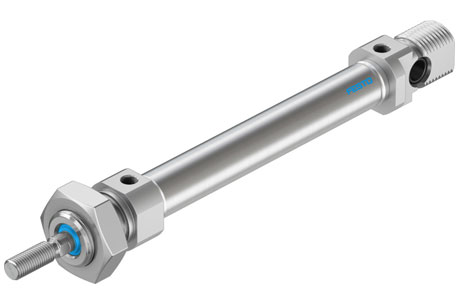
| Brand | Festo |
| Product Type | ISO Cylinder |
| Product | DSNU-32- -F1A- |
Festo DSNU-32- -F1A- Round Cylinder – Technical Specifications
| Specification | Value |
|---|---|
| Stroke | 1; 500 |
| Piston diameter | 32 mm |
| Piston rod thread | M10x1.25 |
| Cushioning | Elastic cushioning rings/plates at both ends; Self-adjusting pneumatic end-position cushioning; Pneumatic cushioning, adjustable at both ends |
| Mounting position | optional |
| Design | Piston; Piston rod; Cylinder barrel |
| Position detection | Via proximity switch |
| Variants | Metals with copper, zinc or nickel by mass as main constituent are excluded from use. Exceptions are nickel in steel, chemically nickel-plated surfaces, printed circuit boards, cables, electrical plug connectors and coils.; Extended male piston rod thread; Piston rod with female thread; Custom thread on the piston rod; Piston rod with male thread shortened at one end; Extended piston rod; Axial supply port; Lateral supply port; Through piston rod |
| Operating pressure | 1; 10 |
| Mode of operation | Double-acting |
| Operating medium | Compressed air to ISO 8573-1:2010 [7:4:4] |
| Corrosion resistance class CRC | 0 - No corrosion stress |
| LABS (PWIS) conformity | VDMA24364-B1/B2-L |
| Cleanroom class | Class 6 according to ISO 14644-1 |
| Ambient temperature | -20; 80 |
| Theoretical force at 0.6 MPa (6 bar, 87 psi), return stroke | 415 |
| Theoretical force at 0.6 MPa (6 bar, 87 psi), advance stroke | 482.5 |
| Moving mass for 0 mm stroke | 121 |
| Additional moving mass per 10 mm stroke | 9 |
| Basic weight for 0 mm stroke | 370.5 |
| Additional weight per 10 mm stroke | 15.5 |
| Type of mounting | With accessories |
| Pneumatic connection | G1/8 |
| Note on materials | RoHS-compliant |
| Material cover | Anodised wrought aluminium alloy |
| Material seals | TPE-U(PU) |
| Material piston rod | High-alloy stainless steel |
| Material cylinder barrel | High-alloy stainless steel |
| Cushioning length | 14 |
Festo is a world leader in industrial automation technology, trusted by engineers for its German precision, consistent innovation, and reliable performance. Across India, Festo products are widely used in factories, machine tools, assembly lines, and R&D labs for their durability, modular design, and international standard compliance. The brand is especially popular among maintenance teams for reducing breakdown time and improving machine life.
The DSNU-32-F1A is a heavy-duty round cylinder with a 32 mm piston diameter and up to 500 mm stroke length. It operates as a double-acting cylinder using compressed air (ISO 8573-1:2010 [7:4:4]) and is compatible with multiple cushioning options—elastic, self-adjusting, and adjustable pneumatic. The model delivers high output force, with a forward stroke force of 482.5 N at 6 bar, making it suitable for demanding industrial tasks. It supports position detection via proximity switches and offers multiple piston rod thread configurations, supply port styles, and mounting options. Built with high-alloy stainless steel and anodised aluminium, it meets RoHS standards and functions efficiently in cleanroom environments and harsh workshop conditions alike.
The DSNU-12-70-P-A round cylinder is commonly used in applications that require short, accurate, and repetitive linear motion. These include part loading/unloading in CNC machines, packaging equipment, pick-and-place units, and sensor-driven automation tasks. Maintenance engineers value its compact size and robust construction, which allow it to perform reliably in dusty, high-vibration environments. The built-in cushioning options reduce impact, noise, and wear, ensuring smoother machine operation over time. For students, this model offers a hands-on understanding of pneumatic actuation principles, making it an ideal reference when learning about motion control in automation systems. As the use case expands, it becomes clear how this model supports both precision and flexibility in modern industrial setups.
Related Products