If you’re not fully sure about DSNU-25-250-PPV-A-19252, taking a closer look at Festo Festo, Festo Dsnu 25 50 P A 19221 and Festo Valves often helps compare reliability, cost, and availability.
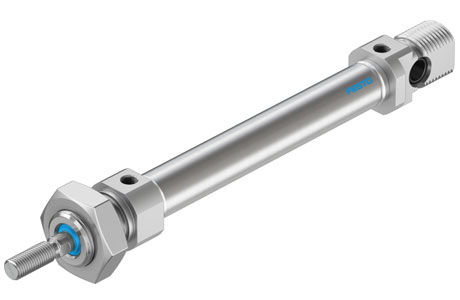
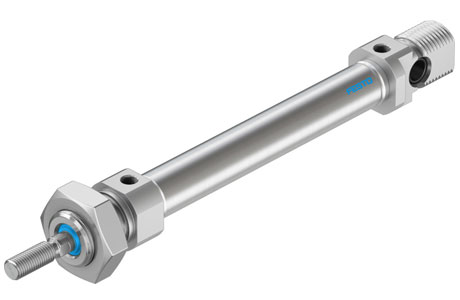
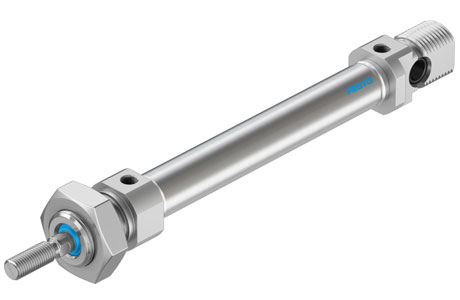
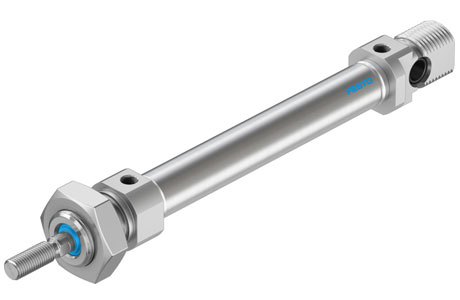
Festo DSNU-25-250-PPV-A Round Cylinder
The Festo DSNU-25-250-PPV-A Round Cylinder offers M10x1.25 rod thread, Male thread piston rod end, 25 mm diameter, andPiston; Piston rod; Cylinder barrel. Manufactured by Festo under the Festo Round Cylinder category, this model belongs to the DSNU Series.

| Brand | Festo |
| Product Type | ISO Cylinder |
| Product | DSNU-25-250-PPV-A |
Festo DSNU-25-250-PPV-A Round Cylinder – Technical Specifications
| Specification | Value |
|---|---|
| Stroke | 250 |
| Piston diameter | 25 mm |
| Piston rod thread | M10x1.25 |
| Cushioning | Pneumatic cushioning, adjustable at both ends |
| Mounting position | optional |
| Conforms to standard | CETOP RP 52 P; ISO 6432 |
| Design | Piston; Piston rod; Cylinder barrel |
| Piston-rod end | Male thread |
| Position detection | Via proximity switch |
| Variants | Piston rod at one end |
| Operating pressure | 1; 10 |
| Mode of operation | Double-acting |
| Operating medium | Compressed air to ISO 8573-1:2010 [7:4:4] |
| Corrosion resistance class CRC | 2 - Moderate corrosion stress |
| LABS (PWIS) conformity | VDMA24364-B1/B2-L |
| Cleanroom class | Class 6 according to ISO 14644-1 |
| Ambient temperature | -20; 80 |
| Impact energy in end positions | 0.3 |
| Theoretical force at 0.6 MPa (6 bar, 87 psi), return stroke | 247.4 |
| Theoretical force at 0.6 MPa (6 bar, 87 psi), advance stroke | 294.5 |
| Moving mass for 0 mm stroke | 71 |
| Additional moving mass per 10 mm stroke | 6 |
| Basic weight for 0 mm stroke | 238 |
| Additional weight per 10 mm stroke | 11 |
| Type of mounting | With accessories |
| Pneumatic connection | G1/8 |
| Note on materials | RoHS-compliant |
| Material cover | Wrought aluminium alloy; Colourless anodised |
| Material seals | NBR; TPE-U(PU) |
| Material piston rod | High-alloy stainless steel |
| Material cylinder barrel | High-alloy stainless steel |
| Cushioning length | 17 |
Festo: Engineering Global Motion Control Excellence
Festo is a globally recognized name in automation, known for delivering high-quality pneumatic and electromechanical systems designed with German precision. Its products are widely used across Indian industries such as packaging, automotive, electronics, and food processing. Festo’s commitment to standardization, durability, and innovation makes it a trusted brand among engineers and plant maintenance teams seeking reliability in every cycle.
DSNU-25-250-PPV-A: Precision Cylinder with Adjustable Cushioning for Long Strokes
The DSNU-25-250-PPV-A is a double-acting round pneumatic cylinder with a 25 mm piston diameter and a 250 mm stroke, making it ideal for extended motion applications. Built according to ISO 6432 standards, it generates up to 294.5 N of forward force and 247.4 N on return at 6 bar operating pressure. What makes this model versatile is its adjustable pneumatic cushioning at both ends—allowing engineers to fine-tune piston deceleration for smoother stopping and reduced impact. The cylinder features a G1/8 pneumatic connection, M10x1.25 piston rod threading, and optional proximity switch support for position feedback. It is manufactured using high-alloy stainless steel and anodised aluminium, ensuring RoHS compliance, corrosion resistance, and suitability for Class 6 cleanroom environments.
Where It’s Used: Tuned Control for Long-Distance Linear Motion
The DSNU-25-250-PPV-A is perfect for automation tasks that involve long travel distances with the need for custom damping control—such as in conveyor section actuators, fixture positioning arms, or machine doors. The adjustable cushioning gives engineers the flexibility to optimize motion for different weights and speeds, which helps reduce mechanical wear and noise. Maintenance teams value the manual adjustability, while engineering students learn how precise pneumatic control enhances machine life and process stability. In any setup requiring smooth motion and controlled stopping over long strokes, this model delivers exactly what industrial systems need—performance, adaptability, and trust.