
Contrinex Photoelectric Sensors
Contrinex Photoelectric Sensors are industrial automation sensing devices used for non-contact object detection across Indian manufacturing environments and facilities.
The Contrinex Photoelectric Sensors, manufactured by Contrinex, operate using emitter–receiver optical systems with infrared or visible light sources, supporting diffuse, retro-reflective, and through-beam sensing modes, defined by sensing distance, response time, light spot characteristics, supply voltage ranges, output configuration, housing material, ingress protection ratings, mounting format, and standardized electrical connection interfaces.
Within industrial automation systems, available under Contrinex brand classification, this product category is defined as optical photoelectric sensing technology built on discrete emitter and receiver structures, classified by detection principle and installation geometry, using solid-state electronics, protective industrial housings, and standardized transistor or relay-based output interfaces for and control system integration, compliant with common industrial wiring standards and supporting continuous presence, absence, and position-based object detection tasks across factory automation and process control applications nationwide in India contexts.
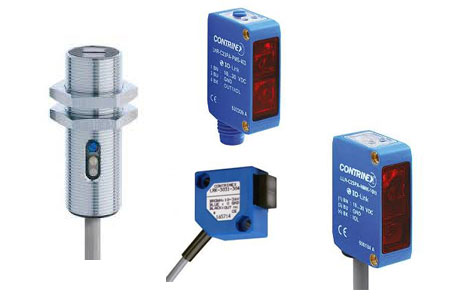
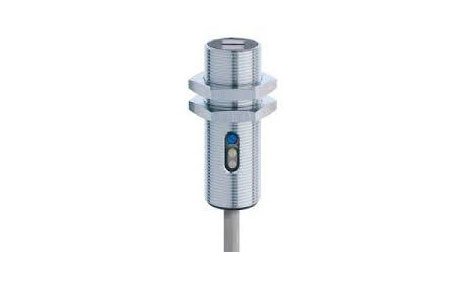
LHK-1180-301
- Operating range: 10…120 mm
- Switching frequency max.: 500 Hz
- Supply voltage: 10…36
- Polarity: NPN
- Output: Light-on
- Connection: PVC, 2 m, 3 wire
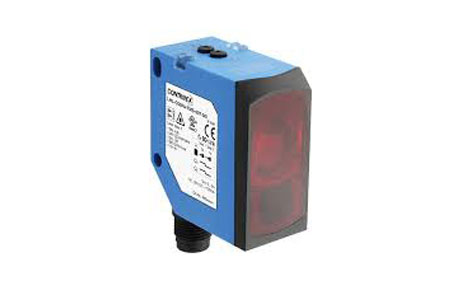
LHL-C55PA-TMS-607-501
- Operating range: 0…5000 mm
- Switching frequency max.: 500 Hz
- Supply voltage: 18…30
- Polarity: PNP/NPN auto-detect
- Output: Light-on/Dark-on/IO-Link + Light-on/Dark-on + Teach input
- Connection: M12 5-pin
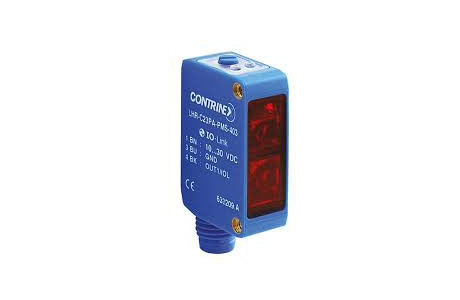
LHR-C23PA-PMS-403-506
- Operating range: 15…170 mm
- Switching frequency max.: 1000 Hz
- Supply voltage: 10…30
- Polarity: PNP
- Output: Light-on/IO-Link
- Connection: M8 3-pin
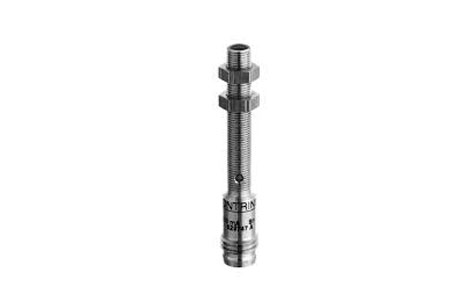
LTI-M05MA-NSS-403
- Operating range: 0…10 mm
- Switching frequency max.: 1000 Hz
- Supply voltage: 10…30
- Polarity: PNP
- Output: Light-on
- Connection: M8 3-pin
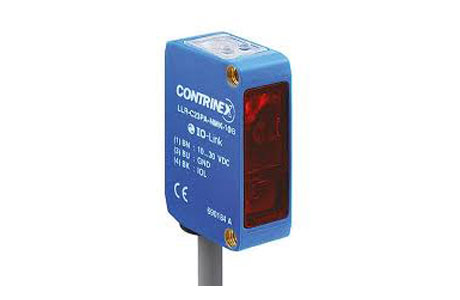
LRR-C23PA-NMK-101
- Operating range: 30…6000 mm
- Switching frequency max.: 1500 Hz
- Supply voltage: 10…30
- Polarity: NPN
- Output: Light-on + Dark-on
- Connection: PVC, 2 m, 4 wire
LRK-3031-302
- Operating range: 2000 mm
- Switching frequency max.: 1000 Hz
- Supply voltage: 10…36
- Polarity: NPN
- Output: Light-on + Dark-on
- Connection: PVC, 2 m, 3 wire
At IndMALL Automation, we offer the Contrinex Photoelectric Sensors, renowned for their versatility and high sensitivity. These sensors provide non-contact detection of both metallic and non-metallic targets across long distances, effectively handling variations in target color and surface finish. Their advanced high-frequency switching circuitry is capable of detecting small, fast-moving objects, even in environments where the background does not contrast with the target.
Contrinex sensors utilize light beams, emitted from either a laser diode or LED, directed towards targets to detect their presence through reflection or beam interruption. The line includes energetic-diffuse and background-suppression models that detect light reflected off objects, as well as reflex and through-beam models that sense when an object interrupts the light beam. Through-beam variants, which use a separate receiver for the emitter, allow for even longer sensing distances.
Frequently Asked Questions
What are the 4 types of photoelectric sensors?
The four major types of photoelectric sensors are: Thru-beam, which uses separate transmitter and receiver units; Reflex, which detects light reflected back to the sensor; Diffuse Reflective, where the object itself reflects light back to the sensor; and Perfect Prox, known for its precise proximity detection without requiring a reflector.
How to test a photoelectric sensor?
To test a photoelectric sensor, first ensure power is connected and the sensor is on. Place an object in front of the sensor to block the light beam. Observe the sensor’s output; it should change state indicating detection. Repeat at various distances to check the sensor’s range and responsiveness.
What is the voltage of photoelectric sensor?
The voltage of a photoelectric sensor typically ranges from 10 to 30 volts DC. Some models are designed to operate within a specific voltage range to ensure optimal performance and reliability. Always refer to the manufacturer’s specifications to confirm the correct operating voltage for your specific photoelectric sensor model.
Kindly share your Contrinex Photoelectric Sensor Requirement to sales@indmall.in