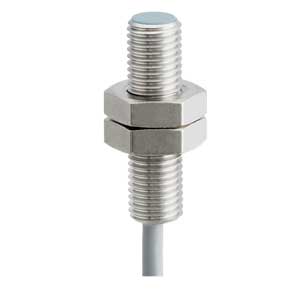
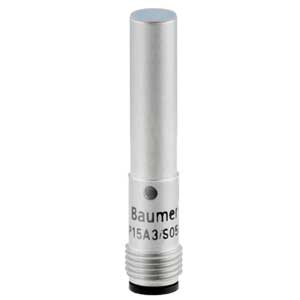
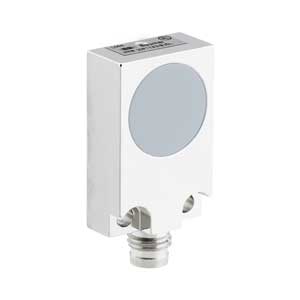
Baumer IFRM 12X9103 Proximity Sensor
The Baumer IFRM 12X9103 Proximity Sensor offers a Non-flush mouting, 4 mm sensing distance, NAMUR output, and Cable, L=2 m connection. Manufactured by Baumer under the Baumer Proximity Sensor category, this model belongs to the IRFM Series.
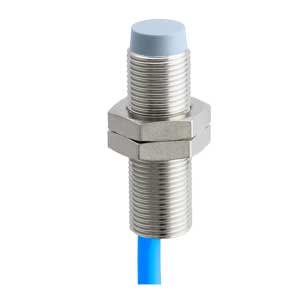
| Brand | Baumer |
| Product Type | Proximity Sensor |
| Model Number | IFRM 12X9103 |
Baumer IFRM 12X9103 Proximity Sensor – Technical Specifications
| Specification | Value |
|---|---|
| Mounting type | Non-flush |
| Nominal sensing distance Sn | 4 mm |
| Hysteresis | ATEX 1G |
| Output indicator | < 10 % Vs |
| Switching frequency | 2 kHz |
| Voltage supply range +Vs | 5 … 30 VDC |
| Output circuit | NAMUR |
| Output current | -20 … +60 °C |
| Short circuit protection | -20 … +40 °C |
| Reverse polarity protection | SEV 21 ATEX 0551 X IECEx SEV 21.0019X |
| Design | Cylindrical threaded |
| Material (sensing face) | PBT |
| Housing material | Brass nickel plated |
| Dimension | 12 mm |
| Housing length | 34 mm |
| Connection types | Cable, L=2 m |
| Cable characteristics | - |
| Operating temperature | -25 … +75 °C |
| Protection class | IP 67 |
The IFRM 12X9103: 10235296 from Baumer is a high-reliability NAMUR proximity sensor designed for explosive or hazardous areas where intrinsic safety and compliance with international standards are critical. Built to deliver dependable signal output in ATEX and IECEx rated environments, this sensor supports a 5–30 VDC power supply and has a nominal sensing distance of 4 mm, making it ideal for close-proximity metal detection tasks in automation and process control applications.
Its non-flush mounting type allows for installation in positions where extended sensing range and minimal metal interference are required. Housed in a rugged cylindrical threaded body made of nickel-plated brass with a PBT sensing face, the sensor offers mechanical strength and chemical resistance. The output conforms to the NAMUR standard, ensuring compatibility with certified isolating amplifiers and intrinsic safety barriers. The integrated 2-meter cable simplifies field wiring, and the sensor's IP67 protection rating ensures reliable operation in dusty or wet environments. With an operational temperature range from -25°C to +75°C and a switching frequency of 2 kHz, it delivers high-speed and stable performance under varying industrial conditions.
Compliance with ATEX 1G and certifications such as SEV 21 ATEX 0551 X and IECEx SEV 21.0019X further enhances its credibility in mission-critical setups. For automation professionals and maintenance engineers working in oil & gas, chemical, or pharmaceutical sectors, the Baumer IFRM 12X9103 offers a safe and reliable proximity sensing solution.
The Baumer IFRM 12X9103 is specifically designed for use in hazardous areas where intrinsically safe sensors are mandated by safety regulations. With its NAMUR output and ATEX/IECEx certification, it is commonly deployed in industries like petrochemical processing, oil and gas extraction, chemical storage plants, and pharmaceutical manufacturing, where explosion-proof equipment is essential.
It is ideal for tasks such as tank level detection, valve positioning, and machine part monitoring in hazardous zones. The sensor’s non-flush mounting allows for improved sensitivity when detecting small or thin metal targets without interference from surrounding materials. Engineers often rely on this model when integrating sensors into ATEX-rated panels, intrinsically safe loops, or PLCs using galvanically isolated barriers.
For Indian maintenance engineers and automation professionals, the IFRM 12X9103 provides the confidence of certified safety, backed by high switching speed and rugged build quality. It allows for seamless integration into both legacy and modern safety systems where signal integrity, certification, and durability cannot be compromised. This model proves essential for ensuring compliance without sacrificing performance in high-risk operational zones.
Related Products