
Omron Fiber Optic Sensors — Fiber Optic Amplifier

Omron Fiber Optic Sensors use guided light transmission through fiber elements to detect target presence across industrial automation systems throughout Indian facilities. They operate through amplifier-driven optical detection, using defined light emission and reception principles suitable for transparent, reflective, or minute object detection tasks without requiring physical contact with the sensing environment. Structural attributes consistently include modular amplifier units, standardized fiber heads, rail-mounted housings, and selectable optical paths designed for integration in constrained machine spaces.
The Omron Fiber Optic Sensors, manufactured by Omron, apply switching interfaces such as NPN, PNP, analog, and two-wire types while supporting Light-ON or Dark-ON operation across compatible amplifier modules referenced through the Omron portfolio. They incorporate fiber units in through-beam or reflective formats, standardized connector or cable terminations, and optical elements designed to guide emitted light and interpret returned signals. As a defined sensing unit, an Omron fiber optic sensor functions as a light-based detection technology structured as a modular fiber-and-amplifier system classified under non-contact optical sensing devices and interfaced through discrete or analog signal outputs.

Omron Fiber Optic Sensors: E3NX-FA Series
- Shape: Cuboid, rail mounting.
- Sensing Method: Amplifier; Setting Method: Teach-In.
- Connection Method: System connector or cable.
- Output Type: NPN, PNP, Analog; Operation Mode: Dark-ON, Light-ON.
- Response Time: 0.03 ms to 0.08 ms
- Type of Light: Polarity-free red light or infrared light.
- Number of Numerical Displays: 2.
- Number of Channels: 1.
Omron Fiber Optic Sensor: E3NX-CA Series
- Shape: Cuboid, rail mounting.
- Sensing Method: Amplifier; Setting Method: Teach-In.
- Connection Method: System connector or cable.
- Output Type: NPN, PNP, Analog; Operation Mode: Dark-ON, Light-ON.
- Response Time: 0.03 ms to 0.08 ms
- Type of Light: Polarity-free red light or infrared light.
- Number of Numerical Displays: 2; Number of Channels: 1.
Omron Optical Fiber Sensor: E3X-NA Series
- Shape: Cuboid, rail mounting.
- Sensing Method: Amplifier.
- Setting Method: Manual adjustment.
- Connection Method: Cable or system connector.
- Output Type: NPN, PNP.
- Operation Mode: Dark-ON, Light-ON.
- Response Time: 0.2 ms, 0.02 ms for fast response models.
- Functions: Timer; Number of Channels: 1.
Omron Fiber Optic Amplifier: E3NX-MA Series
- Shape: Cuboid, rail mounting.
- Sensing Method: Amplifier.
- Setting Method: Teach-In.
- Connection Method: System connector or cable.
- Output Type: NPN, PNP; Operation Mode: Dark-ON, Light-ON.
- Response Time: 0.1 ms; Type of Light: Polarity-free red light.
- Functions: Self-diagnosis, Timer, Twin.
Omron Fiber Amplifier: E3X-ZV/MZV Series
- Shape: Cuboid, rail mounting.
- Sensing Method: Amplifier.
- Setting Method: Teach-In.
- Connection Method: Cable or system connector.
- Output Type: NPN, PNP; Operation Mode: Dark-ON, Light-ON.
- Response Time: 0.05 ms for E3X-ZV, 0.1 ms for E3X-MZV.
- Type of Light: Polarity free red light.
- Functions: Timer, Twin (E3X-MZV).
Omron Fiber Sensors: E32 Series
- Sensor Types: Through-beam, Reflective, Coaxial, Flat.
- Sensing Distance: Up to 4,000 mm.
- Minimum Sensing Object: As small as 0.03 mm diameter.
- Cable Bending Radius: Model-specific flexibility.
- Protection: IP67 water resistance.
- Response Modes: Giga-power, High-speed, Standard, Super-high-speed.
Omron Fiber Sensor: E32-LT11N / LD11N / LR11NP Series
- Types: Through-beam, Reflective, Retro-reflective.
- Sensing Distance: Up to 4,000 mm (Through-beam).
- Minimum Sensing Object: As small as 0.03 mm diameter.
- Cable Flexibility: Model-specific.
- Protection: IP67 water resistance.
- Response Modes: Multiple, including Giga-power and High-speed.
Omron Fiber Optic Sensor Suppliers

✔ Verified🌟 Trusted Vendor
Deals in PAN India
Dealing Fiber Optic Sensor Brands: Autonics, Omron

✔ Verified🌟 Trusted Vendor
Deals in PAN India
Dealing Fiber Optic Sensor Brands: Omron, Autonics, Sick

✔ Verified🌟 Trusted Vendor
Deals in PAN India
Dealing Fiber Optic Sensor Brands: Omron, Autonics

✔ Verified🌟 Trusted Vendor
Deals in PAN India
Dealing Fiber Optic Sensor Brands: Omron

✔ Verified🌟 Trusted Vendor
Deals in South India
Dealing Fiber Optic Sensor Brands: Omron

✔ Verified🌟 Trusted Vendor
Deals in South India
Dealing Fiber Optic Sensor Brands: Omron, Autonics, Sick

IndMALL Automation offers a specialized portfolio of Omron Fiber Optic Sensors engineered for high-precision detection across diverse industrial automation applications. The range includes advanced fiber optic amplifier units such as the Omron E3X-HD Fiber Amplifier Unit and the Omron E3X-SD Fiber Amplifier Unit, designed to process optical signals with high stability and speed. These products support both fiber optic sensing and optical fiber sensing technologies, enabling accurate detection in compact spaces, high-speed machinery, and environments with varying surface conditions.
The lineup also covers Omron laser sensors, fiber optic detectors, and fiber optic sensors that form the core of modern sensing systems used in electronics assembly, packaging, inspection, and material handling. These fiber optics sensors are built for durability, consistent output, and adaptability, ensuring reliable performance even under vibration, dust, or ambient light interference. Manufactured by Omron, the solutions available through IndMALL Automation are supported by detailed technical resources, including fiber optic sensors PDF documentation that explains operating principles, configurations, and application suitability. For dependable and scalable fiber optic sensing solutions, IndMALL Automation delivers proven Omron technology trusted across industrial automation environments.
Product List:
| Model No | Image | Shape | Light Source | Output | Supply Voltage | Connection Method |
|---|---|---|---|---|---|---|
| E3X-NA11 2M | 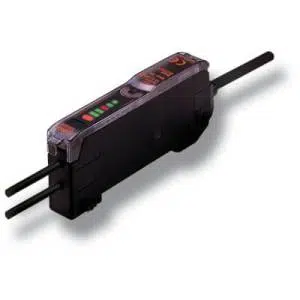 |
Cuboid | Red LED | NPN | 12 to 24 V | Pre Wired Cable, 2M Length |
| E3X-HD41 2M | 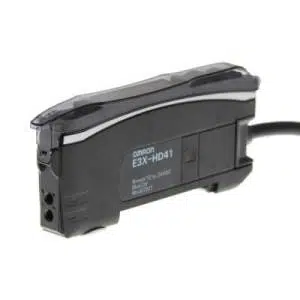 |
Cuboid | Red LED | PNP | 12 to 24 V | Pre Wired Cable, 2M Length |
| E3NX FA11 2M | 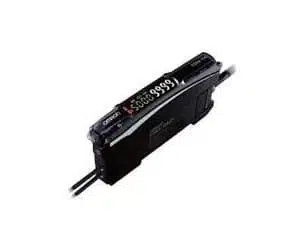 |
Cuboid | Red LED | NPN | 10-30 V | Pre Wired Cable, 2M Length |
| E3X-ZV11 2M | 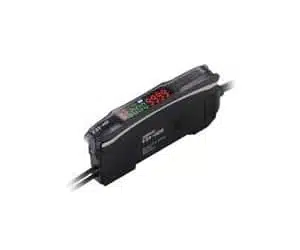 |
Cuboid | Red light | NPN | 2-24 V | Pre Wired Cable, 2M Length |




Frequently Asked Questions
How do Fibre optic sensors work?
Fiber optic sensors use light to detect things. They have a light source and a detector inside.
When something changes the light’s path, the sensor notices. For example, if the light bends, the sensor can tell.
These sensors are used because they’re safe and don’t need electricity. They’re also good for tight or tough spots.
What are the benefits of fiber optic sensors?
Fiber optic sensors are special because they use light. This makes them safe in places with risks like gas or fire.
They don’t get hurt by magnets or radio waves. So, they can work in tricky environments.
Lastly, they’re small and flexible. This means they fit in tight spots easily.
Where are Fibre optic sensors used?
Fiber optic sensors are often used in medical tools. They help doctors see inside our bodies.
They also work in industries to monitor machines and temperatures. Big structures like bridges use them to check for damages.
Moreover, they’re in oil and gas fields. There, they watch for leaks and changes underground.
Please share your Omron Fiber Optic Sensors or Amplifiers in Chennai requirements.