
Rotary Encoder for Industrial Automation
Rotary Encoders are industrial motion sensors used to measure shaft position, rotational speed, direction, and angular movement in automated systems. An industrial rotary encoder provides position or motion feedback for motors, conveyors, robotics, CNC machines, packaging equipment, and other machinery. Common types include incremental rotary encoder, absolute encoder, and hollow shaft encoder configurations for different motion control and installation requirements.
IndMALL provides access to rotary encoder brands, models, and industrial encoder solutions for machine automation and motion control applications. A rotary incremental encoder can be selected based on resolution, pulses per revolution (PPR), shaft type, output configuration, power supply, and operating speed. Buyers can review available models and technical specifications and connect with rotary encoder suppliers and dealers across India. Explore encoders, sensors, controllers, drives, and other motion control and automation products for industrial applications.
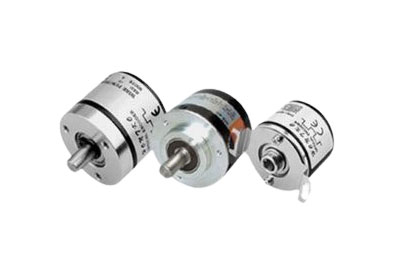
Top Rotary Encoder Brands

Omron Rotary Encoders
Omron rotary encoders are widely used in industrial automation for accurate position sensing and motion control in machines, conveyor systems, and robotics. These encoders are known for their high precision, stable performance, and long operational life in factory environments.

SICK Rotary Encoders
SICK rotary encoders offer high-performance sensing solutions for motion control and industrial automation applications. These encoders are commonly used in robotics, material handling systems, and precision machine operations.

Baumer Rotary Encoders
Baumer rotary encoders are known for their advanced sensing technology and high accuracy in industrial automation systems. These encoders are widely used in machine tools, process industries, and high-speed production environments.

Autonics Rotary Encoders
Autonics rotary encoders provide cost-effective and reliable solutions for position and speed measurement in industrial automation systems. They are widely used in packaging machines, conveyor systems, and general manufacturing equipment.

Kübler Rotary Encoders
Kübler rotary encoders provide robust and precise position feedback solutions for industrial automation and motion control systems. These encoders are commonly used in machinery, elevators, and industrial equipment.

Leuze Rotary Encoders
Leuze rotary encoders offer reliable sensing solutions for industrial automation and machine control applications. These encoders are commonly used in packaging systems, intralogistics, and factory automation environments.

Pepperl Fuchs Rotary Encoders
Pepperl Fuchs rotary encoders are designed for reliable performance in harsh industrial environments. These encoders are commonly used in heavy-duty automation systems, process industries, and hazardous area applications.
Rotary Encoder Suppliers

✔ Verified🌟 Trusted Vendor
Deals in PAN India
Dealing Rotary Encoder Brands: Autonics, Omron

✔ Verified🌟 Trusted Vendor
Deals in PAN India
Dealing Rotary Encoder Brands: Omron, Autonics, Leuze, Sick

✔ Verified🌟 Trusted Vendor
Deals in PAN India
Dealing Rotary Encoder Brands: Omron, Autonics, Leuze

✔ Verified🌟 Trusted Vendor
Deals in PAN India
Dealing Rotary Encoder Brands: Omron, Baumer

✔ Verified🌟 Trusted Vendor
Deals in PAN India
Dealing Rotary Encoder Brands: Sick, Baumer, Kuebler

✔ Verified🌟 Trusted Vendor
Deals in South India
Dealing Rotary Encoder Brands: Omron

✔ Verified🌟 Trusted Vendor
Deals in South India
Dealing Rotary Encoder Brands: Omron, Autonics, Sick

✔ Verified🌟 Trusted Vendor
Deals in South India
Dealing Rotary Encoder Brands: Omron

✔ Verified
Deals in PAN India
Dealing Rotary Encoder Brands: Leuze, Autonics

Popular Rotary Encoder Series
These are widely used rotary encoder series from leading industrial brands used in motion control systems, conveyor automation, and machine control applications.

Omron E6A2-C Series
Compact incremental rotary encoders designed for basic machine automation, position detection, and conveyor systems.
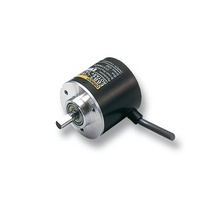
Omron E6B2-C Series
Widely used incremental encoders for industrial automation, motor feedback, and packaging machine applications.
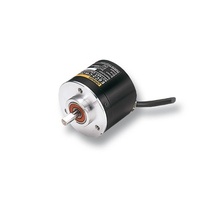
Omron E6C2-C Series
High-performance incremental encoders designed for precise motion control and industrial automation systems.

Omron E6C3-A Series
Absolute rotary encoders used for accurate position tracking without reset, ideal for CNC and automation systems.

Omron E6F-C Series
Heavy-duty incremental encoders designed for high-speed machinery and harsh industrial environments.

SICK DFS60 Series
Industrial incremental encoders known for precision sensing, durability, and reliable performance in automation systems.

Baumer Encoder Series
Baumer encoders designed for speed measurement, motion feedback, and precision control in industrial applications.

Autonics E30S Series
Compact rotary encoders suitable for small machines and light-duty automation applications.

Autonics E40H Series
Hollow shaft encoders designed for easy installation in motors and industrial machinery.

Autonics E50S Series
Standard incremental encoders widely used in industrial automation and machine control systems.

Autonics E60H Series
Hollow shaft encoders used for direct mounting in motors and high-speed industrial systems.

Autonics E80H Series
Heavy-duty rotary encoders designed for demanding industrial environments and continuous operation.
Types of Rotary Encoders
Rotary encoders are available in different types based on sensing technology and application requirements. The most commonly used rotary encoders in industrial automation are incremental and absolute encoders.

Incremental Rotary Encoders
Incremental rotary encoders generate pulses to measure speed and position during rotation. These encoders are widely used in conveyor systems, motors, and industrial automation equipment.
• Provides relative position data
• Used for speed and motion control
• Common in automation systems
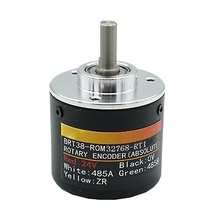
Absolute Rotary Encoders
Absolute rotary encoders provide exact position data even after power loss. These encoders are commonly used in robotics, CNC machines, and precision automation applications.
• Provides exact position feedback
• No data loss during power failure
• Used in high-precision systems

Optical Rotary Encoders
Optical rotary encoders use light-based sensing technology to detect position and rotation with high accuracy. These encoders are widely used in precision machinery and motion control systems.
• High accuracy and resolution
• Used in precision automation
• Suitable for clean environments
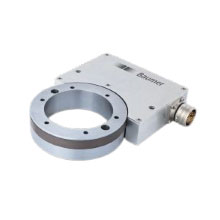
Magnetic Rotary Encoders
Magnetic rotary encoders use magnetic fields to detect position and speed. These encoders are suitable for harsh industrial environments such as dust, vibration, and moisture conditions.
• Works in harsh environments
• Resistant to dust and vibration
• Used in heavy industrial applications
Applications of Rotary Encoders
Rotary Encoders are widely used in industrial automation systems to measure position, speed, and rotation with high accuracy and resolution. They are essential for motion control, machine automation, and precision control applications.
- Conveyor Systems – Used for speed monitoring, position tracking, and synchronization of conveyor belts in automated production lines.
- Packaging Machines – Provide accurate position feedback for product alignment, labeling, filling, and sealing operations.
- CNC Machines – Deliver high-resolution position feedback for precise cutting, drilling, and machining processes.
- Robotics & Automation Systems – Enable precise motion control and position tracking in robotic arms and automated machinery.
- Printing & Textile Machines – Used for position control, roll alignment, and synchronized movement in printing and textile processing.
- Machine Tools – Monitor shaft rotation, position, and movement in industrial machine tools and manufacturing equipment.
Rotary Encoders help improve position accuracy, ensure precise motion control, and provide reliable feedback in industrial automation systems.
Rotary Encoder FAQs
Below are some frequently asked questions about rotary encoders used in industrial automation, motion control, and position sensing applications.
What is a rotary encoder used for?
A rotary encoder is used to measure position, speed, and rotation of shafts in industrial automation systems. It is commonly used in conveyors, CNC machines, robotics, and packaging equipment.
What is the difference between incremental and absolute encoder?
Incremental encoders provide relative position based on pulses, while absolute encoders provide exact position data even after power loss. Absolute encoders are used in high-precision applications.
Where are rotary encoders used in industrial automation?
Rotary encoders are used in conveyor systems, packaging machines, CNC machines, robotics, and machine tools for motion control and position feedback.
What is encoder resolution?
Encoder resolution refers to the number of pulses or counts per revolution. Higher resolution provides more accurate position and speed measurement in industrial automation systems.
Which rotary encoder is best for industrial use?
The best rotary encoder depends on the application. Incremental encoders are used for general automation, while absolute encoders are preferred for high-precision and critical position control systems.
Conclusion
Rotary encoders are essential components in modern industrial automation, helping machines track position, speed, and movement with high accuracy. From conveyor systems to CNC machines and robotics, these devices play a key role in maintaining control, consistency, and smooth machine operation.
With different encoder types, resolutions, and output options available, selecting the right rotary encoder depends on your machine requirements and application conditions. Choosing the correct encoder not only improves performance but also reduces errors and long-term maintenance issues.
On IndMALL, Rotary Encoder suppliers offer better pricing, availability, and service compared to Rotary Encoder dealers and distributors. They provide quick responses, expert support, and efficient sourcing solutions tailored to your needs. Compare multiple options, get quotes from trusted suppliers, and streamline your sourcing process for quicker and more efficient results.