
In most procurement cycles, DSNU-25-100-PPS-A is considered with Festo Festo, Festo Dsnu 25 50 P A 19221 and Festo Valves, giving decision-makers confidence that they’ve chosen the most dependable component.
Festo DSNU-25-100-PPS-A Round Cylinder
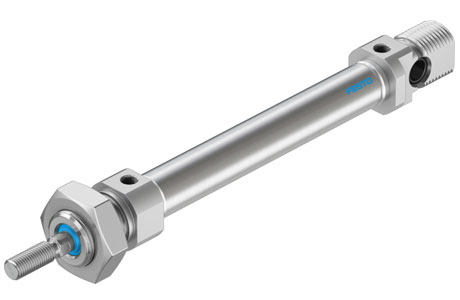
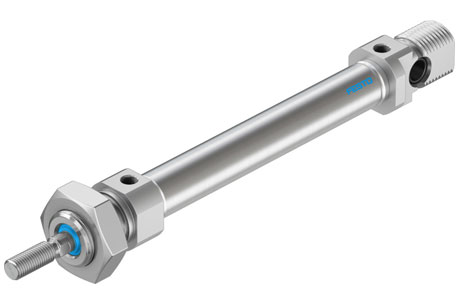
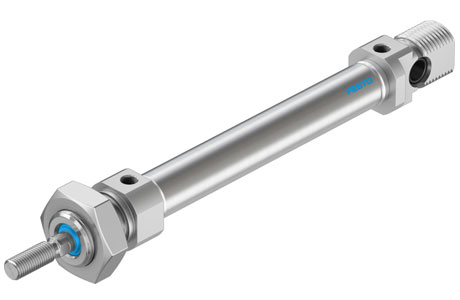
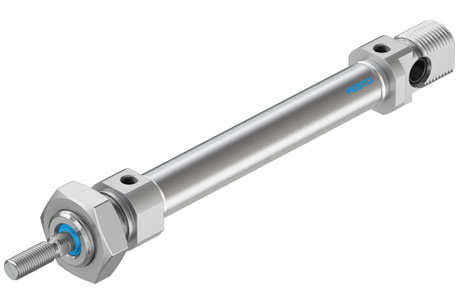
The Festo DSNU-25-100-PPS-A Round Cylinder offers M10x1.25 rod thread, Male thread piston rod end, 25 mm diameter, andPiston; Piston rod; Cylinder barrel. Manufactured by Festo under the Festo Round Cylinder category, this model belongs to the DSNU Series.
| Brand | Festo |
| Product Type | ISO Cylinder |
| Product | DSNU-25-100-PPS-A |
Festo DSNU-25-100-PPS-A Round Cylinder – Technical Specifications
| Specification | Value |
|---|---|
| Stroke | 100 |
| Piston diameter | 25 mm |
| Piston rod thread | M10x1.25 |
| Cushioning | Self-adjusting pneumatic end-position cushioning |
| Mounting position | optional |
| Conforms to standard | CETOP RP 52 P; ISO 6432 |
| Design | Piston; Piston rod; Cylinder barrel |
| Piston-rod end | Male thread |
| Position detection | Via proximity switch |
| Variants | Piston rod at one end |
| Operating pressure | 1; 10 |
| Mode of operation | Double-acting |
| Operating medium | Compressed air to ISO 8573-1:2010 [7:4:4] |
| Corrosion resistance class CRC | 2 - Moderate corrosion stress |
| LABS (PWIS) conformity | VDMA24364-B1/B2-L |
| Cleanroom class | Class 6 according to ISO 14644-1 |
| Ambient temperature | -20; 80 |
| Impact energy in end positions | 0.3 |
| Theoretical force at 0.6 MPa (6 bar, 87 psi), return stroke | 247.4 |
| Theoretical force at 0.6 MPa (6 bar, 87 psi), advance stroke | 294.5 |
| Moving mass for 0 mm stroke | 71 |
| Additional moving mass per 10 mm stroke | 6 |
| Basic weight for 0 mm stroke | 238 |
| Additional weight per 10 mm stroke | 11 |
| Type of mounting | With accessories |
| Pneumatic connection | G1/8 |
| Note on materials | RoHS-compliant |
| Material cover | Wrought aluminium alloy; Colourless anodised |
| Material seals | NBR; TPE-U(PU) |
| Material piston rod | High-alloy stainless steel |
| Material cylinder barrel | High-alloy stainless steel |
| Cushioning length | 17 |
Festo: Engineering Precision for Industrial Motion
Festo is a global leader in pneumatic and automation technology, delivering high-performance solutions that drive machines in manufacturing, packaging, food processing, and electronics. Known for its German engineering excellence, Festo offers products that combine durability, accuracy, and ease of integration. Across Indian industries, Festo is a preferred choice for maintenance engineers, OEMs, and automation professionals who seek long-term reliability and consistent performance.
DSNU-25-100-PPS-A: Long Stroke Cylinder with Self-Adjusting Cushioning
The Festo DSNU-25-100-PPS-A is a double-acting round cylinder with a 25 mm piston diameter and an extended 100 mm stroke. It features self-adjusting pneumatic cushioning at both ends, allowing the cylinder to automatically adapt to speed and load conditions—offering smoother deceleration and reduced mechanical stress. It delivers up to 294.5 N forward force and 247.4 N return force at 6 bar. The build includes a high-alloy stainless steel piston rod and anodised aluminium housing, providing corrosion resistance and cleanroom compatibility (Class 6). With a G1/8” pneumatic port, proximity switch support, and RoHS compliance, this model meets modern industrial standards and simplifies installation in diverse environments.
Where It’s Used: High Flexibility, Minimal Tuning Required
The DSNU-25-100-PPS-A is ideal for dynamic automation tasks where the load or speed may vary throughout the operation. Typical use cases include material pushers, machine guarding systems, automated stops, and linear conveyors. The self-adjusting cushioning helps absorb impact without needing manual adjustment—saving time during installation and reducing long-term maintenance. This makes it particularly useful in production lines that run different product batches or operate at variable speeds. Maintenance engineers appreciate the reduced downtime and consistent performance, while students and junior technicians gain insights into how automation components can intelligently adapt to working conditions.
Related Products