
In sourcing discussions, DSNU-16-200-PPV-A-19235 is often placed next to Festo Festo, Festo Dsnu 25 50 P A 19221 and Festo Valves so procurement teams can align budgets and technical requirements effectively.
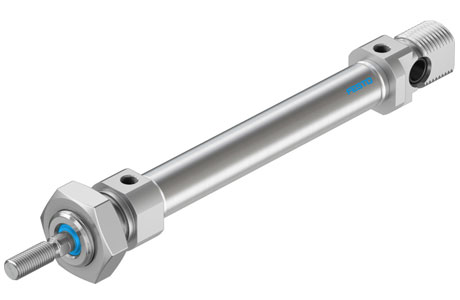
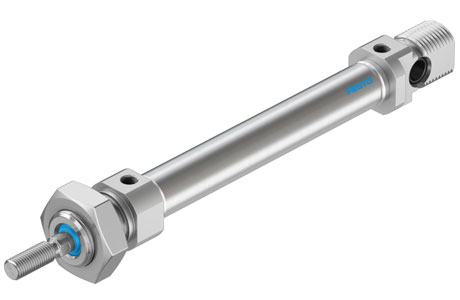
Festo DSNU-16-200-PPV-A Round Cylinder
The Festo DSNU-16-200-PPV-A Round Cylinder offers M6 rod thread, Male thread piston rod end, 16 mm diameter, andPiston; Piston rod; Cylinder barrel. Manufactured by Festo under the Festo Round Cylinder category, this model belongs to the DSNU Series.

| Brand | Festo |
| Product Type | ISO Cylinder |
| Product | DSNU-16-200-PPV-A |
Festo DSNU-16-200-PPV-A Round Cylinder – Technical Specifications
| Specification | Value |
|---|---|
| Stroke | 200 |
| Piston diameter | 16 mm |
| Piston rod thread | M6 |
| Cushioning | Pneumatic cushioning, adjustable at both ends |
| Mounting position | optional |
| Conforms to standard | CETOP RP 52 P; ISO 6432 |
| Design | Piston; Piston rod; Cylinder barrel |
| Piston-rod end | Male thread |
| Position detection | Via proximity switch |
| Variants | Piston rod at one end |
| Symbol | 991235 |
| Operating pressure | 1; 10 |
| Mode of operation | Double-acting |
| Operating medium | Compressed air to ISO 8573-1:2010 [7:4:4] |
| Corrosion resistance class CRC | 2 - Moderate corrosion stress |
| LABS (PWIS) conformity | VDMA24364-B1/B2-L |
| Cleanroom class | Class 6 according to ISO 14644-1 |
| Ambient temperature | -20; 80 |
| Impact energy in end positions | 0.15 |
| Theoretical force at 0.6 MPa (6 bar, 87 psi), return stroke | 103.7 |
| Theoretical force at 0.6 MPa (6 bar, 87 psi), advance stroke | 120.6 |
| Moving mass for 0 mm stroke | 23 |
| Additional moving mass per 10 mm stroke | 2 |
| Basic weight for 0 mm stroke | 89.9 |
| Additional weight per 10 mm stroke | 4.6 |
| Type of mounting | With accessories |
| Pneumatic connection | M5 |
| Note on materials | RoHS-compliant |
| Material cover | Wrought aluminium alloy; Colourless anodised |
| Material seals | NBR; TPE-U(PU) |
| Material piston rod | High-alloy stainless steel |
| Material cylinder barrel | High-alloy stainless steel |
| Cushioning length | 12 |
Festo – A Trusted Name in Industrial Automation
Festo is a globally respected brand in automation technology and pneumatics. Known for precision engineering and German manufacturing standards, Festo components are used in thousands of industrial applications—from simple packaging lines to advanced robotics. Their cylinders are known for durability, clean operation, and consistent performance, making them a preferred choice for Indian industries focused on efficiency and uptime.
DSNU-16-200-PPV-A – Adjustable Cushioning for Controlled Performance
The DSNU-16-200-PPV-A is a double-acting pneumatic round cylinder designed to deliver smooth and powerful linear motion with precision. With a 16 mm piston diameter and a 200 mm stroke, it supports longer movement distances without sacrificing force. One key feature is the adjustable pneumatic cushioning at both ends, allowing technicians to fine-tune the deceleration at stroke limits—minimizing shock, noise, and wear.
It operates between 1 to 10 bar pressure using clean compressed air as per ISO 8573-1:2010 standards. The build includes a male-threaded piston rod, M5 pneumatic ports, and a high-quality stainless steel barrel and rod, offering corrosion resistance (CRC Class 2). With RoHS compliance and Class 6 cleanroom suitability, this cylinder is ideal for use in sensitive environments. The optional mounting accessories and proximity switch compatibility make integration seamless in automated systems.
Applications of DSNU-12-70-P-A – Where It Truly Shines
The DSNU-12-70-P-A is commonly used in light-duty automation where compact, repeatable motion is needed. Maintenance engineers in textile plants, assembly machines, and food processing units often deploy this model for actions like gate control, pin pressing, label application, and small object sorting.
Its compact form makes it ideal for tight installations such as inside electrical panels or beneath conveyor systems. Despite its small size, it offers enough thrust for delicate yet firm tasks. For engineering students, this model serves as an ideal example to understand stroke control, cushioning effects, and energy transfer in pneumatics—laying the foundation for mastering larger systems.
Related Products