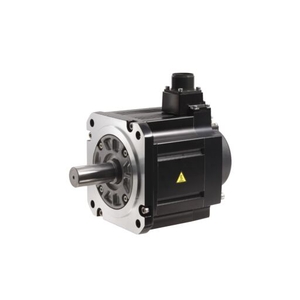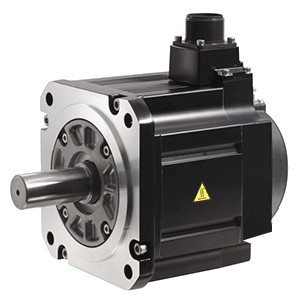
Mitsubishi HK-KT7M3WB - Servo Motors
The Mitsubishi HK-KT7M3WB Servo Motor provides 0.75 kW output, 2.4 Nm torque, and 3000 rpm speed for precision automation tasks. This model is part of the Mitsubishi servo range, accessible at mitsubishi electric, offering low inertia, 26-bit encoder, 67108864 p/rev resolution, IP67 protection, brake functionality, and AC operation. Users can explore Mitsubishi servo motor categories at mitsubishi electric and integrate systems designed around the MELSERVO-J5 series for high-precision machine control.
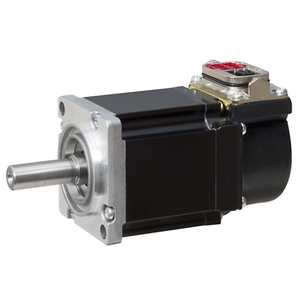
| Brand | Mitsubishi |
| Product Type | Servo Motors |
| Product | HK-KT7M3WB |
Mitsubishi Servo Motors HK-KT7M3WB Technical Specifications:
| Specification | Value |
|---|---|
| Series | MELSERVO-J5 |
| Type | HK-KT |
| Power Supply (V) | 200 |
| Rated Capacity (kW) | 0,75 |
| Inertia | LOW INERTIA |
| Rated Torque (Nm) | 2,4 |
| Maximum Torque (Nm) | 8,4 |
| Rated Speed (rpm) | 3000 |
| Inertia (kg*cm2) | 1,51 |
| Brake | YES |
| Shaft Type | STRAIGHT SHAFT |
| Current Type | AC |
| Encoder Resolution (p/rev) | 67108864 |
| Maximum Speed (rpm) | 6700 |
| Protection Class | IP67 |
| Encoder Type | 26-BIT |
| Depth (mm) | 168 |
| Weight (kg) | 2,9 |
| Width (mm) | 80 |
| Height (mm) | 96,6 |
The Mitsubishi HK-KT7M3WB Servo Motor is a 0.75 kW low inertia unit engineered for stable and controlled motion in automated systems. Delivering 2.4 Nm rated torque, 3000 rpm rated speed, and a 26-bit encoder with 67108864 p/rev resolution, the model ensures high-accuracy feedback for motion control. As part of the MELSERVO-J5 series, it supports dependable performance across advanced industrial automation environments.
This servo motor is suitable for conveyors, automated packaging lines, assembly machinery, and compact equipment requiring consistent torque and fast response. With a maximum speed of 6700 rpm, IP67 protection, and AC operation, it performs reliably in environments exposed to vibration, dust, or moisture. The straight shaft and built-in brake enable precise load handling and smooth integration in high-duty applications.
The Mitsubishi HK-KT7M3WB Servo Motor delivers accurate encoder feedback, stable torque output, and durable construction for demanding industrial tasks. With Mitsubishi’s engineering reliability, the model supports predictable movement, long service life, and steady operation in systems that require precise, repeatable motion under continuous industrial use.