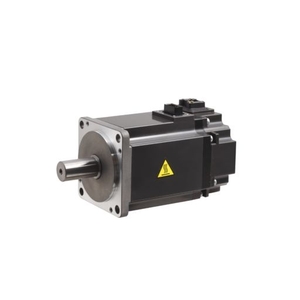
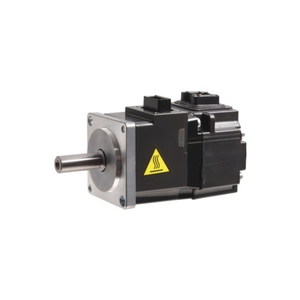
Mitsubishi HG-SN102JK - Servo Motors
The Mitsubishi HG-SN102JK Servo Motor delivers 1 kW power, 4.77 Nm torque, and 2000 rpm speed for industrial automation tasks. This model is part of the Mitsubishi servo family, accessible at mitsubishi electric, featuring medium inertia, 17-bit encoder, 131072 p/rev resolution, IP67 protection, and AC operation. Users can explore Mitsubishi servo categories at mitsubishi electric and integrate systems based on the MELSERVO-JE series for precise machine performance.
| Brand | Mitsubishi |
| Product Type | Servo Motors |
| Product | HG-SN102JK |
Mitsubishi Servo Motors HG-SN102JK Technical Specifications:
| Specification | Value |
|---|---|
| Series | MELSERVO-JE |
| Type | HG-SN |
| Power Supply (V) | 200 |
| Rated Capacity (kW) | 1 |
| Inertia | MEDIUM INERTIA |
| Rated Torque (Nm) | 4,77 |
| Maximum Torque (Nm) | 14,3 |
| Rated Speed (rpm) | 2000 |
| Inertia (kg*cm2) | 11,6 |
| Brake | NO |
| Shaft Type | KEYWAY |
| Current Type | AC |
| Encoder Resolution (p/rev) | 131072 |
| Maximum Speed (rpm) | 3000 |
| Protection Class | IP67 |
| Encoder Type | 17-BIT |
| Depth (mm) | 187,5 |
| Weight (kg) | 6,2 |
| Width (mm) | 130 |
| Height (mm) | 177,5 |
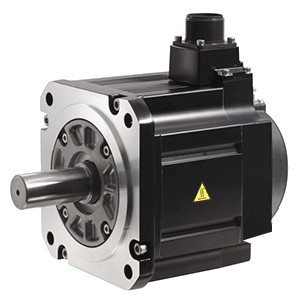
The Mitsubishi HG-SN102JK Servo Motor is a medium inertia 1 kW unit engineered for controlled and repeatable motion in automation systems. The model provides 4.77 Nm rated torque, 2000 rpm rated speed, and a 17-bit encoder delivering accurate positional feedback. As part of the MELSERVO-JE series, the HG-SN102JK supports dependable performance in machines that require stable, continuous-duty motion control.
This servo motor is suited for conveyors, automated packaging units, assembly machines, and material-handling applications needing consistent torque output. With a 3000 rpm maximum speed, IP67 rating, and AC-driven operation, it performs reliably in environments exposed to vibration, dust, or moisture. The keyway shaft ensures smooth mechanical integration for equipment requiring precise rotational alignment.
The Mitsubishi HG-SN102JK Servo Motor offers accurate encoder resolution, steady torque delivery, and robust construction for demanding automation tasks. Supported by Mitsubishi’s engineering reliability, the model ensures predictable movement, long service life, and stable operation across industrial systems that rely on precise and consistent motion.