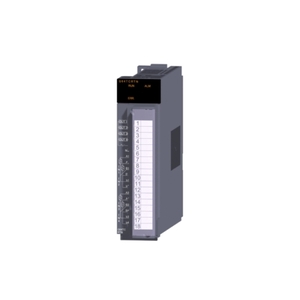
Mitsubishi Q66AD-DG - PLC Analog Output Module
The Mitsubishi Q66AD-DG Programmable Logic Controller features 6 analog input channels with 0–20 mA and 4–20 mA current ranges for precise industrial measurement. Developed by Mitsubishi, it is part of the Mitsubishi Programmable Logic Controller family under the MELSEC-Q Series. The module consumes 0.42A current, operates on 24V DC power, and provides reliable connector-type wiring with 16 occupied I/O points for industrial automation systems.
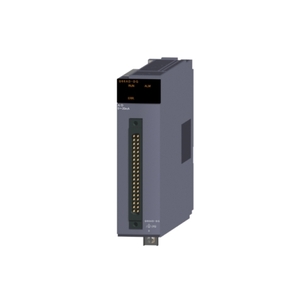
| Brand | Mitsubishi |
| Product Type | PLC Analog Output Module |
| Product | Q66AD-DG |
Mitsubishi PLC Analog Output Module Q66AD-DG Technical Specifications
| Specification | Value |
|---|---|
| Series | MELSEC-Q SERIES |
| Type | ANALOG INPUT |
| Occupied I/O Points on PLC | 16 |
| Integrated Analogue Inputs | 6 |
| Input Current Range (mA) | 0-20; 4-20 |
| Wiring | CONNECTOR |
| Int. Current Consumption (A) | 0,42 |
| Depth (mm) | 177 |
| Weight (kg) | 0,22 |
| Width (mm) | 27,4 |
| Height (mm) | 102 |
| Power Supply (V) | 24 |
| Current Type | DC |
The Mitsubishi Q66AD-DG Programmable Logic Controller is a high-precision analog input module designed for current signal measurement in automated control systems. It supports 6 input channels with 0–20 mA and 4–20 mA ranges, offering stable performance and easy integration within the MELSEC-Q Series. This Mitsubishi PLC provides dependable analog signal acquisition for industrial automation applications.
The Mitsubishi Q66AD-DG PLC is ideal for monitoring process parameters in industries such as manufacturing, packaging, and assembly automation. With its compact 27.4 mm width and 177 mm depth, it fits seamlessly into control panels. Its connector-type wiring ensures firm connectivity, supporting accurate input readings and consistent data flow within complex industrial systems.
The Mitsubishi Q66AD-DG Programmable Logic Controller demonstrates Mitsubishi’s commitment to reliable and precise automation control. Belonging to the MELSEC-Q Series, it offers accuracy, durability, and efficiency for long-term industrial use. Engineers prefer this model for its dependable analog input capability, stable signal handling, and integration flexibility in modern automation environments.