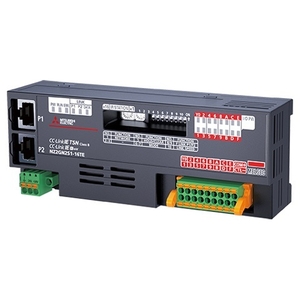
Mitsubishi NZ2MFB2-16R - Programmable Logic Controller
The Mitsubishi NZ2MFB2-16R is a robust PLC module designed for relay output control in industrial automation systems. This Programmable Logic Controller from Mitsubishi offers seamless integration with CC-LINK IE Field Network Basic, making it an ideal choice for distributed control applications across manufacturing environments.
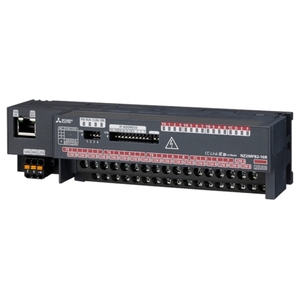
| Brand | Mitsubishi |
| Product Type | PLC(Programmable Logic Controller) |
| Product | NZ2MFB2-16R |
Technical Specifications of Mitsubishi Programmable Logic Controller NZ2MFB2-16R
| Specification | Value |
|---|---|
| Series | CC-LINK IE FIELD NETWORK BASIC |
| Type | REMOTE RELAY OUTPUT |
| Depth (mm) | 68 |
| Weight (kg) | 0,35 |
| Width (mm) | 200 |
| Height (mm) | 50 |
| Power Supply (V) | 24 |
| Current Type | DC |
| Integrated Digital Outputs | 16 |
| Output Type | RELAY |
| Rated Load Voltage (VDC) | 24 |
| Wiring | SCREW |
| Int. Current Consumption (A) | 153 |
| Rated Load Voltage (VAC) | 240 |
| Occupied Stations | 1 |
Engineered by Mitsubishi, the NZ2MFB2-16R is a remote relay output PLC designed for reliable and high-performance output switching. With 16 integrated digital relay outputs, this module ensures efficient load control in automation systems where electrical isolation and mechanical switching are essential. Built on the CC-LINK IE FIELD NETWORK BASIC platform, it provides simplified wiring, real-time communication, and scalable integration with other Mitsubishi controllers, I/O devices, and HMIs. This makes it suitable for both small-scale setups and large distributed systems in industries like material handling, packaging, and utilities.
The NZ2MFB2-16R PLC has a compact and install-friendly structure with dimensions of 68 mm depth, 200 mm width, and 50 mm height, while weighing just 0.35 kg. It operates with a 24V DC power supply and supports a rated load voltage of up to 240V AC, allowing it to control both AC and DC actuators. The use of screw-type wiring ensures secure and long-lasting electrical connections, even in environments with mechanical vibrations. With an internal current consumption of 153 mA and support for 1 occupied station on the network, the unit maintains energy efficiency while ensuring communication bandwidth optimization.
Trusted in both discrete and process industries, the Mitsubishi NZ2MFB2-16R provides dependable control over contactors, alarms, pilot lamps, and output relays. Its rugged relay output type ensures durability in high-load switching scenarios, reducing failure rates compared to solid-state options when managing inductive or AC loads. For engineers seeking reliable relay output control within CC-LINK-based systems, this PLC module offers proven performance, ease of deployment, and the long-term assurance of Mitsubishi’s engineering excellence.
The Mitsubishi NZ2MFB2-16R PLC is widely applied in factory automation environments where relay-based output control is required. For instance, it’s commonly used to switch motors, fans, and solenoids in conveyor systems, packaging lines, and HVAC panels. Its relay outputs allow direct switching of higher voltage loads without additional interface relays, simplifying panel design and reducing system complexity.
For Indian maintenance engineers and system integrators, this model is especially helpful when working on legacy machinery or hybrid systems that demand both AC and DC output compatibility. Its ability to handle 240V AC loads through durable relay contacts ensures long life and operational stability. Whether you're building control panels from scratch or retrofitting older systems with modern networking features, this PLC allows effortless upgrade paths while maintaining electrical safety and modular flexibility.
If your industrial application requires reliable, field-proven control over multiple output points with relay-based switching, the Mitsubishi NZ2MFB2-16R PLC delivers unmatched versatility and dependability. With native support for CC-LINK IE Field Basic, it positions your system for future-ready, synchronized, and decentralized automation.