
Turck Radar Sensor: Precision in Measurement & Range
Turck radar sensors are industrial sensing devices used to detect distance level or motion using radio waves technology applications. They operate by transmitting high frequency electromagnetic signals and analyzing reflected echoes to calculate target position or movement, enabling non contact measurement unaffected by dust, vapor, temperature, or lighting conditions in industrial environments. Selection is based on measurement range, radar frequency band, beam angle, resolution, output signal type, response time, mounting configuration, environmental protection rating, power supply requirements, and compliance with industrial sensor and radio emission standards. Turck radar sensors are electromagnetic wave based measurement devices, compact field mounted in structure, classified by continuous or discrete measurement function and frequency band, interfacing through analog, digital, or industrial communication outputs for integration into standardized industrial automation and process monitoring architectures.
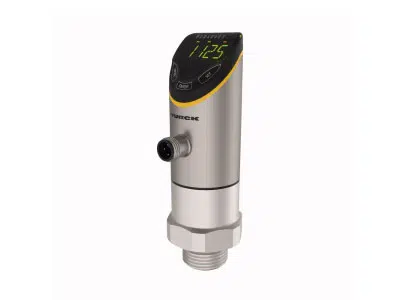

Turck Radar Sensor: LRS Series
Range: All models have a 10 m range.
Blind Zone: Each sensor has a 35 cm blind zone.
Resolution: 1 mm across all models.
Beam Angle: Cone angles vary between ±3° and ±5°.
Connectivity: Includes PNP/NPN switching, some with analog outputs and IO-Link.
Approvals: Compliant with ETSI 305550-2 and FCC/CFR 47 Part 15.
Design: Features a rotatable housing with a 4-digit display and robust pressure resistance.

Turck Radar Distance Sensor: DR Series
Types: Various models like DR15S and T30R series featuring FMCW radar technology.
Specifications: Maximum range up to 15 meters, precision to 1 mm, equipped with IO-Link, switching, and analog outputs.
Durability: All units are IP67 rated, ensuring water and dust resistance.
Global Compliance: Approved for use in multiple regions including USA, Europe, and Australia.
Applications: Suitable for detecting both stationary and moving objects across diverse industrial environments.
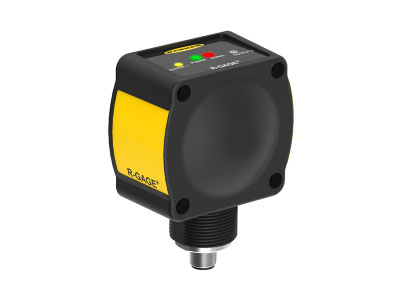
Turck Radar Switching Sensor: QT50 Series
Connectivity & Protection: All models feature an M12 × 1, 5-pin connector with IP67 protection.
Technology: Utilizes FMCW radar to detect both stationary and moving objects.
Detection Range: Varies from 3.75 m to 24 m across different models.
Global Compliance: Certified for use in major regions including Europe and Australia.
Configuration: Adjustable via DIP switch, offering PNP/NPN outputs; some have dual outputs.
Operating Voltage: Supports 12–30 VDC.

Turck Narrow Beam Radar Sensor: Q120R Series
Product Type: All sensors are designed for precise distance measurement with switching outputs.
Models: Includes types Q120RA-EU-AF2Q, Q120RA-EU-AF2, Q120RA-EU-AF, and Q120RA-EU-AF2WQ.
Size: Each model measures 62 x 90.8 x 159.5 mm (Q120 construction size).
Beam Angle: 24° x 50°.
Output: Configured for either PNP or NPN outputs.
We currently don’t have any verified suppliers.
We’re actively onboarding more vendors in this region to serve you better.
If you’re a supplier, get listed on IndMALL today.
IndMALL offer a versatile selection of Turck Radar Sensor known for their reliability and precision. Our range includes the Turck Radar Switching Sensor and Turck Radar Distance Sensor, perfect for complex industrial applications requiring accurate distance measurement and object detection. The Turck Narrow Beam Radar Sensor offers targeted detection with minimal interference, ideal for constrained spaces. These sensors incorporate Frequency-Modulated Continuous Wave (FMCW) technology, ensuring reliable performance under various conditions, with certifications for global markets including Europe and the USA. Each model boasts IP67 protection, versatile connectivity options like IO-Link, and flexible configurations to meet specific industry needs.
What is the purpose of a radar sensor?
The primary purpose of a radar sensor is to detect movements and stationary objects using signal reflections. This allows for gathering comprehensive data on various entities such as vehicles, animals, and people. Radar sensors process these reflections to provide detailed information about the position, speed, and direction of the detected objects, making them invaluable in various applications including traffic monitoring, security, and automation.
What is the range of a radar sensor?
The range of a radar sensor can vary significantly depending on the specific model and its application. For instance, the OndoSense reach radar sensor is designed for object detection and distance measurement, offering a wide measuring range from 0.3 meters up to 40 meters. This allows for versatile use across various environments and conditions.
How do you measure distance with radar?
To measure distance with a radar sensor, the process involves calculating the time it takes for a radar pulse to travel to the target and back. This round-trip time is then multiplied by the speed of the radar signal, which travels at the speed of light. The formula used is: distance = (time * velocity)/2. This calculation provides the distance from the radar to the target by accounting for the return journey of the radar pulse.
Get a Quote for Turck Radar Sensor.