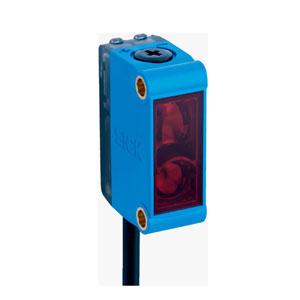
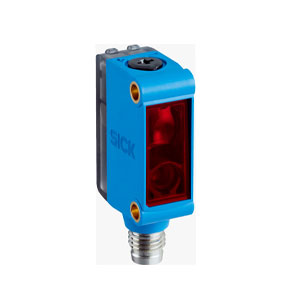
Sick GSE6-N4112 Photoelectric Sensor
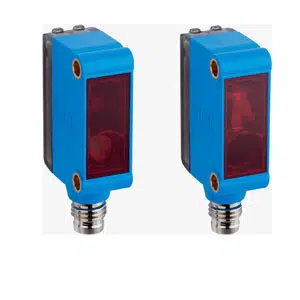
Sick GSE6-N4112 photoelectric sensor provides 15 m sensing range, NPN output, 1000 Hz switching frequency, and PinPoint LED light source. The GSE6-N4112, a Sick 15 m Through-beam Photo Sensor, uses through-beam sensing principle, Ø 375 mm light spot, and ≤ 500 µs response time. It features IP67 protection, rectangular housing, 10–30 V DC supply, and integrates with Sick, Sick Photoelectric Sensors, and the G6 series.
| Brand | Sick |
| Product Type | Photoelectric Sensors |
| Model Number | GSE6-N4112 |
Sick GSE6-N4112 Photoelectric Sensor – Technical Specifications
| Specification | Value |
|---|---|
| Functional principle | Through-beam photoelectric sensor |
| Functional principle detail | - |
| Sensing range max. | 0 m ... 15 m |
| Sensing range | 0 m ... 10 m |
| Light source | PinPoint LED |
| Type of light | Visible red light |
| Light spot size (distance) | Ø 375 mm (12 m) |
| Wave length | 650 nm |
| Adjustment | None |
| Supply voltage UB | 10 V DC ... 30 V DC |
| Ripple | ± 10 % |
| Current consumption | 30 mA 3) |
| Protection class | III |
| Digital Output type | NPN |
| Switching mode | Light/dark switching |
| Switching mode selector | Selectable via light/dark selector |
| Signal voltage PNP HIGH/LOW | Approx. VS / ≤ 3 V |
| Output current Imax. | ≤ 100 mA 4) |
| Response time | < 500 µs 5) |
| Switching frequency | 1,000 Hz 6) |
| Housing | Rectangular |
| Dimensions (W x H x D) | 12 mm x 31.5 mm x 21 mm |
| Connection | Male connector M8, 4-pin |
| Housing material | Plastic, ABS/PC |
| Front screen material | Plastic, PMMA |
| Enclosure rating | IP67 |
| Ambient operating temperature | –25 °C ... +55 °C |
| Ambient temperature, storage | –40 °C ... +70 °C |
| Weight | 40 g |
The GSE6-N4112 Sick 15 m Through-beam Photo Sensor is designed for long-distance detection in industrial automation systems. It offers 15 m sensing range, NPN output, and operates with a PinPoint LED light source and 1000 Hz switching frequency. As part of the G6 series, the GSE6-N4112 uses through-beam sensing for stable and precise detection.
The GSE6-N4112 is used in conveyors, packaging lines, and automated assembly systems where long sensing distances are required. Its through-beam design ensures reliable detection across large gaps and varying object conditions. The compact housing and M8 connector support easy installation in industrial setups.
The Sick GSE6-N4112 Photoelectric Sensor ensures consistent detection and stable output performance in demanding environments. The GSE6-N4112 in the G6 series supports accurate sensing over long distances. As part of the Sick sensor range, it is suitable for industrial automation systems requiring dependable and repeatable detection.