
Honeywell Magnetic Sensors | Magnetic Door Switch
<:contentReference[oaicite:0]{index=0} magnetic sensors are sensing devices used to detect magnetic fields and positional changes in industrial automation systems applications. They operate using Hall effect, magnetoresistive, or reed switch principles to convert variations in magnetic flux into electrical signals for proximity detection, speed sensing, position feedback, and rotational measurement in machinery and equipment. Selection is based on sensing principle, magnetic field strength, operating distance, output type, supply voltage, response time, environmental protection rating, temperature limits, mechanical form factor, and compatibility with industrial control system inputs. Honeywell magnetic sensors are solid-state or electromechanical magnetic field sensing devices, compact in structure, classified by sensing technology and output configuration, interfacing through digital or analog electrical signals for integration into standardized industrial automation and motion monitoring architectures.
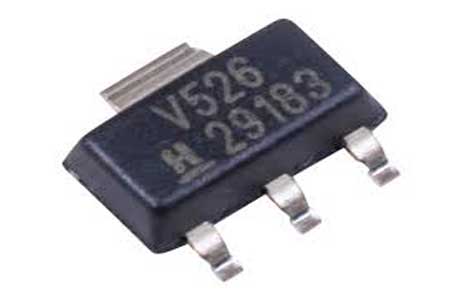

Honeywell Magnetic Sensors:MG series
Variety in Configuration: Available in various compact forms, strengths, and magnetic materials to suit different industrial applications.
- Specific Use: Intended to operate as actuators for sensor ICs, ensuring precise performance in devices requiring magnetic actuation.
- Magnetic Specifications: These magnets provide minimum magnetic fields at specified distances, which assists system designers in selecting the right magnet for their specific needs.
- Customization Options: The series includes magnets that can be matched with specific
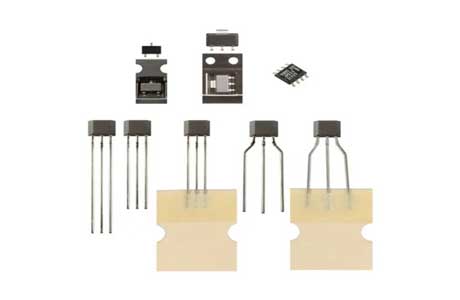
Honeywell Magnetic Door Switch: Linear and Angle Sensor ICs
Sensor Types: Includes analog output Hall-effect and anisotropic magnetoresistive (AMR) sensor ICs.
- Functionality:
- Linear sensor ICs generate a voltage output based on the proximity to magnetic poles.
- APS00B Angle Sensor IC measures angular or rotary displacement, ideal for magnetic field sensing, and provides quadrature outputs for up to 180° angular measurements.
- Product Offerings:
- APS00B Angle Sensor IC: Outputs dual analog voltages for angle changes in magnetic fields.
- SS39ET, SS49E, SS59ET Linear Sensor ICs: Provide linear sourcing outputs and come in various packaging options.
- SS490 Series Linear Sensor ICs: Offer linear sinking or sourcing outputs.
Honeywell Magnetic Sensor:Bipolar Position Sensor ICs
Purpose: These sensors detect magnetic fields from permanent magnets or electromagnets and respond to alternating poles (North and South).
- Product Variety: Includes low-cost bipolar Hall-effect digital sensor ICs and high-voltage, ESD-protected models.
- Models: Notable models include SS30AT, SS40A, SS50AT for low-cost sensors, and SS311PT, SS411P with built-in pull-up resistors.
- Packaging Options: Available in SOT-23, flat TO-92-style, and SOT-89B packages.
- Output: All models feature a digital sinking output.
- Voltage Range: High Voltage models can handle a supply voltage range of 4.5-60 Vdc.
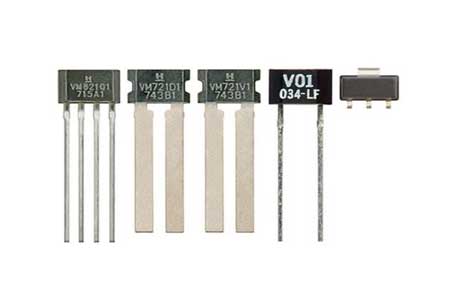
Honeywell Magnetic Switch:Speed Sensor ICs
VM Series: Designed for detecting the speed and direction of ring magnet encoders in automotive and industrial applications.
- VF401: Digital sensor capable of true zero speed sensing, uses a 2-wire magnetoresistive system, suitable for high-speed applications up to 3000 Hz.
- VF526DT: Features dual Hall-effect sensors for speed and direction detection, operates across a voltage range of 3.4 Vdc to 24 Vdc.
- VG481V1: Equipped with a back-biased Hall-effect sensor that can detect ferrous gear tooth wheels at zero speed once powered.
Honeywell offers a diverse range of magnetic sensors designed for precise position, speed, and angle sensing in industrial applications. Their lineup includes Hall-effect and anisotropic magnetoresistive (AMR) sensor ICs available in both digital and linear outputs. Introduced in 1968 with the first solid-state keyboard that utilized Hall-effect sensors, Honeywell has continued to innovate in this technology space. Today, their magnetic sensors portfolio encompasses linear and angle sensors ICs, position sensor ICs, and specialized sensors for speed and direction. These sensors are highly compatible with other electronic circuits and offer a variety of packaged options. Additionally, Honeywell provides magnets under the MG Series that act as actuators for these sensors, featuring unipolar or omnipolar magnetic characteristics, suitable for a range of industrial sensing applications.
Frequently Asked Questions
What are magnetic sensors used for?
Magnetic sensors are crucial across various engineering fields, including automobiles, military, robotics, medical devices, space equipment, geophysics, and industrial measurements. They detect magnetic fields and changes, enabling applications such as vehicle speed sensing in automotive ABS systems, navigation in robotics, and equipment monitoring in industrial settings. These sensors enhance precision and safety in technology-dependent sectors.
What is a magneto sensor?
A magneto sensor, or magnetic sensor, is a device that converts the magnitude and variations of a magnetic field into electrical signals. These sensors are crucial for detecting and measuring magnetic forces, enabling them to be utilized in various applications such as navigation, proximity detection, vehicle speed sensing, and object positioning, ensuring precise and reliable readings of magnetic environments.
How is a magnetic sensor tested?
Testing a magnetic sensor typically involves several steps to ensure it functions correctly. First, use a multimeter to check the sensor’s resistance to confirm it falls within the expected range. Next, verify the sensor’s output by measuring voltage or frequency changes when exposed to a magnetic field. This helps determine if the sensor is accurately detecting and responding to magnetic variations, ensuring its reliability in practical applications.
Get a Quote for Honeywell Magnetic Sensors