
Fotek Solid State Relays - SSR Solid State Module
Fotek solid state relays are electronic switching devices used to control electrical loads without mechanical contacts in industrial systems. They operate using semiconductor devices such as triacs or thyristors, providing zero-cross or random turn-on control for AC loads, and MOSFET outputs for DC loads, enabling fast switching, electrical isolation via optocouplers, and silent operation in automation panels. Selection depends on load type, rated voltage and current, control input voltage, output configuration, heat dissipation requirements, switching mode, leakage current, and compliance with electrical standards for continuous industrial duty. Fotek solid state relays are semiconductor-based power switching modules, panel-mounted, classified by AC or DC load control, current rating, and switching method, using optically isolated low-voltage control interfaces to drive resistive, inductive, or capacitive loads in standardized industrial electrical control architectures across automation systems requiring predictable lifecycle behavior and deterministic electrical performance under continuous operating conditions with defined thermal limits and interface compatibility.
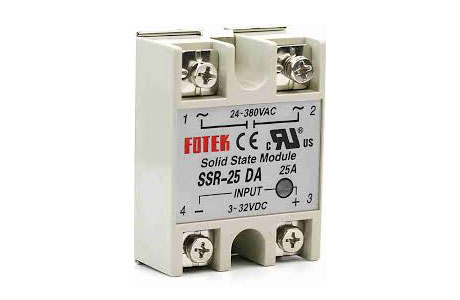
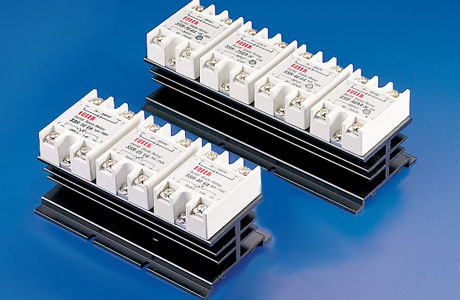
Fotek Solid State Relays - DA Series
High Durability: Features high dielectric strength over 4kV and strong isolation above 100MΩ/500VDC.
Protection Features: Includes an overheat protection circuit activated at 120°C, ensuring safety and reliability.
Surge Handling: Capable of sustaining high surge currents and voltages.
Compliance: Meets EN60947-4-3 and EN60950 standards, ensuring operational safety and reliability.
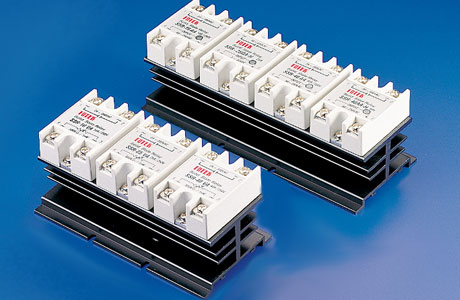
Fotek SSR - AA Series
High Dielectric Strength: Over 4KV, ensuring excellent insulation and safety.
Robust Isolation: Exceeds 100MΩ at 500VDC, offering superior protection against electrical interference.
Overheat Protection: Features a circuit that activates at 120°C to prevent overheating.
Surge Resistance: Designed to withstand high surge currents and voltages, enhancing durability.
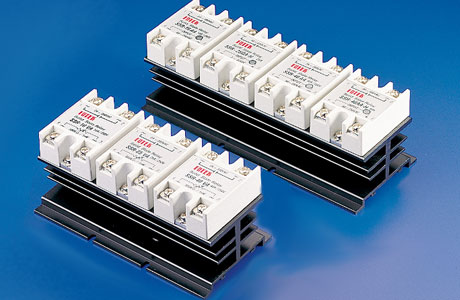
Fotek SSR Relay - DD Series
High Dielectric Strength: Offers over 4KV, providing excellent electrical insulation.
Isolation Capability: Above 100MΩ at 500VDC, ensuring robust electrical separation.
Thermal Protection: Includes an overheat protection circuit that activates at 120°C.
Surge Performance: Capable of handling high surge currents and voltages.
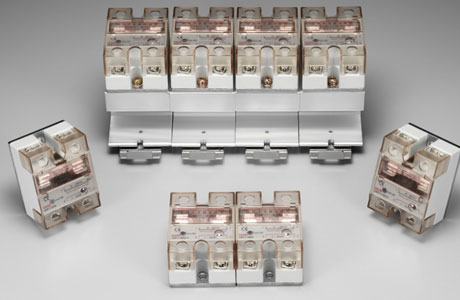
Fotek Solid State Module - SSR-F-DA
High Dielectric Strength: Exceeds 4KV, providing excellent insulation against electrical faults.
Robust Isolation: Features isolation strength over 100MΩ at 500VDC for enhanced safety.
Overheat Protection: Incorporates a circuit that activates at 120°C to prevent excessive heating.
Surge Capabilities: Designed to withstand high surge currents and voltages, ensuring durability.

Veda Instrument
Deals in PAN India
The Fotek Solid State Relays showcases a variety of SSR models suitable for different industrial applications. These include single-phase and three-phase modules, with specific series designed for enhanced heat dissipation and high-power applications. Key features across these models include high dielectric and isolation strength, overheat protection circuits, and compliance with EN60947-4-3 and EN60950 standards, ensuring safety and reliability in demanding environments.
Are solid state relays good?
Solid State Relays (SSRs) are highly effective for frequent switching applications. They can rapidly toggle heating elements to regulate temperature, unlike mechanical relays that wear out due to moving parts. SSRs offer durability and reliable performance without the mechanical wear associated with traditional relays.
What is the difference between SCR and SSR?
An SCR (Silicon Controlled Rectifier) can adjust the phase angle of AC power, allowing linear control of output voltage. In contrast, an SSR (Solid State Relay) purely functions as an ON/OFF switch without phase angle control. This fundamental difference makes SCRs more versatile for applications requiring variable power output, while SSRs are better suited for simple, rapid switching tasks.
Are solid state relays AC or DC?
Solid state relays (SSRs) can operate with either AC or DC input currents, depending on their design and intended use. DC SSRs typically handle inputs like 5V, 12V, and 24V, while AC SSRs are often designed for 120V or 240V. This flexibility allows SSRs to be used in various applications, adapting to different power requirements.
Find the right Fotek Solid State Relays for your industry needs at IndMALL.