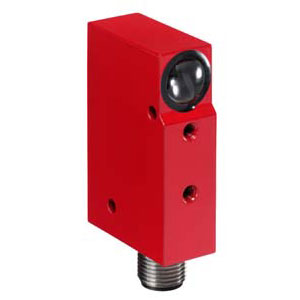
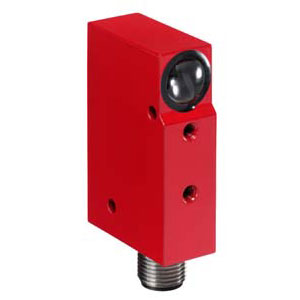
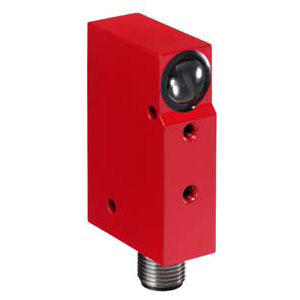
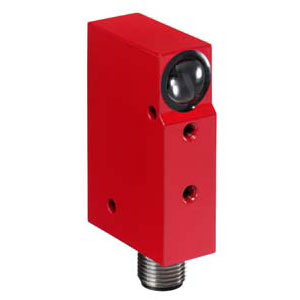
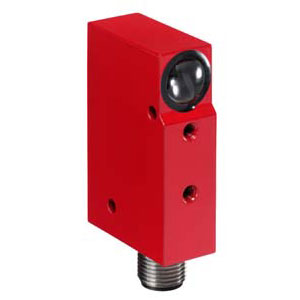
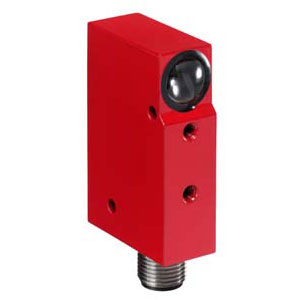
Leuze IPRK 18/A L.4 | 50030077
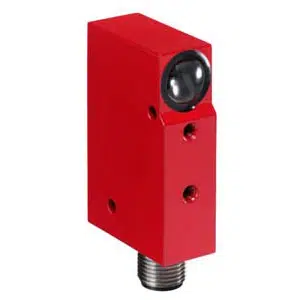
| Brand | Leuze |
| Product Type | Photoelectric Sensor |
| Product | IPRK 18/A L.4 |
Leuze 2.4 m Operating range Retro-reflective photoelectric sensor IPRK 18/A L.4 - 50030077 Technical Specifications:
| Specification | Value |
|---|---|
| Design | Cubic |
| Operating principle | Reflection principle |
| Application | Detection of highly transparent bottles Detection of highly transparent films and glass panes |
| Special version | Autocollimation Warning output |
| Sensing Distance | 0 ... 2.4 m |
| Beam path | - |
| Light source | LED, Red |
| Wavelength | 660 nm |
| Type of light spot geometry | Round |
| Supply voltage UB | 26.5 ... 31.6 V |
| Switching Output 1 | - |
| Switching principle | - |
| Switching Output 2 | - |
| Switching principle | - |
| Switching frequency | 500 Hz |
| Response time | 1 ms |
| Function | AS-i interface Voltage supply |
| Type of connection | Connector |
| Thread size | M12 |
| Type | Male |
| Material | Stainless steel |
| No. of pins | 5 -pin |
| Encoding | A-coded |
| Dimension (W x H x L) | 15 mm x 50 mm x 33 mm |
| Housing material | Metal |
| Metal housing | Zinc |
| Lens cover material | Glass |
| Housing color | Red |
| Type of display | LED |
| Operational controls | Step switch |
| Ambient temperature, operation | -25 ... 55 °C |
| Ambient temperature, storage | -40 ... 70 °C |
| Degree of protection | IP 67 / IP 69K |
Built with a robust metal zinc housing and protected by an IP67/IP69K sealing class, the Leuze IPRK 18/A L.4 ensures reliable operation even in dusty, wet, or high-pressure cleaning environments. With a compact cubic design and dimensions of 15 mm x 50 mm x 33 mm, it fits easily into tight spaces on automated production lines.
This photoelectric sensor is engineered using the reflection principle and utilizes a red LED light source at a wavelength of 660 nm, optimized for transparent object detection. The sensing range extends up to 2.4 meters, making it ideal for short- to mid-range applications. The sensor operates on a supply voltage of 26.5 to 31.6 V DC, with a response time of 1 ms and a switching frequency of 500 Hz, ensuring quick and reliable object recognition.
The Leuze IPRK 18/A L.4 integrates an AS-i interface for seamless fieldbus communication and features a 5-pin A-coded M12 male connector for quick and secure wiring. LED indicators and a step switch provide visual diagnostics and easy configuration. Backed by German engineering, this sensor is built to meet the toughest industrial standards while maintaining ease of use and installation. For more details, refer to the official product page from Leuze IPRK 18/A L.4 – Official Datasheet.
The Leuze IPRK 18/A L.4 Photoelectric Sensor is purpose-built for the reliable detection of highly transparent bottles, films, and glass panes—critical in industries like food and beverage, pharmaceuticals, and packaging. Traditional sensors often fail in these applications due to irregular light refraction, but this model’s advanced autocollimation design ensures precise and repeatable detection even with minimal contrast.
With the reflection principle and optimized 660 nm LED technology, this sensor reduces false triggers caused by light interference or background reflections. Its fast response time and high switching frequency make it suitable for high-speed filling lines, labeling machines, and bottle inspection stations. The added warning output allows operators to receive alerts when sensing margins are compromised, helping teams prevent downtime before it occurs.
From its rugged construction to intelligent signal processing, the Leuze IPRK 18/A L.4 Photoelectric Sensor enhances operational reliability and sensing accuracy. Whether you're upgrading legacy systems or designing new automation lines, this photoelectric sensor offers a clear edge in performance, durability, and ease of integration.