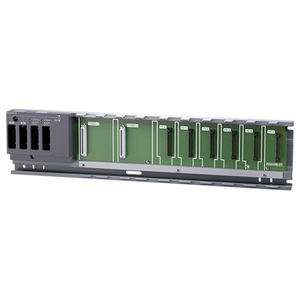


During technical comparisons, MITSUBISHIELECTRIC-R68RB-HT appears alongside Schneider PLC, Fx5U 32Mt Ess and Mitsubishi HMI so engineers assess signal types, ingress protection, and ambient tolerances accurately.
Mitsubishi R68RB-HT - PLC Programmable Logic Controller
Technical Specifications of Mitsubishi PLC Programmable Logic Controller R68RB-HT:
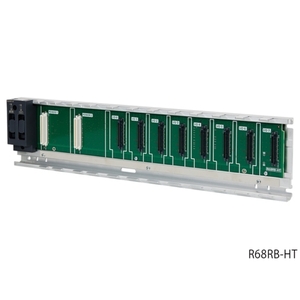
| Brand | Mitsubishi |
| Product Type | PLC(Programmable Logic Controller) |
| Product | R68RB-HT |
Mitsubishi PLC Programmable Logic Controller R68RB-HT Technical Specifications
| Specification | Value |
|---|---|
| Series | MELSEC IQ-R SERIES |
| Type | EXTENDED TEMP. EXTENSION BASE |
| Slots | 8 |
| Slots for Power Supply | 2 |
| Depth (mm) | 32,5 |
| Weight (kg) | 0,2 |
| Width (mm) | 439 |
| Height (mm) | 101 |
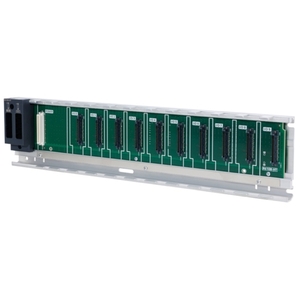
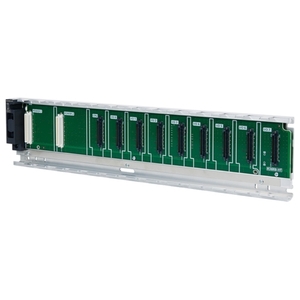
The Mitsubishi R68RB-HT Programmable Logic Controller is a structured extension base designed for the MELSEC IQ-R SERIES. It features 8 expansion slots, 2 power supply slots, a compact 32.5 mm depth, and a lightweight 0.2 kg build, supporting stable mounting in automation panels. The 439 mm width and 101 mm height allow the R68RB-HT to integrate cleanly within larger PLC configurations required in industrial automation environments.
The Mitsubishi R68RB-HT Programmable Logic Controller is commonly applied in conveyors, automated packaging lines, assembly processes, and machine control systems requiring flexible expansion. Its slot arrangement supports balanced I/O distribution and stable communication, helping maintain reliable operation over long production cycles. The extended temperature structure ensures controlled thermal performance, making it suitable for demanding production floors where consistent hardware stability is required.
The Mitsubishi R68RB-HT Programmable Logic Controller delivers dependable performance with its 8-slot layout, dual power supply capability, and extended temperature design. Its dimensions and structural profile support robust installation across IQ-R architectures, providing engineers with a predictable and reliable base for modular expansion. This model remains a practical choice for building scalable, durable, and stable industrial automation systems where long-term operational consistency is essential.