
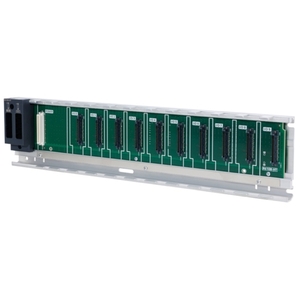
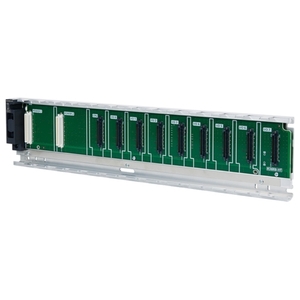

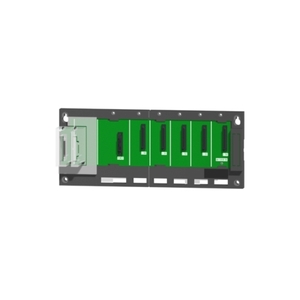

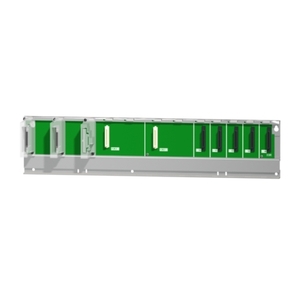
Procurement managers rarely finalize MITSUBISHIELECTRIC-R66WRB-HT without reviewing Schneider PLC, Fx5U 32Mt Ess and Mitsubishi HMI, ensuring that the chosen component meets budget, compliance, and delivery conditions.
Mitsubishi R66WRB-HT - PLC Programmable Logic Controller
Technical Specifications of Mitsubishi PLC Programmable Logic Controller R66WRB-HT:
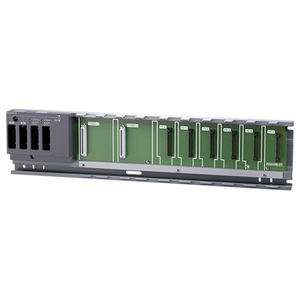
| Brand | Mitsubishi |
| Product Type | PLC(Programmable Logic Controller) |
| Product | R66WRB-HT |
Mitsubishi PLC Programmable Logic Controller R66WRB-HT Technical Specifications
| Specification | Value |
|---|---|
| Series | MELSEC IQ-R SERIES |
| Type | EXTENDED TEMP. EXTENSION BASE |
| Slots | 6 |
| Slots for Power Supply | 2 |
| Depth (mm) | 32,5 |
| Weight (kg) | 0,76 |
| Width (mm) | 439 |
| Height (mm) | 101 |
The Mitsubishi R66WRB-HT Programmable Logic Controller is a structured extension base designed for the MELSEC IQ-R SERIES, offering 6 expansion slots and 2 power supply slots. With a compact 32.5 mm depth, 439 mm width, and 101 mm height, the R66WRB-HT supports stable mounting and efficient module alignment. Its 0.76 kg frame ensures compatibility with standard industrial automation panels while enabling controlled thermal operation in extended temperature environments.
The Mitsubishi R66WRB-HT Programmable Logic Controller is commonly used in conveyor automation, packaging systems, assembly lines, and machine control setups requiring modular expansion. Its slot configuration supports diverse I/O and communication modules, ensuring consistent signal flow and panel reliability. The extended temperature capability helps maintain stable operation in demanding factory conditions, making it suitable for continuous-duty applications that depend on durable and predictable control hardware.
The Mitsubishi R66WRB-HT Programmable Logic Controller provides dependable performance with its 6-slot design, dual power supply support, and extended temperature structure. The balanced dimensions and robust build align well with IQ-R system architecture, ensuring compatibility and long-term reliability. Engineers can rely on the model’s consistent performance, solid mounting arrangement, and stable electrical interface for building scalable and durable industrial automation systems.