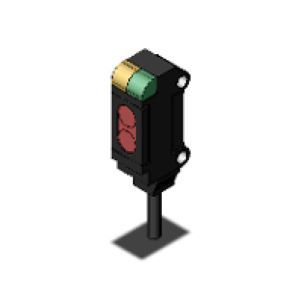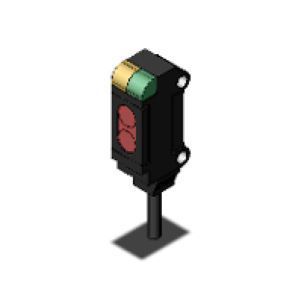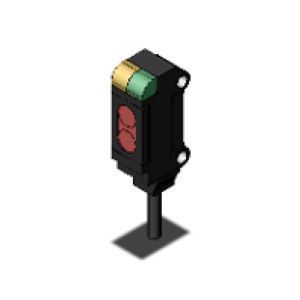
Omron E3T-SL13 5M Ultracompact Photoelectric Sensor
The Omron E3T-SL13 5M Photoelectric Sensor is an ultracompact, ultrathin sensor with a built-in amplifier designed for short-range object detection. It uses limited reflective sensing with a 5 to 15 mm sensing distance, PNP output, Red LED light source, and operates on a 12 to 24 VDC power supply in Light-ON mode. Manufactured by Omron, this sensor is part of the Omron Photoelectric Sensors portfolio and belongs to the Omron E3T Series.
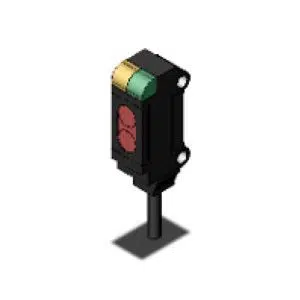
| Brand | Omron |
| Product | Photoelectric Sensors |
| Model Number | E3T-SL13 5M |
Omron E3T-SL13 5M Photoelectric Sensor - Technical Specifications
| Specification | Value |
|---|---|
| Sensing Method | Limited Reflective |
| Shape | Square type |
| Sensing Distance | 5 to 15 mm |
| Power Supply Voltage | 12 to 24 VDC |
| Output Configuration | PNP |
| Connection Method | Pre-wired cable length 5m |
| Current Consumption | 20 mA max. |
| Light Source (Wavelength) | Red LED |
| Operation Mode | Light-ON |
| Response Time | 1 ms max. |
| Degree Of Protection | IP67 |
| Material | Polybutylene terephthalate |
| Material Lens | Denatured Polyarylate |
| Weight | 20g |
The Omron E3T-SL13 5M is a limited reflective photoelectric sensor developed for precise detection in compact automation systems. As an ultracompact, ultrathin photoelectric sensor with a built-in amplifier, it supports PNP output, 5 to 15 mm sensing range, and stable operation using a Red LED light source. The sensor is designed for DC-powered control circuits operating within the 12–24 VDC range.
In industrial applications, the E3T-SL13 5M photoelectric sensor is commonly used in electronic assembly machines, small conveyors, pick-and-place systems, and compact inspection setups. Its limited reflective sensing method enables accurate detection of nearby objects where space constraints prevent the use of standard photoelectric sensors. The pre-wired 5 m cable simplifies installation in dense control panels.
As part of the Omron E3T Series, the E3T-SL13 5M is engineered for reliable performance in high-density automation environments. Its ultrathin body, stable output characteristics, and immunity to electrical noise make it suitable for continuous industrial operation. Engineers selecting limited reflective photoelectric sensors value this model for consistent detection accuracy and compatibility with modern PLC-based control systems.