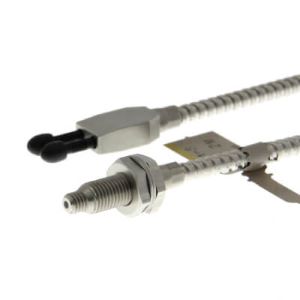
Omron E32-D33 2M Fiber Optic Sensor
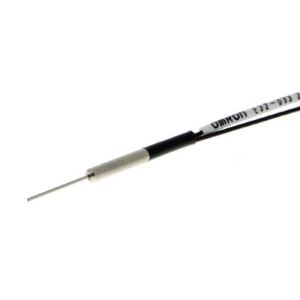
Omron E32-D33 2M is a 3 mm miniature diffuse-reflective fiber optic sensor designed for short-range object detection up to 100 mm. Its sleeved sensing structure has a 3 mm diameter, creating a compact detection point for machine locations where available mounting space is limited. A top-view sensing orientation directs the optical path toward the target, while the 2 m fiber uses a plastic core with a polyethylene sheath. The specified 25 mm bending radius defines cable routing around machine components. IP67 protection and operation from -40 to 70°C support industrial sensing conditions. The E32-D33 2M belongs to the E32 Series within the miniature fiber optic sensor range from Omron sensing products, supporting compact diffuse object detection.
| Brand | Omron |
| Product | Fiber Optic Sensor |
| Model Number | E32-D33 2M |
Omron E32-D33 2M Fiber Optic Sensor - Technical Specifications
| Specification | Value |
|---|---|
| Shape | Sleeved |
| Sensing Distance | 100 mm |
| Size | dia 3 mm |
| Cable Length | 2 m |
| Sensing Method | Diffuse reflective |
| Application | Object detection |
| Features | Miniature |
| Sensing Surface Orientation | Top-view |
| Temperature Range | -40-70 °C |
| Bending Radius | 25 mm |
| Free Cut | yes |
| Material Core | plastic |
| Material Sheath | Polyethylene |
| Degree Of Protection Ip | IP67 |
The Omron E32-D33 2M Fiber Optic Sensor uses diffuse-reflective sensing for object detection at distances up to 100 mm. Its sleeved sensing structure has a 3 mm diameter, creating a miniature optical detection point for installations where sensor-head size is a primary consideration. The top-view sensing orientation directs detection toward the target, while the 2 m fiber separates the sensing location from the compatible fiber amplifier. Its fiber uses a plastic core with a polyethylene sheath and supports a 25 mm bending radius. IP67 protection and operation from -40 to 70°C define the supplied environmental characteristics. The important semantic relationships are 3 mm miniature sensing, sleeved fiber head, diffuse-reflective detection, top-view sensing, short-range object detection and compact mounting. These characteristics provide stronger model context than weight or unrelated physical values. Within the E32 family, sensing-head diameter, sleeved versus axial construction, sensing distance and optical orientation provide useful distinctions between related models. The E32-D33 therefore combines miniature 3 mm construction with short-range diffuse sensing. For another 3 mm miniature E32 diffuse-reflective model using cylindrical axial construction and a longer 1050 mm sensing distance, the E32-D32L 2M provides the closest comparison.