
Many procurement teams check DSNU-20-80-P-A-19211 against Festo Festo, Festo Dsnu 25 50 P A 19221 and Festo Valves before signing purchase orders, verifying quality, compliance, and after-sales support availability.
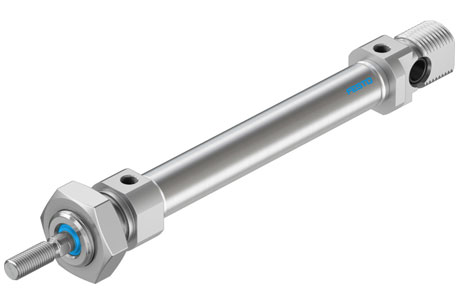
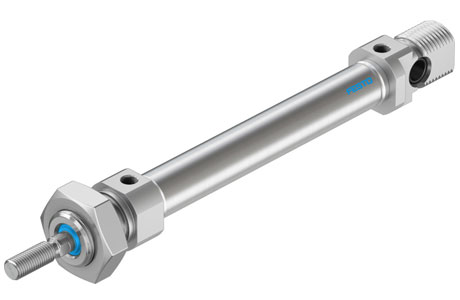
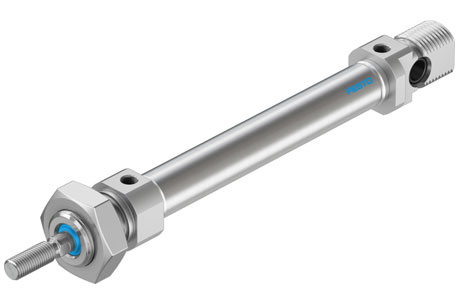
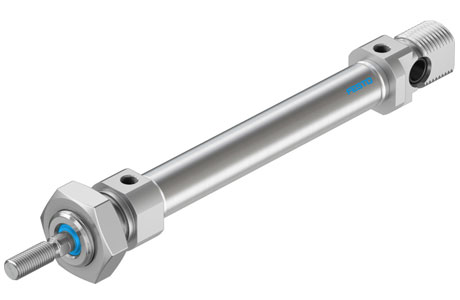
Festo DSNU-20-80-P-A Round Cylinder
The Festo DSNU-20-80-P-A Round Cylinder offers M8 rod thread, Male thread piston rod end, 20 mm diameter, andPiston; Piston rod; Cylinder barrel. Manufactured by Festo under the Festo Round Cylinder category, this model belongs to the DSNU Series.
| Brand | Festo |
| Product Type | ISO Cylinder |
| Product | DSNU-20-80-P-A |
Festo DSNU-20-80-P-A Round Cylinder – Technical Specifications
| Specification | Value |
|---|---|
| Stroke | 80 |
| Piston diameter | 20 mm |
| Piston rod thread | M8 |
| Cushioning | Elastic cushioning rings/plates at both ends |
| Mounting position | optional |
| Conforms to standard | CETOP RP 52 P; ISO 6432 |
| Design | Piston; Piston rod; Cylinder barrel |
| Piston-rod end | Male thread |
| Position detection | Via proximity switch |
| Variants | Piston rod at one end |
| Operating pressure | 1; 10 |
| Mode of operation | Double-acting |
| Operating medium | Compressed air to ISO 8573-1:2010 [7:4:4] |
| Corrosion resistance class CRC | 2 - Moderate corrosion stress |
| LABS (PWIS) conformity | VDMA24364-B1/B2-L |
| Cleanroom class | Class 6 according to ISO 14644-1 |
| Ambient temperature | -20; 80 |
| Impact energy in end positions | 0.2 |
| Theoretical force at 0.6 MPa (6 bar, 87 psi), return stroke | 158.3 |
| Theoretical force at 0.6 MPa (6 bar, 87 psi), advance stroke | 188.5 |
| Moving mass for 0 mm stroke | 44 |
| Additional moving mass per 10 mm stroke | 4 |
| Basic weight for 0 mm stroke | 186.8 |
| Additional weight per 10 mm stroke | 7.2 |
| Type of mounting | With accessories |
| Pneumatic connection | G1/8 |
| Note on materials | RoHS-compliant |
| Material cover | Wrought aluminium alloy; Colourless anodised |
| Material seals | NBR; TPE-U(PU) |
| Material piston rod | High-alloy stainless steel |
| Material cylinder barrel | High-alloy stainless steel |
Festo – Trusted Worldwide for Pneumatic Automation
Festo is a globally recognized leader in automation technology, delivering high-quality pneumatic and electrical motion solutions. Known for precision engineering and long-lasting performance, Festo products are used across Indian industries—from automotive and packaging to electronics and food processing. Their standardized, easy-to-install components help engineers build and maintain reliable automation systems with confidence.
DSNU-20-80-P-A – Technical Specifications
The DSNU-20-80-P-A is a double-acting round pneumatic cylinder designed according to ISO 6432 standards, with a 20 mm piston diameter and 80 mm stroke. It features elastic cushioning rings/plates at both ends, offering basic shock absorption to reduce wear during stroke reversal. The cylinder uses a G1/8 pneumatic port, has an M8 male-thread piston rod, and supports position detection via proximity switches. Built from high-alloy stainless steel and anodised aluminium, it offers moderate corrosion resistance (CRC Class 2) and is RoHS-compliant and suitable for cleanroom Class 6 environments. Operating between 1 and 10 bar, it delivers 188.5 N (advance stroke) and 158.3 N (return stroke) of theoretical force at 6 bar.
Practical Applications of DSNU-12-70-P-A in Industry
The DSNU-12-70-P-A is well-suited for machines where a compact body with extended stroke is essential—such as part sorting arms, vertical lifters, or packaging ejectors. In Indian factories, it is commonly used for light-load pushing, object positioning, and repetitive stroke tasks where reliability and ease of replacement matter. Maintenance engineers appreciate its ISO-compliant design, which ensures compatibility with standard accessories and quick swap-outs during servicing. For engineering students, this model offers hands-on experience in understanding stroke length dynamics, basic cushioning effects, and component selection based on real-world automation needs. Its balance of simplicity, strength, and standardization makes it a valuable part of efficient motion systems.
Related Products